


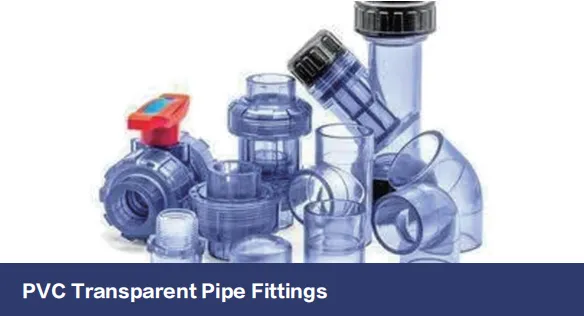
Picture this: You're in a factory watching molten PVC transform into crystal-clear pipe fittings. Each piece travels down conveyor belts like liquid glass solidifying before your eyes. But here's the catch – if that process isn't perfectly calibrated, those fittings will fail when they meet industrial pvc pressure pipes in real-world applications. That pressure mismatch? It's why quality control isn't just important in this industry – it's existential.
Why Continuous Improvement Isn't Optional
Let's be brutally honest – many manufacturers treat PVC fittings like disposable commodities. They prioritize volume over precision. But the companies thriving today understand that transparency in manufacturing literally translates to transparency in product value. When your pipes are see-through, every impurity, bubble, or weak spot becomes glaringly obvious to your customers.
The best manufacturers approach quality like chefs perfecting a signature dish:
- Consistency matters more than speed: A perfectly molded fitting every time beats rushing defective units
- Raw material selection is sacred: Virgin PVC vs. recycled compounds change everything
- Testing is the tasting phase: Pressure tests and UV resistance checks prevent "undercooked" products
Real Solutions for Real Problems
After examining manufacturing processes across Southeast Asia and Europe, patterns emerged about what separates adequate fittings from exceptional ones:
The Material Paradox
Many think "PVC is PVC." Wrong. Additives determine:
- UV resistance (critical for outdoor use)
- Clarity maintenance after chemical exposure
- Pressure tolerance thresholds
Top solution: Implement blockchain-tracked material sourcing. Each batch gets a digital passport tracking its composition – no more guessing games when failures occur.
Case Study: Transparency (Literally) Pays Off
A Taiwanese manufacturer added real-time viscosity sensors to extrusion lines. By monitoring flow consistency at micron levels:
- Surface imperfections decreased by 68%
- Production waste dropped by 31%
- Customer defect complaints vanished entirely
Future-Proofing Through Innovation
The next frontier? Smart fittings. Imagine:
- Embedded sensors detecting micro-fractures before they become failures
- QR codes revealing full manufacturing history – temperature curves, pressure test results, material origins
- Self-reporting fittings alerting maintenance teams before leaks occur
This isn't sci-fi – prototype-stage factories in Germany are already testing these features for pharmaceutical liquid transfer systems.
The Culture Component
Machines don't improve quality alone. The most advanced extrusion line still fails without:
- Cross-trained technicians understanding chemistry and mechanics
- Daily "kaizen" meetings empowering line workers to flag inconsistencies
- Open communication bridging quality labs and production floors
A Malaysian plant rewards defect-spotting with innovation bonuses. Result? They now dominate the biotech pipeline sector.
The Bottom Line
Improving PVC fitting quality boils down to three imperatives:
- Treat clarity as a measurable science – not an aesthetic feature
- Integrate testing into every production phase – not just final inspection
- Build transparency into your culture – both in materials and information flow
The factories embracing this mindset don't just make better fittings... They redefine what's possible when you see clearly through every stage of creation.










