
Imagine working with pipes that leak, corrode, or fail unexpectedly after just a few weeks of handling everyday chemicals. This nightmare scenario underscores why chemical resistance isn't just a technical specification – it's a make-or-break factor in industrial, lab, and plumbing applications. When your piping system leaks acids, solvents, or oxidants, the damage isn't merely to the equipment but can include safety hazards, environmental fines, and costly shutdowns.
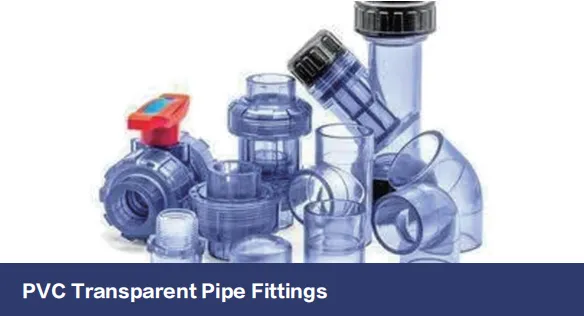
Selecting the right piping material matters even more when visual monitoring is critical. PVC transparent pipe fittings are game-changers here – they let you see flow conditions, sediment buildup, and fluid purity with just a glance. But how does their chemical resilience stack up against alternatives like CPVC, PVDF, PP, and others?
Through this comprehensive comparison, we'll demystify:
The table below summarizes how transparent PVC pipe fittings compare with 6 other common plastic piping materials when exposed to different chemical families. Ratings (A-F) reflect lab-tested resistance to corrosion and degradation:
| Chemical Group/Family | PVDF | PVC/Transparent PVC | CPVC | PP (Polypropylene) | PPR | GFRP |
|---|---|---|---|---|---|---|
| Aliphatic Solvents | A | C | B | F | F | B |
| Aromatic Solvents | A | D | D | F | F | B |
| Chlorinated Solvents | A | B | A | F | F | B |
| Esters & Ketones | D | D | C | D | D | C |
| Halogens | A | C | C | F | F | C |
| Strong Acids | A | C | B | C | B | B |
| Strong Bases | D | C | B | A | A | D |
| Strong Oxidants | A | C | B | F | F | D |
| Weak Acids | A | B | A | B | B | A |
| Weak Bases & Salts | A | A | A | A | A | B |
Seeing what's flowing through your pipes solves countless problems. That's why PVC transparent pipe fittings are lifesavers in labs, food processing lines, and pharmaceutical settings. But even clearer than the fluid they carry is where these fittings shine – and where alternatives make more sense.
Where Transparent PVC Excels:
Handling Limitations:
Lab tables never tell the whole story. That "Fair (C)" rating? It could mean "works perfectly" or "fails catastrophically" depending on three overlooked variables:
1. Temperature's Double-Edged Sword
Heat amplifies chemical aggression. PVC transparent fittings handling dilute sulfuric acid at 70°F might resist it for years, but at 140°F? Expect shortened service life. Meanwhile, CPVC and PVDF maintain resistance at higher temperatures – a key reason chemical plants favor them for hot processes.
2. Concentration: The Hidden Multiplier
"Strong Acids" covers everything from 10% to 98% sulfuric acid. Transparent PVC might handle the dilute version reasonably well (B/C rating) but fail rapidly with concentrated acid. Always match your exact concentration to manufacturer charts.
3. Mechanical Stress & Fatigue
Vibrations, pressure spikes, or frequent thermal cycling? These can turn a "mildly aggressive" chemical into a pipe-destroyer. PVDF often outperforms here due to its toughness – something critical when commissioning fire suppression systems with halon alternatives.
Remember: Transparent PVC pipe fittings aren't just chosen for chemical resistance. Their unique visibility advantage justifies their use even when alternatives rank slightly higher. Seeing a blockage forming or detecting fluid color changes provides value no opaque pipe can match. That said, smart engineers specify hybrid systems – using PVDF or CPVC for critical chemical transfers while employing transparent PVC for monitoring sections.
These ratings represent lab conditions – typically unpressurized fluids at room temperature. Your actual system's pressure surges, temperature cycles, and mechanical stresses change the game. "Good" doesn't guarantee "forever."
Before finalizing any installation involving PVC transparent pipe fittings or alternatives:
Because ultimately, resilient piping systems aren't just about surviving today's chemicals – they're about thriving through tomorrow's unexpected challenges. When dealing with drainage systems or chemical transfer applications, always verify with your PVC pipes fittings supplier for compatibility with specific substances.
Recommend Products












