
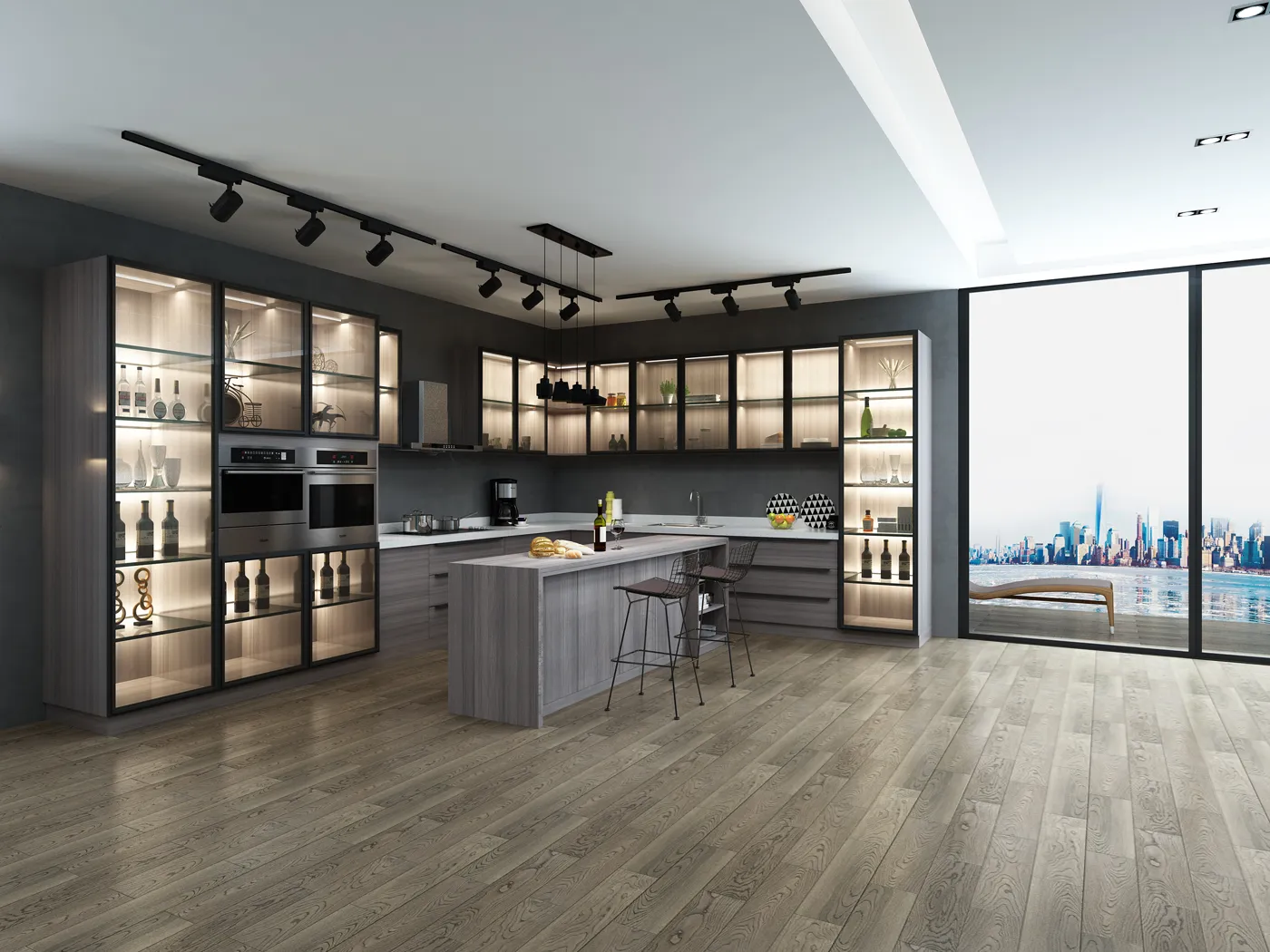
That beautiful smooth edge on your kitchen cabinet – it's not just there for looks. While many homeowners obsess over countertops and hardware finishes, the edge-banding technique quietly prevents moisture intrusion, protects vulnerable particleboard layers, and keeps your cabinets looking sharp for decades. Choosing the wrong method? That's when you'll start seeing peeling corners and chipped edges that make even high-end cabinets look tired.
Whether you're building new cabinets or refreshing existing ones, understanding these techniques helps you balance budget constraints with longevity demands. From DIY-friendly iron-on tapes to seamless liquid applications, each solution carries hidden strengths and compromises. We've broken them down with real-world performance insights beyond marketing claims – because your kitchen deserves edges that last as long as your love for cooking.
Think of PVC edge banding as that sturdy rain jacket that never lets you down. Made from flexible synthetic material, it wraps around cabinet edges like armor against spills, steam, and humidity. Unlike wood veneer that might warp over time, PVC holds its shape whether you're in humid Houston or dry Denver. What makes it popular with pros? It bends beautifully around curves while offering nearly limitless decorative options – match it to your cabinet color or go bold with metallic finishes.
"The beauty of PVC is in its low maintenance. Wipe it clean without worrying about swelling or stains – a lifesaver around sinks and dishwashers where moisture is constant." - Cabinet Refinishing Pro
For that authentic woodcraft feel, nothing beats real wood veneer edges. Thin slices of cherry, oak, or walnut bond to cabinet edges, creating a seamless transition from face to edge that stained finishes beautifully. But wood demands extra care – significant humidity changes can cause slight expansion gaps, and repeated impacts might dent softer species.
Its magic happens during staining. Since veneer uses actual wood grain, stains penetrate deeply for rich, multidimensional colors that synthetic materials struggle to replicate. If you're restoring heritage homes or crave artisanal warmth, wood veneer brings soul that plastic can't match.
Meet PVC's more adaptable cousin: ABS. Made from resilient thermoplastic polymer, it bends easily around tight radius corners where others crack or crinkle. Ever seen those perfect curved edges on waterfall islands? That's ABS showing off. While similar in durability to PVC, it bonds better with solvent-free adhesives for eco-friendly installations.
Where ABS particularly excels is cold climates. Unlike some materials that turn brittle in freezing garages or unfinished spaces, it maintains flexibility – a key reason boat builders and RV manufacturers rely on it.
Don't underestimate melamine's popularity – those affordable ready-to-assemble cabinets use this workhorse for good reason. Paper saturated with resin creates an edge surface that matches cabinet interiors perfectly. For standard straight edges in low-moisture zones, it delivers decent protection without breaking budgets.
Its limitation comes to light when moisture enters the equation or when corners impact. Unlike flexible PVC, melamine chips when bumped hard. Still, for upper cabinets and pantry units away from sink splash zones, it remains a cost-effective solution.
Picture this: an edge with no visible seam whatsoever. Liquid edge techniques use applied coatings (polyester or PU-based) that create ultra-smooth, monolithic surfaces especially stunning on modern, high-gloss kitchens. Since there's no banding material, it won't ever peel or lift – but achieving perfection requires specialist tools and curing environments.
The catch? It's the priciest technique and needs professional application. If you're investing in a statement kitchen with waterfall countertops or handle-less designs, liquid edge creates gallery-worthy continuity.
| Material/Type | Durability | Moisture Resistance | Cost Level | DIY Friendliness | Best Use Cases |
|---|---|---|---|---|---|
| PVC | Excellent | Waterproof | $$ | Moderate | Sink surrounds, dishwashers, high-humidity areas |
| Wood Veneer | Good | Moderate (sealant dependent) | $$$ | Difficult (needs specialized tools) | Heritage kitchens, furniture-style islands, visible edges |
| ABS | Excellent | Waterproof | $$-$$$ | Moderate | Curved cabinets, outdoor kitchens, cold environments |
| Melamine | Fair | Low (susceptible to swelling) | $ | Easy (iron-on applications) | Upper cabinets, pantry interiors, budget projects |
| Liquid Edge | Exceptional | Impervious | $$$$ | Professional Only | Luxury contemporary designs, seamless surfaces |
Notice how each technique plays to different strengths? Budget-friendly melamine holds up well in dry zones, but near water sources, PVC and ABS create defensive barriers against degradation. Wood veneer brings warmth but demands climate control – an important consideration for vacation homes or seasonal residences.
Let's ditch theoretical specs and talk real kitchens. Over decades of cabinet restoration work, patterns emerge that matter more than lab tests:
Notice how environmental stresses – not daily use – cause most failures? This explains why cabinet edges near dishwashers fail years before others. The lesson: Choose techniques based on zone-specific demands, not whole-kitchen generalizations.
Beyond materials, proper technique prevents problems before they start. Follow these pro-tier principles:
PVC or ABS with PUR adhesive. Cut banding 1-2mm longer than edges for thermal expansion. Seal cut ends with edge sealant.
0.8mm flexible PVC. Apply heat during installation (120-140°F) to improve conformity. Post-trim with specialty concave cutters.
2mm T-edge banding (reinforced core) around trash cabinets and appliance corners. Rounded edge profiles minimize chip points.
Pre-stained wood veneer applied with hide glue. Hand-sand after bonding for invisible transitions. Seal with amber shellac.
The edge-banding world isn't standing still. Emerging techniques hint at smarter, greener solutions:
Expect greater convergence with building materials trends too. Architects note how metal-edged "terrazzo-style" bandings add industrial character to residential kitchens. Meanwhile, textured wood-grain PVCs convincingly mimic reclaimed lumber aesthetics that consumers adore.
That thin strip of material framing your cabinet edges holds surprising power. It protects structural integrity from moisture damage, maintains aesthetic continuity, and absorbs daily kitchen abuse. But as we've seen, no solution handles every challenge equally.
The secret to ideal edge banding lies in thoughtful zoning. Protect wet zones with waterproof synthetics; pamper focal points with artisan wood finishes; fortify high-traffic corners with extra thickness. Match application methods to skill levels – DIY tapes for utility spaces, professional finishes for statement pieces.
Beyond technical performance, the best solutions honor how custom kitchen cabinets transform practical spaces into personal sanctuaries. Whether through seamless liquid edges that reflect light like molten glass or warm walnut veneers recalling heirloom furniture, these details whisper "craftsmanship" every time you grab a coffee mug. Choose techniques that reflect how proudly your kitchen serves – year after year.
Recommend Products












