
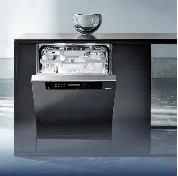
We've all been there. You excitedly open your dishwasher after a cycle, anticipating that satisfying moment when you transfer sparkling dry dishes straight to your cabinets... only to find everything still dripping wet. That lingering moisture isn't just inconvenient - it breeds bacteria, causes water spots, and turns what should be a time-saving appliance into a frustration machine.
Today, we're pulling back the curtain on the three titans of dishwasher drying technology. By understanding how residual heat drying, heat exchange systems, and crystal drying really work, you'll finally get that "wow" moment every time you open your machine. Let's transform that damp disappointment into dry delight!
At its core, dishwasher drying is a battle against physics. Water molecules cling stubbornly to your plates and glasses through surface tension. Modern drying technologies use different approaches to overcome this clinginess:
Your dishwasher's interior material dramatically impacts drying efficiency. That stainless steel tub isn't just for looks - it actually becomes an active participant in the drying process by cooling faster than plastic alternatives, creating ideal conditions for condensation to work its magic.
Imagine letting your dishes air dry naturally after a hot shower - that's residual heat drying in essence. This method relies on simple physics:
"My dishes always felt like they needed a towel finish," shares Jenna, a home cook from Seattle. "It wasn't until I switched methods that I realized how much time I'd been wasting opening the door and rearranging dishes."
This is where things get fascinatingly smart. Heat exchange systems create what appliance engineers call "temperature theater":
1. During the final rinse, super-heated water (we're talking 160°F/70°C!) raises dish temperatures
2. The stainless steel tub walls cool faster than those hot dishes
3. Moisture naturally migrates to the cooler surfaces like thirsty travelers to an oasis
4. Water drips down to be drained away
Imagine a natural substance that actually heats up when it gets wet. That's the wizardry behind crystal drying. Pioneered by Bosch, this system uses zeolite minerals:
• During the wash, drying compartment doors remain shut
• At cycle's end, the compartment opens to the main tub
• Moisture flows toward the crystals like moths to flame
• The adsorption process generates heat up to 180°F (82°C)
• Generated warmth circulates to evaporate remaining moisture
| Feature | Residual Heat Drying | Heat Exchange Drying | Crystal Drying |
|---|---|---|---|
| Dry Plastics? | Rarely | ⚠️ Sometimes | Consistently |
| Glassware Results | ⏱️ Good with time | Excellent | Excellent |
| Energy Efficiency | |||
| Noise Level | Silent | Silent | Silent |
| Typical Dry Time | 1.5-3 hours | 30-70 minutes | 45-90 minutes |
| Price Impact | $ | $$ | $$$ |
Selecting the right drying technology is deeply personal - it's about matching your lifestyle and priorities with technical capabilities:
For the Eco-Champion : You'll love residual heat or crystal drying. Both are energy sippers rather than guzzlers. That environmental win hits different when you know your clean dishes didn't cost the earth.
The Busy Family's Savior : Heat exchange systems deliver that precious combo of speed and quality. That moment when you unpack completely dry dishes just 40 minutes after starting the cycle? Pure magic during hectic weeknights.
Plastic Warriors Unite : If your kitchen resembles a toddler-friendly plastic utopia, crystal drying is your hero. The frustration of picking up that supposedly clean plastic bowl only to find a puddle underneath? Gone forever.
Elevate your drying game with these field-tested strategies:
This unsung hero works by breaking water's surface tension. Think of it as giving moisture a slippery slide to escape down. Even Consumer Reports testing shows it improves drying performance by up to 40% across all systems.
Loading for Liberation : Orient dishes so water can actually escape. Angle bowls downward, face cups and glasses downward, and never nest items. Water trapped between stacked plates might as well be in Alcatraz.
The Steam Release Ritual : Get in the habit of cracking your dishwasher door 2-3 inches when the cycle ends. That escaping steam carries humidity with it - a simple trick that turbo-charges condensation systems.
The Temperature Factor : Dishwashers perform best with hot water entering at 120°F (49°C) or above. Check your water heater settings - this simple adjustment can transform mediocre drying into marvelous results.
Even the best systems sometimes need help. Here's how to diagnose common issues:
The Perpetually Wet Plastic Syndrome
:
- Try a rinse aid refresh
- Verify water temperature isn't too low
- Consider repositioning items during loading
The Sudden Performance drop Mystery
:
- Check for mineral buildup around seals and spray arms
- Examine the filter - clogs are airflow killers
- Ensure detergent dispenser functions properly
Inconsistent Drying Across Racks
:
- Redistribute items to prevent overcrowding
- Wipe upper cabinet seals where steam escapes
- Confirm no large utensils block spray arms
Through countless cycles and technical analysis, crystal drying emerges as the champion for comprehensive drying performance - especially if plastics dominate your kitchen. There's something deeply satisfying about removing even toddler cups bone dry.
That said, heat exchange systems deliver outstanding value for their price point. You'll get beautiful drying on glass and ceramics without breaking the bank. And if energy conservation tops your priority list, you can't beat residual heat's elegant simplicity.
The true victory lies in understanding these technologies well enough to match them with your life. Because when your dishwasher finally delivers that perfect load of completely dry dishes? That's not just convenience - that's everyday magic that makes you smile right in your kitchen.
Recommend Products












