
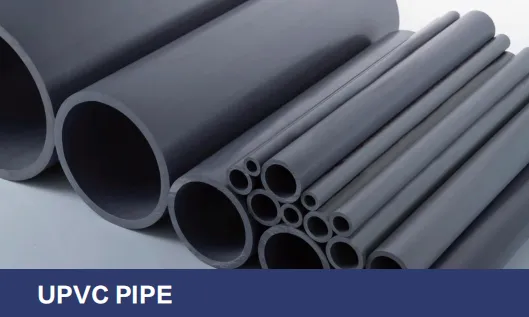
For contractors, builders, and project managers in the construction industry, few decisions feel as consequential as choosing a pipe supplier. When it comes to UPVC (Unplasticized Polyvinyl Chloride) pipes—workhorses of modern plumbing, drainage, and industrial systems—the choice often narrows down to two paths: local upvc pipe suppliers or international providers. It's a decision that ripples through project timelines, budgets, and long-term durability. A local supplier might promise same-week delivery, while an international one could offer cutting-edge materials that meet stringent global standards. So, how do you navigate this? Let's dive into the nuances of both options, weighing their strengths, weaknesses, and real-world impact.
Before comparing suppliers, it's critical to grasp why UPVC pipes have become a staple in construction. Unlike regular PVC, UPVC is rigid, unplasticized, and boasts impressive resistance to corrosion, chemicals, and high temperatures—qualities that make it ideal for everything from residential drainage systems to commercial water supply lines. UPVC pipe solutions aren't just about the pipes themselves; they encompass a full ecosystem: technical support for installation, customization for unique project needs, and after-sales service that ensures long-term performance. Whether you're building a high-rise apartment, a hospital, or a school, the right UPVC solution can mean the difference between a plumbing system that lasts 50 years and one that needs frequent repairs.
Consider, for example, the role of UPVC in drainage systems. PVC DWV (Drainage, Waste, Vent) pipes are a subset of UPVC solutions designed to handle wastewater and ventilation, a critical component in any building. A reliable pvc dwv pipe supplier doesn't just deliver pipes—they provide expertise on slope calculations, fitting compatibility, and local building codes, ensuring the system functions seamlessly for decades. This blend of product and knowledge is what turns a "supplier" into a true partner in construction.
Local upvc pipe suppliers thrive on their connection to the community and the pace of local projects. For small to mid-sized builds—think neighborhood renovations, boutique hotels, or residential complexes—their advantages are hard to ignore. Proximity is their superpower: a local supplier can often deliver pipes within 24 to 48 hours, a lifesaver when a construction schedule hits a snag and materials run low. There's no waiting for customs clearance or navigating international shipping delays; if you need an emergency batch of UPVC pipes for a burst water line repair, a local provider is likely just a phone call away.
Another key strength is their intimate knowledge of local regulations. Building codes vary widely even within a single country—what's acceptable for a residential project in Riyadh might differ from Jeddah. Local suppliers specialize in these nuances, ensuring their UPVC pipe solutions comply with Saudi Arabian Standards (SASO) or regional municipal requirements. This familiarity reduces the risk of costly rework due to non-compliant materials, a common headache when importing products that don't align with local norms.
Cost is another factor. Local suppliers often have lower overheads than international firms, translating to more competitive pricing for standard UPVC products. For projects with tight budgets, this can make a significant difference. Small contractors, in particular, appreciate the flexibility of local suppliers, who may offer smaller order quantities or payment terms tailored to the local market—something larger international companies rarely do.
But local suppliers aren't without limitations. Their product ranges are often narrower, focusing on high-demand items like standard UPVC pipes and PVC DWV solutions rather than specialized variants. If a project requires UPVC pipes with unique diameters, pressure ratings, or certifications (such as ASTM D2846 for industrial use), a local supplier might struggle to deliver. Quality can also be inconsistent; while many local firms prioritize excellence, others cut corners to keep prices low, leading to pipes that crack under pressure or degrade quickly in harsh environments.
International UPVC pipe suppliers bring a different set of strengths to the table—ones rooted in scale, innovation, and global standards. These companies operate across continents, investing in research and development to stay ahead of material science trends. For large-scale projects or those with specialized needs—hospitals, airports, or industrial facilities—their expertise is invaluable. Imagine building a hospital where plumbing systems must withstand constant exposure to disinfectants and high water pressure; an international supplier is more likely to offer UPVC pipes tested to meet rigorous global certifications, ensuring safety and durability in critical environments.
One of the biggest draws of international suppliers is their commitment to quality control. Many adhere to strict standards like ISO 9001, ASTM, or DIN, which govern everything from raw material selection to manufacturing processes. This consistency is a boon for projects where reliability is non-negotiable. For example, a school construction project requiring Class A fireproof materials might turn to an international supplier not just for UPVC pipes, but for fire-resistant fittings and technical documentation that proves compliance with global safety norms.
Product diversity is another advantage. International suppliers often stock a wide range of UPVC solutions, from standard pressure pipes to specialized variants like PEX or PPR fittings (though PPR is a different material, many global suppliers offer a full suite of plumbing products). This one-stop shopping can simplify logistics for large projects, reducing the need to coordinate with multiple vendors. For instance, a commercial complex might source UPVC pipes for water supply, PVC DWV pipes for drainage, and PPR fittings for hot water lines—all from a single international provider, streamlining the procurement process.
Of course, global reach comes with trade-offs. Lead times are longer—often 4 to 8 weeks for international shipments—and shipping costs can add 10% to 20% to the total material cost. There's also the risk of communication barriers; while many international suppliers have multilingual teams, nuances in technical specifications or order details can get lost in translation. For small projects with tight deadlines, these delays can derail schedules, making international suppliers a less practical choice than local alternatives.
Choosing between local and international UPVC pipe suppliers isn't about picking a "better" option—it's about aligning with your project's unique needs. Here are the critical factors to consider:
A Riyadh-based contractor was building a 20-unit residential complex with a tight 6-month timeline. The project required standard UPVC pipes for water supply and PVC DWV pipes for drainage. They opted for a local upvc pipe supplier with a 10-year track record in the region. The supplier delivered materials in batches, matching the construction phase—first the DWV pipes for the foundation, then UPVC pipes for the upper floors. When a last-minute design change required adjusting pipe diameters, the supplier reconfigured the order within 48 hours, keeping the project on schedule. Total material cost was 15% lower than quotes from international suppliers, and the contractor saved on storage fees by avoiding bulk imports. Today, the complex's plumbing system runs smoothly, with no reported leaks or blockages in its first three years.
A Jeddah hospital expansion needed plumbing systems that could withstand frequent sanitization, high water pressure, and strict infection control standards. The project team chose an international upvc pipe supplier known for ASTM D2846-certified products. Though lead times were 6 weeks, the supplier provided detailed material test reports, ensuring compliance with Saudi Ministry of Health regulations. They also offered virtual training for the installation team, covering proper fitting techniques to prevent bacterial buildup. The higher upfront cost was offset by reduced maintenance—over five years, the hospital reported 30% fewer plumbing issues compared to its older wings, which used local UPVC pipes. For a healthcare facility where reliability is critical, the investment in international quality paid off.
| Factor | Local UPVC Pipe Suppliers | International UPVC Pipe Suppliers |
|---|---|---|
| Delivery Time | 24–48 hours (local), ideal for urgent needs | 4–8 weeks (international), requires advance planning |
| Cost | Lower upfront costs; competitive pricing for standard products | Higher initial costs (shipping, import taxes); better value for specialized items |
| Quality Control | Varies; some meet local standards, others may cut corners | Consistent, certified to global standards (ASTM, ISO, DIN) |
| Product Range | Limited to high-demand items (standard UPVC, PVC DWV) | Wide range: specialized diameters, pressure ratings, and complementary products (fittings, valves) |
| Technical Support | On-site guidance, local code expertise, personalized service | Remote support (documentation, virtual training), global best practices |
| Regulatory Compliance | Deep knowledge of local building codes and SASO standards | Adherence to international certifications; may require local adaptation |
At the end of the day, the choice between local and international UPVC pipe suppliers hinges on your project's priorities. Local suppliers are the backbone of quick, community-focused builds, offering speed, cost savings, and hands-on support. International suppliers shine in large-scale, high-stakes projects where quality, certification, and product diversity are non-negotiable. For many builders, the sweet spot lies in hybrid approaches: using local suppliers for standard, time-sensitive materials (like PVC DWV pipes) and international partners for specialized needs (like high-pressure UPVC for industrial systems).
What matters most is treating your supplier as a partner, not just a vendor. Ask tough questions: What certifications do your UPVC pipes carry? How quickly can you adapt to design changes? What after-sales support do you offer? A great supplier—whether local or international—will prioritize your project's success, offering not just pipes, but solutions that turn blueprints into lasting, functional buildings. In the end, the best UPVC pipe solution is the one that aligns with your goals, your budget, and the legacy you want to build.
Recommend Products












