
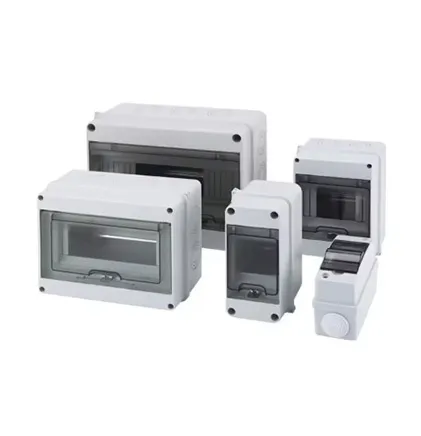
You know those metal cabinets you see on every street corner? The ones humming with electricity that powers our homes, businesses, and lives? Those distribution boxes might seem ordinary, but beneath their steel surfaces lies a complex web of engineering that literally keeps the lights on. Across ASEAN - this buzzing economic powerhouse of 650 million people - we're facing an energy revolution. And it's these unassuming metal boxes that hold the key to powering our future.
Here's the deal: ASEAN's lightning-fast growth means we're adding new buildings, factories, and infrastructure faster than most places on earth. But if our distribution boxes can't handle tomorrow's energy demands, we're building progress on shaky foundations. And let me tell you, watching a distribution box spark and fail during peak hours feels like seeing the very heartbeat of a neighborhood stop beating.
Distribution boxes are the unsung heroes of electricity networks. They divide power flows, protect equipment, and shield us from surges. But travel across ASEAN and you'll see as many variations as there are dishes at a night market. Malaysia uses British-derived specs, Thailand follows US guidelines, Vietnam blends French and Russian influences, while Singapore demands its own premium tier.
The headaches this creates? Oh, you don't even want to know...
Manufacturers must retool production lines for each country's requirements. That extra expense? It lands in our electricity bills as hidden costs that make no sense when we're all trying to keep the aircon running on sweltering days.
Fire departments across ASEAN confirm it: different standards mean we haven't established uniform protection against monsoon floods or monsoon-like downpours. That junction box saving lives in Bangkok might fail spectacularly in Jakarta's flood season.
When Laos orders parts from Thailand to repair storm-damaged lines? Half the components arrive incompatible. Crews improvise dangerous fixes because ASEAN power grids don't actually speak the same language.
| Country | Voltage Norm | IP Rating | Temperature Tolerance | Material Standards |
|---|---|---|---|---|
| Singapore | 400V ±1% | IP67 | -5°C to 55°C | 304 Stainless Steel |
| Thailand | 380V-400V | IP55 | 0°C to 50°C | Galvanized Steel |
| Vietnam | 380V ±5% | IP54 | -10°C to 40°C | Polycarbonate blend |
| Indonesia | 380V-415V | IP53 | 0°C to 45°C | Powder-coated Steel |
Seeing these numbers laid out like this really hits home, doesn't it? The differences seem minor when you look at just one specification. But pile them up? It's a recipe for headaches that makes building reliable networks tougher than durian ice cream.
And here's what keeps engineers awake at 3 AM: most ASEAN boxes aren't ready for our climate reality. Those IP54 ratings? They crumple when tropical monsoons dump a month's rain in hours. Our standard plastic parts soften under extreme heat that's becoming the norm rather than the exception.
The vision? Simple: distribution boxes designed around ASEAN's actual realities instead of copied standards from other continents. Let's start with three pillars:
Why not settle on 380V to 415V tolerance with enhanced surge protection? This range accommodates existing infrastructure while building wiggle room for solar hookups and those crazy Monsoon-induced fluctuations we experience all too often.
Standard IP56 rating minimum - dust tight and powerful water jets resistant. Materials tested under prolonged 60°C heat and 95% humidity. Anti-corrosion coatings validated by marine environments. Our boxes should be as resilient as that street food vendor riding out the seasonal downpour.
Fixed compartments for solar connections and EV chargers? Standardized ports? Yes! This forward-looking approach will solve many problems before they arise. Our boxes should be ready for solar additions just like ASEAN nations are embracing renewable energy as an integral part of our energy strategy.
The ASEAN Smart Grid Network research suggests we'd reduce outages by 17% in first-year implementation. Thailand's Electricity Generating Authority trials show 24% faster disaster recovery with harmonized parts. These aren't just numbers; these represent real families getting air conditioning restored quicker during unbearable heatwaves.
Our shared future isn't about dull metal boxes - it's about building resilient, adaptable, and ultimately reliable foundations for ASEAN's bright tomorrow. Let's choose unity over fragmentation and standards that recognize how truly interconnected we've become.
At the end of long hot days, when children do homework under buzzing fans, when grandmothers cook rice with electric cookers, when shopkeepers display goods under humming neon - it all flows through those distribution boxes. They become invisible guardians of modern life.
Creating regional standards means more than economic efficiency. It's about ensuring Filipino families enjoy Thailand-level reliability during typhoon season. It's guaranteeing Malaysian factories run with Singapore-grade precision during export surges. It's letting Cambodian villages access Indonesian-quality solar solutions at Vietnamese price points.
That transformer your neighborhood might share with neighboring communities? That's the heartbeat of collective progress - literally. When properly standardized, it becomes a common lifeline rather than a potential point of failure.
Ultimately, this journey towards commonality requires compromise and courage. Manufacturers resisting change will invoke short-term costs. Utilities wedded to legacy systems will complain about transition headaches. But the collective payoff – ASEAN operating as truly integrated grid – will outshine temporary inconveniences.
Remember those distribution boxes. They stand silent at countless street corners across our diverse region. By building smarter common standards, we ensure they stand not just as metal cabinets, but as monuments to ASEAN's practical cooperation - protecting lives, powering dreams, and illuminating our shared path forward.
Recommend Products












