


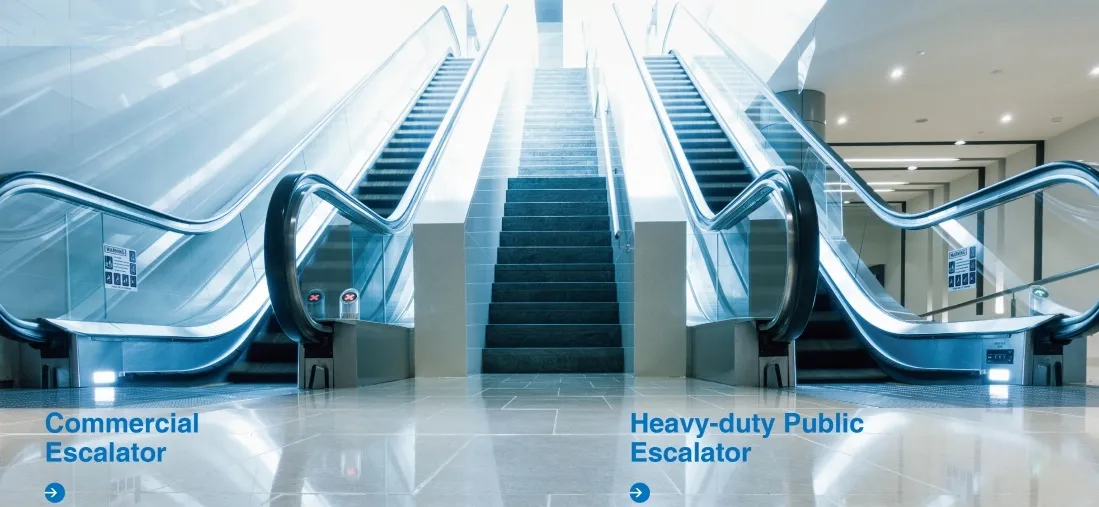
The Heartbeat of Dynamic Spaces
Picture a bustling shopping mall during holiday season or a busy airport terminal. What keeps people flowing smoothly through these spaces? Often, it's the unsung heroes of commercial infrastructure: escalators. Unlike standard elevators , escalators handle constant crowds while becoming invisible threads in our daily routines.
Modern commercial escalators aren't just steel staircases – they're precision-engineered systems using high-quality building materials . Manufacturers now combine brushed stainless steel with polycarbonate panels and reinforced step chains to balance longevity and aesthetics. Like selecting building materials for commercial projects , escalator components require rigorous testing for heavy-traffic environments.
| Feature | Commercial Escalators | Standard Elevators |
|---|---|---|
| Hourly Capacity | 6,000-10,000 people | 800-1,200 people |
| Daily Operation | 18-24 hours | 10-16 hours |
| Safety Sensors | Multi-layer detection | Basic obstruction |
| Customization | Architectural integration | Limited finishes |
Safety: Beyond Handrails and Emergency Stops
A hospital recently upgraded its escalators after noticing how families with strollers struggled during peak hours. Their solution? Extra-wide steps with anti-slip grooves and side-mounted infrared sensors that pause operation if fabrics get trapped – critical for facilities using specialized medical fire wall board that restricts structural modifications.
Top-tier safety features include:
- Predictive maintenance alerts : Vibration sensors detecting abnormal gear wear before failures
- Smart brush systems : Self-cleaning tracks preventing debris accumulation
- Directional lighting : LED pathways illuminating steps during power fluctuations
Just as elevator suppliers implement seismic stabilizers, escalator manufacturers now incorporate earthquake-response tech that automatically slows and secures units during tremors.
Efficiency: Where Physics Meets Innovation
The secret to energy-smart escalators lies in regenerative drives. When descending passengers' weight pulls steps downward, these systems capture kinetic energy like hybrid cars – feeding it back into the building's grid to power LED lighting or charging stations. One airport terminal reduced energy costs by 18% simply by retrofitting with this technology.
Intelligent Traffic Flow Systems
New escalator networks function like symphonies:
- Peak hours: All units operate full speed
- Moderate traffic: Every third escalator slows to 0.3m/s
- Night mode: Units convert to stationary stairs with illuminated edges
Compared to traditional elevators , modern escalators offer:
- 5x higher crowd capacity during events
- 30% less spatial footprint than elevator banks
- Seamless integration with high-quality building materials like granite cladding
Sustainability: Green Engineering in Motion
Forward-thinking manufacturers now mirror solar panel solutions in their designs by embedding photovoltaic strips along escalator canopies. These generate enough power to operate the unit’s lighting and monitoring systems – a breakthrough particularly valuable in structures prioritizing green and environmentally friendly building materials .
| Model | Energy Consumption | CO2 Reduction | Recycled Materials |
|---|---|---|---|
| Standard Escalator (2010) | 35,000 kWh | - | 15% |
| Modern Eco-Scalator | 18,500 kWh | 9.2 tons | 41% |
Key sustainability features include:
- Regenerative braking systems recapturing 20% energy
- Durable components made from recycled aircraft aluminum
- Oil-free gear technology eliminating hydraulic fluid leaks
Like selecting building materials for commercial projects , escalator specification now includes Environmental Product Declarations (EPDs) quantifying lifecycle impact.
Design Integration: Where Engineering Meets Architecture
A luxury Dubai mall recently commissioned curved escalators with glass balustrades containing holographic displays – not just transport solutions but artistic installations. This reflects how modern escalators complement other structural elements:
Material Synergy
Steps matching granite floor tiles or terrazzo patterns
Spatial Harmony
Custom angles avoiding interference with fireproof ceiling boards
Light Coordination
Integrated LEDs syncing with architectural lighting solutions
Leading elevator suppliers now offer unified approach:
- Building information modeling (BIM) compatibility
- Material sample coordination with interior finishes
- Acoustic dampening matching acoustic ceiling tiles
Future Horizons: The Intelligent Ascent
Emerging innovations will transform escalators from utilities to intelligent systems:
Self-Powered Steps
Prototypes with piezoelectric crystals generate electricity from foot pressure – potentially creating net-zero energy systems.
Other advancements include:
- AI-enabled predictive maintenance (analyzing 500 operational parameters)
- UV-C light sterilization between cycles
- Retractable designs converting to ramps during low-traffic hours
These innovations complement broader trends like solar panel solutions and high-quality building materials to create comprehensively efficient structures.
Conclusion: Elevating Expectations
Today’s commercial escalators represent a nexus of safety engineering, spatial efficiency, and environmental responsibility. Their development parallels advancements in building materials for commercial projects and solar panel solutions – all working toward spaces that move people comfortably while respecting planetary boundaries. As architects and developers collaborate with innovative elevator suppliers , these dynamic systems will continue transforming from mere utilities to signature architectural elements defining human experiences.
Tomorrow's shopping centers, transit hubs, and hospitals won't just contain escalators – they'll be designed around their graceful, efficient flow.










