


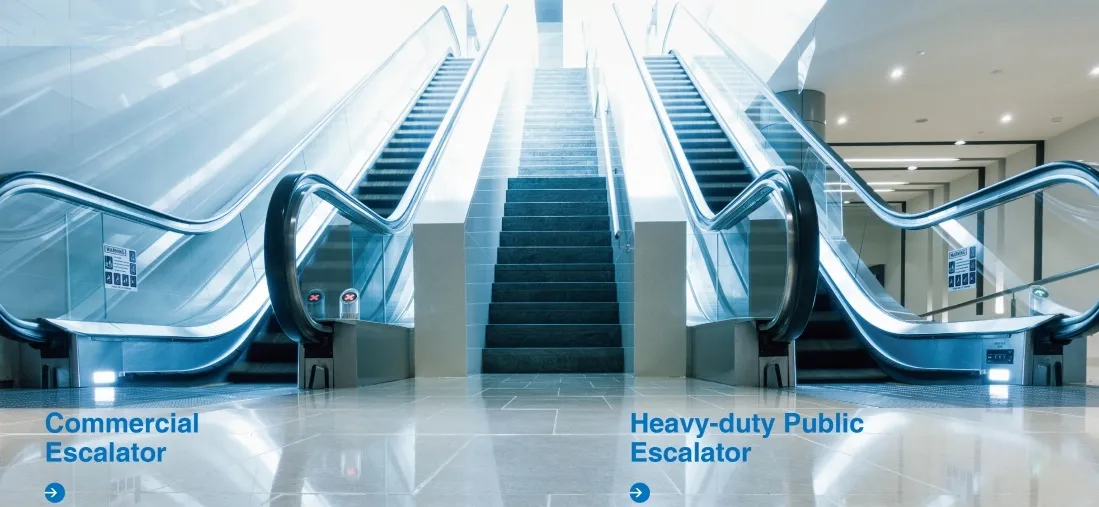
From shopping centers to transit hubs, escalators keep our world moving—but there's more beneath the steps than meets the eye. Let's break down what makes these engineering marvels work.
The Art & Science of Escalator Design
Picture that moment when you approach a crowded subway station at rush hour. Without escalators, we'd be stuck in a bottleneck nightmare. But designing them? That's a puzzle balancing physics, traffic flow, and human behavior.
The Geometry of Movement
That 30–35° incline isn't random—it's the sweet spot where physics meets comfort. Go steeper and people feel like they're climbing a ladder; shallower and you'd need a football field-sized footprint. And step dimensions? They're precision-engineered to match the rhythm of human strides while locking securely together. Imagine your feet missing that final step because the comb plate didn't sync!
Material Matters
Those stainless steel sides aren't just pretty—they withstand thousands of daily scuffs while hiding critical components like step chains. And let's talk weather: Airport outdoor escalators battle ice and salt spray, demanding specialized rust-resistant materials that indoor models would never need. A mall escalator may shine with decorative finishes, while transit models armor up for durability.
The Traffic Algorithm
In busy locations, escalators often operate as one-way systems during peak times—a simple crowd-control trick that prevents human gridlock. Newer models include AI-powered sensors that automatically adjust speed based on crowd density, saving energy during quiet hours. Think of it like cruise control for people flow.
And hidden beneath? The "truss"—a multi-ton steel skeleton that handles the weight of packed escalators. Engineers reinforce building structures to handle this concentrated load, while acoustics experts ensure vibrations don't make stores below feel like earthquake zones.
The Underrated Benefits You Never Noticed
Sure, escalators beat stairs—but their true value goes deeper:
- The Accessibility Bridge: For folks who can't handle ramps or stairs? Escalators provide vertical access without elevator delays. Smart cities now integrate them with public transport navigation apps.
- The Foot Traffic Multiplier: Ever notice how department stores always place escalators near impulse-buy zones? Studies show escalator users spend 11% more time browsing than elevator users. That's not engineering—that's psychology.
- Emergency Lifelines: During stadium evacuations, escalators become descending rivers of people. Modern designs include "high-torque modes" for rapid emptying during emergencies, making them vital crisis infrastructure.
- Space Savings: A bank of escalators moves 6,000+ people hourly in the space elevators would need for just 1,200. In skyscrapers with multiple levels like shopping centers, this footprint efficiency is everything.
But here's the kicker—new escalators consume up to 65% less energy than decade-old models. Variable-speed drives cut juice when nobody's aboard, while regenerative brakes capture descent energy like hybrid cars. These aren't just steps; they're energy efficient appliances reducing urban carbon footprints.
Installation: Like Open-Heart Surgery for Buildings
Installation starts with surgical precision:
| Phase | Duration | Activities |
|---|---|---|
| Pre-Installation | 4 weeks | Structural checks, permits, equipment ordering |
| Site Preparation | 2 weeks | Creating floor openings, reinforcing supports, power setups |
| Main Installation | 6 weeks | Truss positioning, drive systems, step chains |
| Safety Systems | 1 week | Handrail integration, electrical controls, emergency brakes |
| Testing & Commissioning | 2 weeks | Load tests, safety checks, regulatory sign-offs |
Watching installation crews is like observing choreography—cranes hoist 4,000-pound trusses through narrow building gaps, laser levels verify 0.1° angle accuracy, and technicians test emergency stops hundreds of times. Any mistake? A misaligned chain can shred steps like tinfoil.
Safety systems get drilled harder than astronauts. Step-edge lighting must clearly define transitions for avoiding trips. Comb plates at landings deploy emergency brakes if foreign objects jam them. Pressure sensors under steps detect step-separation with zero tolerance—catching problems before they make headlines.
Innovation Curve: What's Next?
Tomorrow's escalators are already evolving:
Predictive Intelligence
IoT sensors now monitor motor vibrations like cardiograms—predicting bearing failures months before breakdowns. Cloud-connected systems schedule maintenance automatically when usage hits thresholds, reducing downtime.
Adaptive Movement
Prototype escalators detect slow-moving users like seniors or parents with strollers, temporarily slowing adjacent steps to create "assist zones" without disrupting overall flow. Think automatic empathy.
And materials science? Self-healing polymer handrails that seal minor scratches, anti-microbial step surfaces, and photovoltaic glass sides that help power the escalator itself—bringing us full circle to self-sustaining infrastructure.
So next time you ride one, remember: That smooth glide is a dance of physics, safety, and ingenuity—engineering that quite literally moves humanity forward.










