
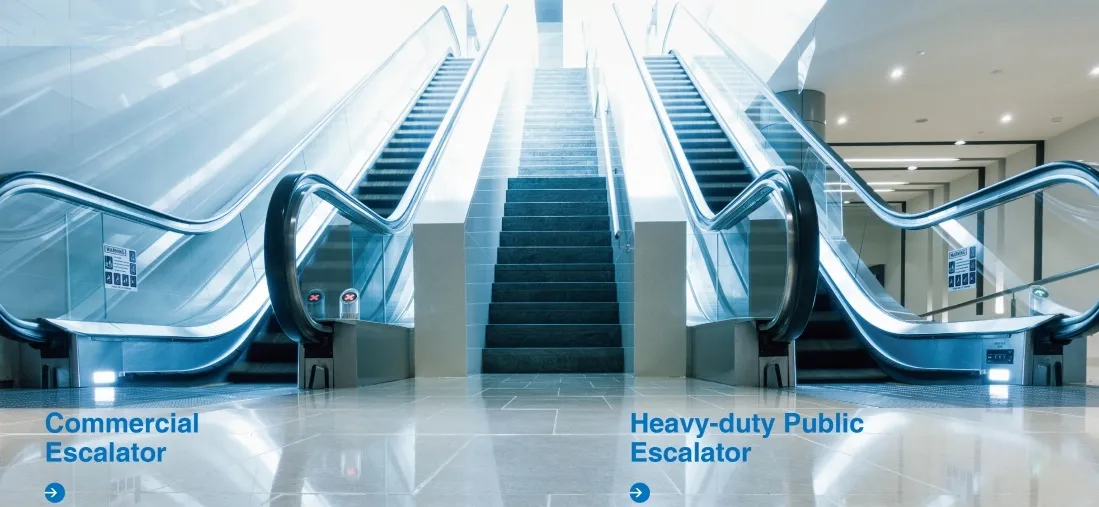
Picture yourself walking through a bustling airport terminal. The constant hum of activity, travelers rushing between gates, luggage wheels clattering against polished floors - and there they are: smooth, reliable escalators moving hundreds of people effortlessly between levels. Have you ever paused to consider where these mechanical marvels come from? There's a high probability you've ridden on escalators born in China, the undisputed global leader in escalator manufacturing.
China's escalator industry has quietly become one of the nation's manufacturing crown jewels - a perfect blend of engineering precision, innovative design, and manufacturing muscle. From massive factories in Zhejiang province to specialized workshops in Guangdong, China produces more than 70% of the world's escalators. It's not just about quantity though; Chinese manufacturers have perfected the art of delivering quality escalators at prices that simply can't be matched elsewhere.
In this deep dive, we'll uncover the fascinating ecosystem behind China's escalator dominance - the specialized engineering, the competitive landscape, and why architects worldwide are increasingly specifying Chinese escalators for projects ranging from boutique hotels to metro systems moving millions daily.
Did you know? The Shanghai Rail Transit system alone features over 10,000 escalators maintained by Chinese manufacturers. That's more escalators than the entire London Underground!
What started in the 1990s as basic manufacturing operations has transformed into an incredibly sophisticated industrial sector. Chinese escalator factories today feature robotics-assisted production lines that would make German engineers nod in approval. This transformation has been fueled by three critical factors:
Within an hour's drive from manufacturing hubs like Huzhou, you'll find specialized foundries casting aluminum comb plates, gear manufacturers producing precision gearboxes, and electronics workshops programming sophisticated control panels. This cluster approach minimizes logistics friction, cutting production costs by 15-20% compared to fragmented international supply chains.
The "Made in China 2025" initiative poured billions into automating heavy industries. Escalator manufacturers were among the top beneficiaries, with subsidized robotic integration cutting human error by 60% while boosting precision. State-funded testing facilities like the Hangzhou Lift Inspection Center offer certifications recognized globally.
The Tianfu International Airport in Chengdu features escalators that move 14,000 people hourly during peak times. Such demanding projects serve as brutal proving grounds. Manufacturers who survive these installations emerge with credibility that opens doors worldwide. China's domestic infrastructure boom has been the ultimate stress test for equipment durability.
When American mega-retailers began sourcing commercial escalators during the 2010s, they discovered something remarkable - the gap between premium European brands and mid-tier Chinese offerings had vanished. Products from manufacturers like KOYO and Nova weren't just cheaper; they incorporated technological innovations faster than legacy Western firms. Modern Chinese escalators now feature:
Chinese manufacturers have mastered the art of escalator customization. Whether it's a stainless steel monster designed to withstand Scandinavian winters or a sleek glass-encased unit destined for Dubai's luxury malls, production lines have standardized customization to astonishing degrees.
Mass transit systems present unique challenges: constant operation, heavy loads, and vandal resistance. China's KYH series public transport escalators found in systems from Milan to Singapore incorporate mil-spec components originally developed for high-speed trains:
Shopping malls and hotels demand both beauty and endurance. The KYS series commercial escalators merge architectural elegance with commercial-grade durability. The customization options are staggering:
Brushed stainless steel, laminated safety glass, nano-coated aluminum, and architectural woods. Some premium models even feature integrated terrazzo steps that match surrounding flooring.
Curved configurations with radii down to 8 meters, glass balustrades with virtually invisible joints, and tensioned cable systems creating floating effects.
Programmable step lighting systems, voice announcement modules in 40 languages, and touchless control via smartphone proximity sensors.
Recently, VVVF drive systems have revolutionized Chinese escalators. These Variable Voltage Variable Frequency drives aren't just for elevators - they've transformed escalator operation by providing silky-smooth acceleration and remarkable energy efficiency. The transition between standby and operational modes happens so seamlessly passengers barely perceive it.
Modern Chinese manufacturers have embraced sustainability in fascinating ways. KOYO's "ECO-Rise" systems recover energy during descent. Instead of wasting potential energy when people ride down, these escalators become generators, feeding electricity back into building systems. This technology alone cuts operational carbon footprints by 20-35%.
The materials revolution has been equally impressive. Over 90% of all escalator components are now recyclable. Most factories implement closed-loop aluminum recycling programs. Some manufacturers are pioneering bioplastics derived from bamboo composites for non-load-bearing parts.
From subway stations in South America to shopping complexes in Eastern Europe, Chinese escalators are becoming the default choice. This isn't just about pricing - it's about design flexibility that other manufacturing hubs struggle to match. When a French luxury department store requested rose gold-finished handrails that exactly matched their jewelry displays, a Chinese factory delivered production samples in under three weeks - something no European manufacturer could achieve at that price point.
China's next challenge? Breaking into the ultra-premium segment traditionally dominated by Swiss and German companies. By focusing on smart technology integration and bespoke design capabilities, manufacturers like Edunburgh Elevator Group are now supplying five-star hotels and private residences requiring museum-quality installations.
Fun fact: The world's fastest moving walk is in China - Guangzhou Airport's 225-meter "ACCEL" system moves passengers at 2m/s! Chinese manufacturers are now exporting this high-speed technology globally.
As urbanization increases globally, the demand for efficient people-moving solutions will only grow. Chinese escalator manufacturers, with their perfect storm of technological sophistication, manufacturing flexibility, and relentless focus on value, are uniquely positioned to dominate this space for decades. More importantly, they've elevated what the world expects from escalators - transforming them from mere utilities to design elements that enhance architectural experiences.
The next time you step onto an escalator in a Parisian shopping arcade or a Chicago transit hub, look closely at the manufacturer's plate. Increasingly, that plate will bear the name of a Chinese company whose products deliver Swiss precision at Asian efficiencies - proving that in the vertical transportation world, East and West have beautifully converged.
Recommend Products












