
Commercial construction is like assembling a giant, intricate puzzle—every piece, no matter how small, has to fit perfectly to create a space that's functional, safe, and built to last. From the foundation to the ceiling, each component plays a role, but if there's one system that acts as the "circulatory system" of any commercial building, it's the plumbing. Imagine a bustling hospital where nurses can't access clean water, or a school where restrooms are out of order during class hours—suddenly, the importance of reliable plumbing becomes crystal clear. That's where modern solutions like PEX pipes come in, and behind every successful plumbing project is a supplier who doesn't just deliver products, but peace of mind.
Commercial buildings aren't just bigger versions of homes. They're high-traffic environments with complex needs: think hospitals with strict hygiene standards, schools with hundreds of students using facilities daily, or office towers where water pressure has to stay consistent across 20 floors. Unlike residential spaces, commercial plumbing systems face constant stress—fluctuating water flow, varying temperatures, and the need to comply with rigorous safety codes. For example, hospitals and schools often require materials that meet class A fireproof CPL inorganic board standards to minimize fire risks, a detail that can't be overlooked when choosing plumbing components.
Here's the thing: traditional plumbing materials like copper or galvanized steel, while once industry staples, often fall short in these settings. Copper is expensive and prone to corrosion over time, especially in areas with hard water. Galvanized steel can rust, leading to clogs and reduced water pressure. Enter PEX (cross-linked polyethylene) pipes—a material that's quietly revolutionizing how commercial projects approach plumbing. But even the best material is only as good as the supplier behind it. A commercial building materials supplier that specializes in PEX solutions doesn't just sell pipes; they sell reliability, adaptability, and a deep understanding of what makes commercial projects tick.
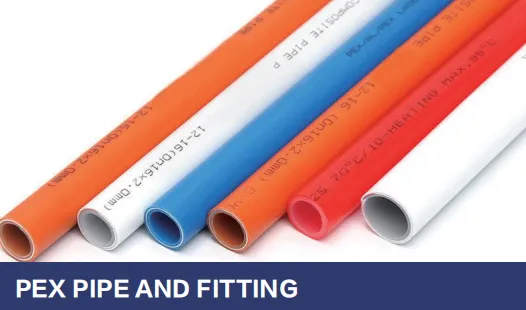
Let's talk about PEX pipes. If you've ever watched a plumber snake a pipe through tight corners in a commercial kitchen or navigate around electrical wiring in a hospital wall, you'll appreciate why flexibility matters. PEX pipes bend without kinking, which means fewer joints (and fewer potential leak points) compared to rigid materials. That's a huge win for contractors working in cramped spaces, where every inch of maneuverability counts. But flexibility is just the start.
PEX is also resistant to the two biggest enemies of plumbing: corrosion and freezing. In commercial buildings like restaurants, where water might contain food particles or cleaning chemicals, corrosion resistance ensures the pipes won't degrade over time. In colder climates, PEX can expand up to 50% of its diameter if water freezes, then shrink back without cracking—a lifesaver for schools or offices in regions with harsh winters. And because PEX doesn't conduct electricity, it's safer to install near electrical systems, a critical feature in hospitals where sensitive medical equipment is everywhere.
To put this into perspective, let's compare PEX with other common plumbing materials. The table below breaks down how PEX stacks up against copper, PPR (polypropylene random copolymer), and traditional PVC pipes in key areas that matter for commercial projects:
| Feature | PEX Pipe | Copper Pipe | PPR Pipe | PVC Pipe |
|---|---|---|---|---|
| Flexibility | High (bends easily, minimal joints) | Low (requires elbows/fittings for turns) | Moderate (stiffer than PEX) | Low (rigid, prone to cracking if bent) |
| Corrosion Resistance | Excellent (no rust or scale buildup) | Poor (susceptible to corrosion in hard water) | Good (resists chemicals, but less durable than PEX) | Good (but not ideal for hot water) |
| Installation Time | Fast (no soldering; crimp or clamp fittings) | Slow (requires soldering and cooling time) | Moderate (heat fusion needed) | Moderate (gluing required, longer drying time) |
| Cost (Material + Labor) | Low to moderate (affordable materials, fast labor) | High (expensive material + skilled labor) | Moderate (material cost similar to PEX, higher labor than PEX) | Low (material cheap, but labor can add up) |
| Best For | Hospitals, schools, offices, high-rise buildings | Historic buildings, low-pressure systems | Residential or small commercial hot water lines | Drainage systems, cold water lines |
As the table shows, PEX isn't just a "good" option—it's often the best option for most commercial projects. But here's the catch: not all PEX pipes are created equal. The difference lies in the quality of the material, the precision of the fittings, and the support provided by the supplier. A PEX pipe and fitting supplier that's serious about commercial needs will offer products that meet ASTM standards (like ASTM F876 for PEX pipes), ensuring they can handle the high pressures and temperatures of commercial use. They'll also provide fittings designed to work seamlessly with their pipes, reducing the risk of leaks that could shut down a project or, worse, a building post-construction.
Commercial projects rarely rely on a single type of pipe. A hospital, for example, might need PEX for potable water lines, PPR pipe and fitting for hot water systems in kitchens, and PVC for drainage. Trying to coordinate orders from multiple suppliers is a logistical nightmare—delays, mismatched specifications, and communication gaps that can derail timelines. That's why the best commercial building materials supplier doesn't limit themselves to PEX; they offer a range of complementary solutions, acting as a one-stop shop for all plumbing needs.
Take PPR pipes, for instance. While PEX excels in flexibility, PPR (a type of plastic pipe) is known for its heat resistance, making it ideal for commercial kitchens or laundry facilities where hot water is constantly in use. A supplier that stocks both PEX and PPR can help contractors choose the right material for each part of the project, ensuring optimal performance without the hassle of dealing with multiple vendors. It's this kind of "big-picture" thinking that turns a supplier into a strategic partner.
Another example: class A fireproof CPL inorganic board might not be a plumbing material, but in hospitals and schools, it's often installed near plumbing systems to meet fire safety codes. A supplier that understands these overlapping needs can advise on how PEX pipes and fireproof boards can work together, ensuring the entire system is compliant and cohesive. It's these small, thoughtful touches that make a difference when deadlines are tight and margins are thin.
So, what exactly do PEX pipe and fitting solutions entail for commercial projects? Let's break it down. First, the pipes themselves: PEX comes in three types (PEX-A, PEX-B, PEX-C), each with slightly different flexibility and durability characteristics. A reputable supplier will help contractors select the right type based on the project's needs. For example, PEX-A, with its high flexibility, is perfect for retrofitting older buildings where walls are already in place, while PEX-B, which is stiffer, might be better for new construction where straight runs are more common.
Then there are the fittings. PEX fittings come in various styles—crimp, clamp, push-to-connect—and the right choice depends on the installation environment. In a hospital operating room, where even a tiny leak could compromise sterility, push-to-connect fittings (which are quick to install and require no tools) might be preferred to minimize installation time and reduce human error. In a school gymnasium, where pipes are exposed in the ceiling, crimp fittings (known for their long-term reliability) could be the safer bet. A supplier that offers a full range of fittings, along with technical support to help crews choose the right ones, is worth their weight in gold.
Customization is another key factor. Commercial projects often have unique specs—unusual pipe lengths, special colors for identification (red for hot water, blue for cold), or fittings designed to connect to existing copper or PVC systems. A supplier that can accommodate these custom requests isn't just providing a product; they're saving contractors from the headache of modifying off-the-shelf parts on-site. Imagine a contractor needing 25-foot PEX pipes instead of the standard 20-foot lengths to reduce joints in a high-rise—being able to get that customization means fewer trips to the hardware store and more time focused on installation.
Let's put this into real-world context. A few years back, a major hospital in Riyadh embarked on a $50 million renovation to expand its emergency department. The goal was to double capacity while keeping the existing hospital fully operational during construction—a tightrope walk of scheduling and precision. The plumbing team faced a big challenge: the old copper pipes in the existing wing were corroding, leading to frequent leaks, and the new wing needed a system that could handle high water pressure and meet strict hygiene standards.
The hospital's contractor turned to a PEX pipe and fitting supplier with experience in healthcare projects. After assessing the needs, the supplier recommended PEX-A pipes for the new wing (for their flexibility, which made installation easier in the tight spaces between exam rooms) and PEX-B for retrofitting the existing wing (for durability against the hospital's hard water). They also provided PPR pipes for the kitchen and laundry areas, where heat resistance was critical. To align with fire safety codes, the supplier coordinated with the team installing class A fireproof CPL inorganic board in the ceiling, ensuring the PEX pipes were routed safely away from potential fire hazards.
The result? The renovation was completed two weeks ahead of schedule, and in the three years since, the hospital has reported zero plumbing-related shutdowns in the renovated areas. The contractor later noted that using PEX saved them roughly 15% on labor costs compared to copper, thanks to faster installation, and the hospital's maintenance team has praised the system's reliability. It's a story that highlights not just the benefits of PEX, but the value of a supplier who takes the time to understand the project's unique challenges.
As commercial construction evolves—with a growing focus on sustainability, smart buildings, and faster project timelines—the role of the PEX pipe and fitting supplier is becoming even more critical. Today's projects demand materials that are not only durable but also eco-friendly; PEX, for example, requires less energy to produce than copper and can be recycled, making it a greener choice. Suppliers that stay ahead of these trends, offering recycled PEX options or pipes designed for use with smart water monitoring systems, will be the ones that thrive.
There's also the issue of supply chain reliability. In recent years, global shortages of construction materials have taught the industry a hard lesson: relying on distant suppliers with unpredictable lead times is a risk. A local or regional supplier with strong relationships with manufacturers, warehouses stocked with inventory, and a track record of meeting deadlines becomes an invaluable asset. When a school project needs 500 feet of PEX pipe in a week to avoid delaying the first day of classes, a supplier that can deliver isn't just a vendor—they're a hero.
At the end of the day, commercial construction is about more than bricks and mortar. It's about creating spaces that serve communities—hospitals that heal, schools that educate, offices that inspire. And at the heart of those spaces is plumbing that works, quietly and reliably. PEX pipes have emerged as a game-changer in this arena, but their true potential is unlocked when paired with a supplier that understands the nuances of commercial projects.
Whether it's providing PEX pipe and fitting solutions that stand up to hospital standards, offering PPR pipes for high-temperature areas, or ensuring materials align with fire safety codes like class A fireproof CPL inorganic board , the right supplier is the bridge between a project's goals and its success. So the next time you walk into a commercial building, take a moment to appreciate the invisible systems that make it work—and remember: behind every drop of water that flows, there's a supplier who cared enough to get it right.
Recommend Products












