
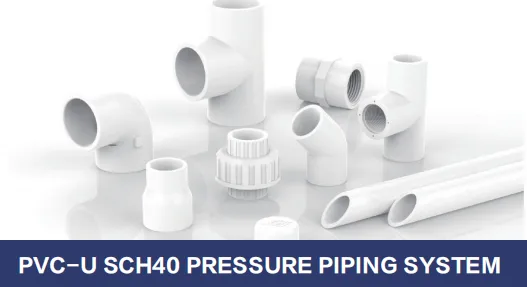
Walk into any bustling commercial space—a five-star hotel with crystal-clear fountains, a sprawling shopping mall with restrooms that never run out of water, or a manufacturing plant where production lines hum 24/7—and you'll likely overlook one of its most critical components: the piping system. It's the silent backbone, the unsung hero that keeps operations flowing, quite literally. For businesses, a reliable piping system isn't just a convenience; it's a lifeline. Downtime from leaks, corrosion, or pressure failures can cost thousands in repairs, lost revenue, and damaged reputations. This is where PVC-U SCH40 pressure piping systems step in, offering a blend of durability, cost-effectiveness, and versatility that's hard to match. Let's dive into why this material has become a go-to choice for commercial building materials suppliers and project managers alike.
First things first: let's decode the jargon. PVC-U stands for "Unplasticized Polyvinyl Chloride," a rigid, strong variant of PVC that's free from the plasticizers that make flexible PVC bendable. SCH40 refers to the pipe's schedule, a standard that indicates its wall thickness and pressure-bearing capacity. In simple terms, a SCH40 pipe is built to handle higher internal pressures than its thinner-walled counterparts (like SCH20), making it ideal for applications where consistent water flow or fluid transfer under pressure is non-negotiable.
But what truly sets PVC-U SCH40 apart? Let's break down its key properties:
Walk into a pipes fittings supplier's warehouse, and you'll see shelves lined with options: PPR pipes (popular for hot water), UPVC DWV pipes (designed for drainage, not pressure), even traditional metal pipes. So why does PVC-U SCH40 stand out? Let's compare it to a few common alternatives to see the difference.
| Material | Pressure Rating (Typical) | Corrosion Resistance | Installation Ease | Long-Term Cost | Best For |
|---|---|---|---|---|---|
| PVC-U SCH40 | 150-200 psi (varies by size) | Excellent (no rust/scaling) | High (lightweight, solvent-welded) | Low (minimal maintenance) | Commercial water supply, industrial fluid transfer, municipal irrigation |
| PPR (Polypropylene Random Copolymer) | 100-160 psi (at 20°C) | Good (but sensitive to UV light) | Moderate (heat-fused joints) | Moderate (higher upfront cost) | Residential hot/cold water, low-pressure commercial |
| UPVC DWV | Low (not designed for pressure) | Good | High | Low | Drainage, vents, non-pressurized wastewater |
| Metal (Steel/Galvanized Iron) | High (500+ psi) | Poor (prone to rust, scaling) | Low (heavy, requires threading/welding) | High (frequent maintenance, replacement) | High-pressure industrial, fire sprinklers (specialized coatings needed) |
The table tells the story: PVC-U SCH40 hits the sweet spot for most commercial needs. It handles higher pressures than PPR, avoids the corrosion issues of metal, and unlike UPVC DWV, it's built specifically for systems where pressure matters. For a commercial building materials supplier, this versatility means fewer SKUs to stock and happier clients who don't have to compromise on performance.
Now, let's get practical. Where exactly is PVC-U SCH40 making a difference in the commercial world? The answer is: almost everywhere fluid needs to move under pressure.
Imagine a luxury hotel with 500 rooms, each needing 24/7 access to hot and cold water. Or a shopping mall with dozens of restrooms, food courts, and fountains. These spaces demand consistent water pressure—no dribbling showers or weak handwashes. PVC-U SCH40 excels here because it maintains flow rates even over long distances, and its smooth interior prevents buildup that can slow water down. Plus, since it doesn't corrode, there's no risk of rust affecting water quality—a must for businesses that prioritize guest satisfaction.
In industrial settings, the name of the game is reliability. A food processing plant might use PVC-U SCH40 to transfer cleaning solutions or non-acidic ingredients; a textile factory could rely on it for dyeing processes (thanks to its chemical resistance). Even in automotive plants, where coolants and lubricants are constantly on the move, SCH40 pipes hold their own. Unlike metal, they don't react with mild chemicals, and their lightweight design makes retrofitting or expanding production lines easier—saving time and labor costs.
Cities and towns have some of the most demanding piping needs. Municipal water distribution systems, for example, need pipes that can handle varying pressure (from water towers to street-level taps) and resist the elements. PVC-U SCH40 is a favorite here for secondary water lines—think residential neighborhoods, parks, or irrigation systems for public gardens. It's also used in stormwater management, where its durability stands up to heavy rainfall and debris.
Ever wondered how large commercial buildings stay cool in the scorching summer? Chilled water systems, which circulate cold water through air handlers, are key. PVC-U SCH40 is often used here for secondary chilled water lines and condensate drains. Its insulation properties help keep water cold, reducing energy loss, and its resistance to condensation-related corrosion means fewer repairs over time. For HVAC contractors, this translates to systems that are easier to install and maintain.
Let's take a look at a project that brought these benefits to life. A mid-sized hotel in Riyadh, Saudi Arabia, was undergoing a full renovation in 2023. The existing piping system, a mix of galvanized steel and older UPVC, was prone to leaks—guests had complained about inconsistent water pressure in showers, and maintenance crews were constantly fixing rust-related clogs. The hotel's management team, working with a local commercial building materials supplier, decided to replace the entire water supply system with PVC-U SCH40.
The results? Installation time dropped by 30% compared to metal pipes (thanks to PVC-U's lightweight design and solvent welding, which is faster than threading steel). Over the first year post-renovation, maintenance calls related to leaks or pressure issues fell by 80%. The hotel's engineer noted, "We used to spend 10 hours a week just checking for rust in the old pipes. Now, we barely think about the piping system—it just works." Best of all, the upfront cost was 25% lower than switching to stainless steel, and the supplier estimated the system would last at least 50 years with minimal upkeep.
While PVC-U SCH40 is a star performer, it's not a one-size-fits-all solution. Here are a few tips to ensure you get the most out of it:
As commercial projects grow more complex—with higher demands for sustainability, cost-efficiency, and resilience—PVC-U SCH40 continues to evolve. Manufacturers are developing eco-friendly variants with recycled materials, and suppliers are offering pre-insulated pipes for energy-saving applications. For businesses, this means even more options to tailor the system to their needs.
At the end of the day, a piping system is an investment. It's about more than just moving water or fluids—it's about peace of mind. For commercial building materials suppliers, contractors, and business owners, PVC-U SCH40 delivers exactly that: a system you can set and forget, knowing it will keep up with the demands of your business for decades to come. So the next time you're planning a project, ask your supplier about PVC-U SCH40. Chances are, it's the silent solution you've been looking for.
Recommend Products












