
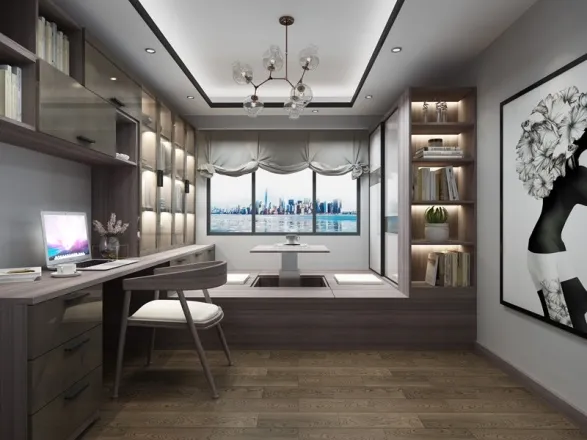
Bridging Tradition and Modern Business Environments
When we hear "commercial spaces," our minds jump to sterile offices, fluorescent lighting, and cookie-cutter designs. But what if commercial environments could offer warmth, cultural depth, and authentic human connection? This is where tatami design solutions are revolutionizing how we approach conference rooms and tea rooms in modern business settings, particularly in building material applications.
Commercial design isn't just about profit margins and efficiency metrics. At its core, it's about creating spaces where people feel inspired to collaborate, connect, and create lasting value. Tatami brings that missing human element into corporate environments.
What makes a space truly commercial? It's more than just financial transactions. Commercial spaces serve as:
Where partnerships form and trust builds through face-to-face interactions
Environments designed to spark innovation and collaborative thinking
Physical manifestations of a company's values and identity
The traditional Japanese tatami mat—often made from woven rush grass over compressed wood cores—might seem like an unlikely solution for corporate environments. But its unique properties solve multiple modern commercial challenges. Tatami installation requires careful consideration of building material requirements.
Imagine walking into your next investor meeting not to a cold glass table under fluorescent lights, but to a tatami-floored room with natural light filtering through shoji screens. The transformation begins immediately:
International firms like Mitsui have incorporated Tatami Mats in their overseas branches to provide authentic cultural experiences during negotiations.
The corporate tea room isn't about replacing coffee machines with teapots. It's about creating intentional spaces for the conversations that matter:
The Japanese tea ceremony principles applied to modern business: mindfulness, respect, purity and tranquility
Tatami tea rooms create neutral territory for difficult conversations
Silicon Valley tech companies report 42% more productive brainstorming sessions in tatami spaces versus traditional conference rooms.
Unlike conventional building materials, Tatami Mats evolve with use. Their scent changes subtly, the texture softens slightly—these subtle transformations create subconscious connections to the space that synthetic materials can't replicate.
Transitioning to tatami solutions doesn't require full Japanese architecture. Smart integration strategies include:
| Approach | Implementation | Commercial Benefit |
|---|---|---|
| Tatami Islands | Raised tatami platforms in conventional rooms | 50% lower implementation costs |
| Hybrid Flooring | Tatami zone transitions to wood/hard flooring | Accessibility compliance achieved |
| Seasonal Transformation | Interchangeable elements for different seasons | Reinvestment savings versus renovations |
These architectural components require specialized building material suppliers and careful consideration in construction documents.
The real business value emerges in measurable outcomes:
Maintenance routines differ from conventional flooring and require coordination with building maintenance teams.
Emerging applications are expanding tatami's commercial possibilities:
Thin-sensor tatami for posture monitoring or occupancy analytics
Modular designs that allow partial replacement
Short meditation sessions during work hours
These developments require building material innovations like moisture-proof tatami panels and integrated lighting systems.
The commercial spaces of tomorrow won't shout "business." They'll whisper "welcome," "create," and "connect"—through natural materials like tatami that engage our senses while serving business objectives. The boardrooms with soul are already here; the question isn't about cost, but about missed opportunities.
As we look toward commercial spaces that prioritize human experience as much as profit margins, tatami solutions represent more than an interior design trend. They signify a fundamental shift in how we approach business environments.
Recommend Products












