
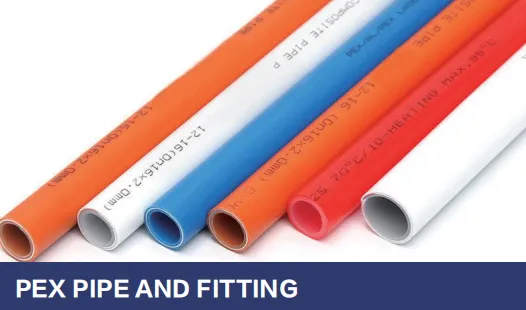
Building a Greener Future, One Pipe at a Time—How Coloria's PEX Solutions Are Transforming Residential and Commercial Construction
Walk into any modern construction site these days, and you'll notice a quiet but powerful shift happening. Builders, architects, and even homeowners are no longer just focused on "getting the job done"—they're asking bigger questions: How does this building impact the planet? Will these materials keep occupants healthy? Can we reduce waste without sacrificing quality? This is the heart of the green building movement, a global push to create structures that are not just functional, but sustainable, energy-efficient, and kind to both people and the environment.
At the center of this revolution is the choice of building materials. From flooring to wall panels, every component plays a role in a project's carbon footprint, durability, and long-term sustainability. And when it comes to one of the most critical systems in any building—plumbing—one material has emerged as a game-changer: PEX pipe. Flexible, durable, and inherently eco-friendly, PEX (cross-linked polyethylene) is redefining what it means to build sustainably. And leading the charge in bringing this innovation to life is Coloria, a trusted name in the industry and a dedicated pex pipe and fitting supplier with a mission to make green building accessible to everyone.
But Coloria isn't just another supplier. As a residential building materials supplier and commercial building materials supplier , they've positioned themselves as a one-stop partner for projects that prioritize sustainability. Whether you're constructing a cozy eco-home or a sprawling hospital campus, their PEX pipes and fittings are designed to meet the unique demands of modern green building—without compromising on performance, safety, or cost-effectiveness. Let's dive into why PEX has become the material of choice for forward-thinking builders, and how Coloria is leading the way.
If you're new to green building, you might be wondering: What exactly is PEX pipe, and how is it different from the copper or CPVC pipes I'm used to? Let's start with the basics. PEX is a type of plastic piping made from cross-linked polyethylene, a material that's been treated to create strong chemical bonds between its molecules. This cross-linking process gives PEX several unique advantages: it's flexible (meaning it can bend around corners without the need for elbow joints), resistant to corrosion, and able to handle extreme temperatures—from freezing cold to scalding hot water.
But what really sets PEX apart is its sustainability profile. Traditional copper pipes, for example, require massive amounts of energy to mine and manufacture. CPVC, while cheaper, is prone to cracking over time and often contains harmful chemicals. PEX, on the other hand, is made from recycled materials in many cases, uses significantly less energy to produce, and has a lifespan of up to 50 years—meaning fewer replacements and less waste over time. For builders aiming for LEED certification or other green building standards, these factors aren't just "nice to have"—they're essential.
Coloria's PEX pipes take this a step further. Their manufacturing process prioritizes low carbon emissions, and they source raw materials from suppliers who share their commitment to ethical and sustainable practices. The result? A product that doesn't just meet industry standards—it exceeds them. "We didn't just want to sell pipes," says Maria Gonzalez, Coloria's Sustainability Director. "We wanted to create a solution that helps builders achieve their green goals without cutting corners. PEX was the obvious choice because it checks all the boxes: durable, efficient, and kind to the planet."
Let's get specific: What makes Coloria's PEX pipes stand out in a crowded market? It starts with their commitment to quality. Every pipe and fitting undergoes rigorous testing to ensure it meets strict safety and durability standards. But beyond that, their focus on sustainability is woven into every step of the process—from raw material selection to manufacturing to packaging.
First, the materials. Coloria uses high-quality, recycled polyethylene whenever possible, reducing the demand for virgin plastic and keeping waste out of landfills. Their pipes are also free from lead, BPA, and other harmful chemicals, making them safe for drinking water systems—a critical feature for residential projects where occupant health is a top priority. "Parents shouldn't have to worry about what's in their tap water," says John Chen, Coloria's Product Manager. "Our PEX pipes are designed to keep water clean and safe, from the source to the faucet."
Then there's the manufacturing process. Coloria's factories run on renewable energy—solar panels and wind turbines power much of their production line—slashing their carbon footprint. They also prioritize water conservation, recycling up to 90% of the water used in manufacturing. Even the packaging is eco-friendly: pipes are wrapped in recyclable cardboard instead of plastic, and fittings come in biodegradable bags. It's a holistic approach that ensures sustainability isn't just a buzzword—it's a practice.
But what really matters to builders is performance. Coloria's PEX pipes are built to last. Their flexibility means they can be installed with fewer joints, reducing the risk of leaks—a common issue with rigid copper or CPVC pipes. They're also resistant to scale buildup and corrosion, which means less maintenance and longer system life. For commercial projects like hospitals or schools, where downtime is costly, this durability is a game-changer. "We recently supplied PEX pipes for a new pediatric hospital," Chen recalls. "Their main concern was reliability—they couldn't afford a plumbing issue disrupting care. Our pipes delivered, and we're proud to say that system is still running smoothly three years later."
Still not convinced that PEX is the right choice for your green building project? Let's look at the data. Below is a comparison of Coloria's PEX pipes with traditional copper and CPVC pipes, focusing on key sustainability and performance metrics. The results might surprise you:
| Metric | Coloria PEX Pipes | Traditional Copper Pipes | CPVC Pipes |
|---|---|---|---|
| Carbon Footprint (Manufacturing) | 30% lower than copper, 15% lower than CPVC | High (energy-intensive mining/refining) | Moderate (plastic production emits CO2) |
| Installation Energy Use | Low (flexible, fewer joints, no soldering) | High (requires soldering with torches) | Moderate (rigid, more joints needed) |
| Expected Lifespan | 50+ years | 20-50 years (prone to corrosion) | 25-40 years (brittle in cold temps) |
| Recyclability | 100% recyclable at end of life | Recyclable, but recycling process is energy-heavy | Limited recyclability (often ends in landfills) |
| Water Efficiency | Smooth interior reduces flow resistance, saving water pump energy | Prone to scale buildup, increasing flow resistance | Moderate flow resistance, can degrade over time |
The takeaway? Coloria's PEX pipes outperform traditional materials across the board when it comes to sustainability. But they don't just help the planet—they help builders save money, too. The lower installation costs (thanks to fewer joints and no need for specialized tools like torches), reduced maintenance, and longer lifespan mean that PEX often pays for itself within a few years. For residential projects, this translates to happier homeowners with lower utility bills. For commercial projects, it means better ROI and easier compliance with green building certifications like LEED or BREEAM.
Numbers tell a story, but real projects tell a better one. Let's take a look at how Coloria's PEX pipes have transformed two recent green building projects—one residential, one commercial—showcasing their versatility and impact.
EcoVillage at Spring Creek is a 50-home development in Portland, Oregon, designed to be one of the most sustainable communities in the Pacific Northwest. Every home is LEED Platinum certified, with features like solar panels, rainwater harvesting systems, and energy-efficient appliances. When it came to plumbing, the developers, GreenSpaces Builders, knew they needed a solution that aligned with their eco-friendly mission.
"We evaluated copper, CPVC, and PEX, and Coloria's PEX pipes were the clear winner," says Sarah Lopez, Project Manager at GreenSpaces. "The lower carbon footprint was a big factor, but we were also impressed by the flexibility. Our homes have unique layouts, and PEX made it easy to route pipes around obstacles without extra joints. Installation was 30% faster than with copper, which saved us time and labor costs."
Three years later, the results speak for themselves. The homes' plumbing systems have had zero leaks, and homeowners report lower water bills thanks to the pipes' smooth interior, which reduces flow resistance. "One homeowner told me her water pressure is better than in her old house, and she's saving $20 a month on utilities," Lopez adds. "That's the kind of impact we wanted—sustainability that improves quality of life."
Hospitals have unique plumbing needs: they require reliable, sanitary systems that can handle high water pressure and frequent temperature changes. When Riverview Medical Center in Chicago decided to expand its pediatric wing, they turned to Coloria for a solution that would meet strict health and safety standards while supporting their goal of becoming a "green hospital."
"Hospitals can't afford plumbing failures—they risk patient health and disrupt care," says Dr. Michael Torres, Chief Facilities Officer at Riverview. "We needed pipes that were durable, easy to clean, and free from chemicals that could leach into the water. Coloria's PEX pipes checked all those boxes, and their sustainability credentials aligned with our commitment to reducing our carbon footprint."
The expansion included 12 new patient rooms, a play area, and a nurses' station—all with plumbing systems using Coloria's PEX pipes and fittings. The flexibility of PEX was especially valuable in the tight spaces of the medical wing, where traditional rigid pipes would have required extensive wall cutting. "Installation was minimally invasive, which meant less disruption to ongoing hospital operations," Torres notes. "And because PEX is resistant to corrosion, we won't have to replace the pipes for decades—saving us money and reducing waste in the long run."
Today, Riverview's pediatric wing is not only a safe, welcoming space for kids—it's also a model of sustainable healthcare design. "Our patients' families love knowing we're doing our part for the planet," Torres says. "And as a facility manager, I love that we can focus on patient care instead of plumbing problems. Coloria delivered exactly what we needed."
While PEX pipes are a cornerstone of Coloria's offerings, they're more than just a pex pipe and fitting supplier . As a one-stop architectural solution provider , they understand that green building requires a holistic approach—and they've curated a range of sustainable products to meet every need, from walls to flooring to fixtures.
Take, for example, their class a fireproof cpl inorganic board for hospital and school supplier line. These boards are designed for high-traffic, safety-critical spaces like hospitals and schools, offering superior fire resistance (Class A rating) and zero VOC emissions—making them ideal for green projects where indoor air quality is a priority. "We often pair these boards with our PEX pipes on healthcare projects," says Maria Gonzalez. "It creates a system that's both safe and sustainable, which is exactly what clients like Riverview Medical Center are looking for."
For residential projects, Coloria also offers eco-friendly wall panels, like their bamboo charcoal board wall panels. Made from recycled bamboo fibers and activated charcoal, these panels absorb odors and improve indoor air quality—perfect for eco-conscious homeowners. And their porcelain slab tiles for walls combine the beauty of natural stone with the durability of porcelain, reducing the need for frequent replacements and lowering long-term waste.
"We believe in making green building easy," Gonzalez explains. "Instead of juggling multiple suppliers, builders can get everything they need from us—all with the same commitment to sustainability. It saves time, reduces logistical headaches, and ensures every component works together seamlessly."
At Coloria, sustainability isn't just about the materials they sell—it's about their entire business model. From their factories to their partnerships, they're committed to reducing their environmental impact and driving positive change in the industry.
One example is their "Circular Pipes" program, which encourages builders to return old PEX pipes for recycling. Coloria processes the recycled material and uses it to make new pipes, closing the loop and keeping waste out of landfills. "We've recycled over 500,000 pounds of PEX since launching the program two years ago," Gonzalez says. "It's a small step, but it shows that sustainability is a cycle, not a one-time effort."
They also prioritize ethical sourcing, working only with suppliers who meet strict labor and environmental standards. "We visit every supplier's facility to ensure they treat their workers fairly and minimize their own carbon footprint," Gonzalez adds. "Our supply chain is a reflection of our values, and we don't compromise on that."
Certifications matter too. Coloria's PEX pipes are certified by NSF International (for drinking water safety), ASTM International (for performance), and GreenGuard (for low chemical emissions). They're also a proud member of the U.S. Green Building Council (USGBC), actively contributing to the development of green building standards.
As the green building movement continues to grow, Coloria isn't resting on its laurels. They're investing heavily in research and development, exploring new ways to make their PEX pipes even more sustainable. "We're experimenting with bio-based polyethylene, made from plant sugars instead of fossil fuels," Chen reveals. "Early tests are promising—if we can scale it, we could reduce our carbon footprint by another 20%."
They're also expanding their product line to meet emerging needs. "We're seeing more demand for smart plumbing systems that monitor water usage and detect leaks in real time," Chen says. "We're developing PEX pipes with built-in sensors that connect to building management systems, helping clients save even more water and energy."
But perhaps most importantly, Coloria is committed to education. They host workshops for builders and architects, teaching them about the benefits of PEX and other sustainable materials. "Sustainability can feel overwhelming, especially for small contractors," Gonzalez says. "We want to be a resource, not just a supplier. The more we empower builders to make green choices, the faster we'll all reach a more sustainable future."
The green building revolution is here, and it's not slowing down. As more projects aim for sustainability, the choice of materials will only grow more critical. PEX pipes, with their low carbon footprint, durability, and performance, are leading the way—and Coloria is at the forefront, proving that sustainability and quality can go hand in hand.
Whether you're building a single-family home or a sprawling commercial complex, the pipes you choose matter. They're the silent workhorses of any building, carrying water, energy, and life itself. With Coloria's PEX pipes, you're not just installing a plumbing system—you're investing in a greener, healthier, more sustainable future.
So the next time you walk onto a construction site, remember: every material choice is a step toward the kind of world we want to build. Choose wisely. Choose sustainably. Choose Coloria.
Recommend Products












