

Redefining durability and aesthetics in extreme environments
Walk through the streets of Riyadh in July, and you'll feel the sun's intensity bouncing off concrete walls like a relentless drumbeat. In Jeddah, the coastal humidity wraps around buildings like a damp blanket, while in Dammam, sandstorms hurl grit that sands down exteriors year after year. For anyone involved in building design or construction across Saudi Arabia, these aren't just weather anecdotes—they're daily battles against nature. Traditional wall materials, once considered reliable, often crumble under this onslaught: natural stone cracks from thermal expansion, wood warps in humidity, and even concrete succumbs to moisture seepage over time. The question isn't just about building—it's about building to last in a climate that tests every material's limits.
As a leading saudi arabia building materials supplier and one-stop architectural solution provider , Coloria has witnessed these struggles firsthand. Contractors complain of skyrocketing maintenance costs; architects lament compromising design vision for durability; homeowners watch as their once-beautiful facades fade or crack. It was this cycle of frustration that led Coloria to develop a game-changing solution: PU stone wall panels engineered specifically for the Middle East's unique climate. These aren't just another wall product—they're a rethink of what wall solutions can be, blending the timeless appeal of stone with the resilience modern buildings demand.
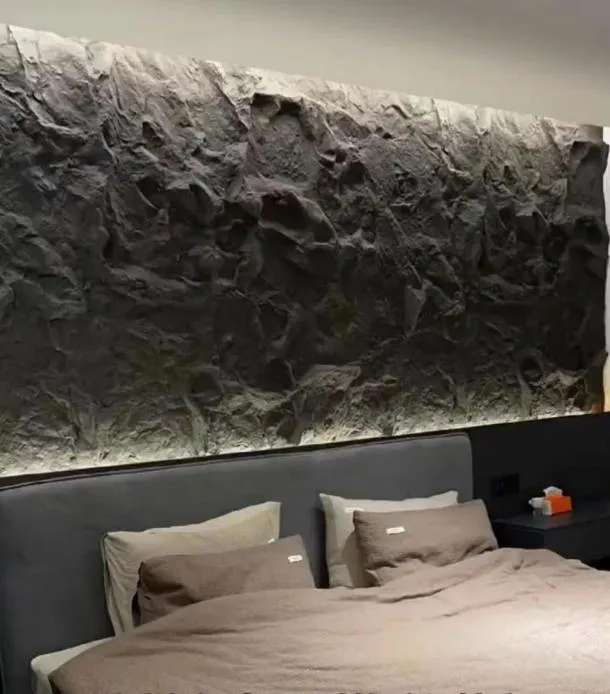
Polyurethane (PU) might not sound glamorous, but when combined with natural stone aggregates and advanced additives, it becomes a material that outperforms traditional cladding in nearly every category. Coloria's pu stone wall panel solutions start with a lightweight PU core, reinforced with stone particles to mimic the texture and color of natural stone—think limestone, granite, or travertine—without the weight or brittleness. At just 8–12 kg per square meter, these panels are up to 80% lighter than natural stone, reducing structural load and cutting installation time dramatically. But their real strength lies in how they're engineered to thrive where others fail.
In a region where air conditioning accounts for 60% of building energy use, thermal performance isn't a luxury—it's a necessity. PU stone panels act as a thermal barrier, with a conductivity rate of 0.022–0.030 W/m·K (compared to 2.0–3.0 W/m·K for natural stone). This means they slow heat transfer from the scorching exterior to the interior, keeping spaces cooler and reducing AC reliance. A recent project in Riyadh using Coloria's panels reported a 32% drop in cooling costs within the first year. "Clients used to think 'stone look' meant 'high energy bills,'" says a Coloria product specialist. "Now we're showing them it can mean the opposite."
Coastal cities like Jeddah and Bahrain know the enemy is moisture. Traditional porous materials absorb humidity, leading to mold, mildew, and structural rot. Coloria's PU panels feature a closed-cell structure that repels water, making them ideal for both exterior cladding and interior walls solutions in humid areas. Unlike bamboo charcoal boards or MCM cladding, which can trap moisture over time, PU stone panels shed water and resist mold growth—a critical advantage for hospitals, schools, and residential buildings alike.
Middle Eastern days bake walls in 50°C heat; nights can drop to 20°C, causing materials to expand and contract violently. Rigid cladding like natural stone or concrete cracks under this stress, but PU stone panels flex. Their elasticity allows them to move with temperature changes, preventing cracks and maintaining structural integrity. This flexibility also makes them perfect for curved surfaces or modern architectural designs, giving architects the freedom to create without worrying about material limitations.
Sandstorms aren't just a nuisance—they're abrasive. Fine sand particles wear down exposed surfaces, while UV rays fade colors and degrade materials. Coloria's panels are coated with a UV-resistant layer that locks in color, and their tough outer skin resists abrasion. After a particularly severe sandstorm in Riyadh last year, a commercial building using Coloria's panels required zero touch-ups, while neighboring structures with traditional cladding needed repainting and repairs. "We designed these panels to look as good on day 10,000 as they do on day one," says a Coloria engineer.
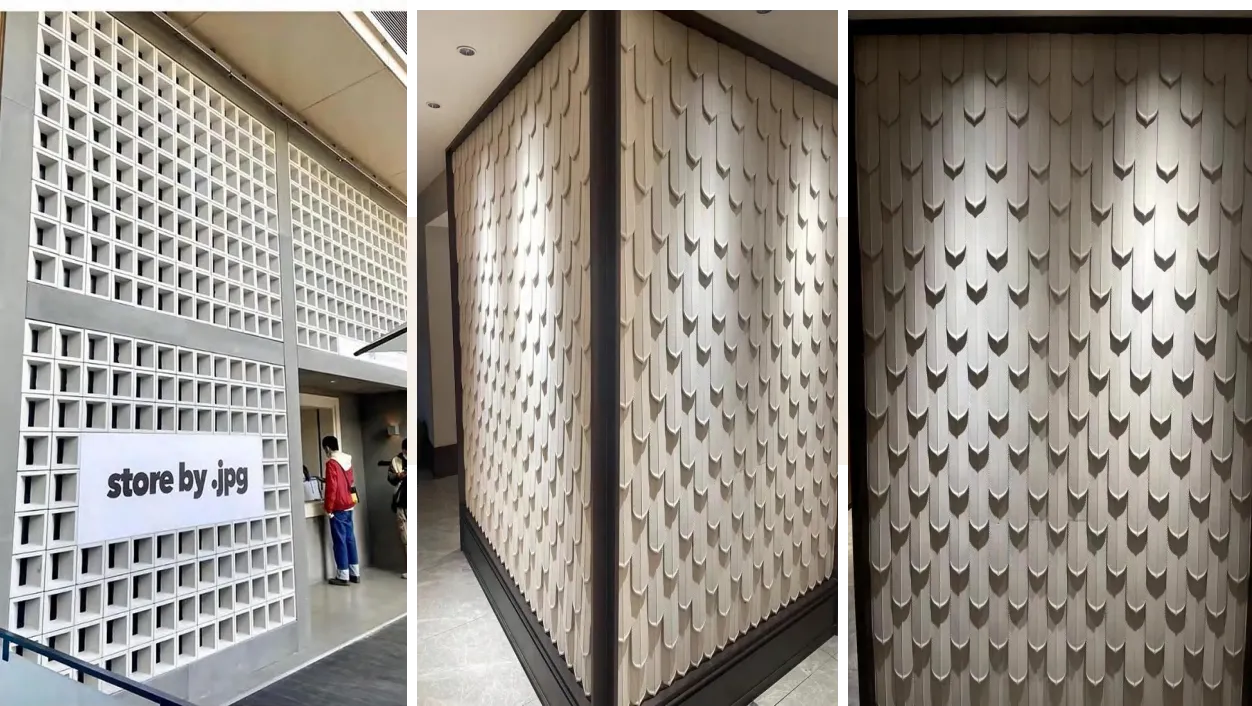
While pu stone wall panel supplier might be what puts Coloria on the map, the company's strength lies in being a true one-stop architectural solution provider . Whether you're building a luxury villa, a hospital, or a commercial complex, Coloria offers integrated solutions that simplify projects and ensure consistency. Need fire-resistant interior walls? Their class A fireproof CPL inorganic boards meet hospital and school safety standards. Renovating a kitchen? Explore their porcelain slab tiles or bamboo charcoal board wall panels for a modern, durable finish. Even specialized needs like PVC pipes, flooring, or custom furniture are covered—all backed by local expertise and global quality standards.
| Material | Weight (kg/m²) | Thermal Conductivity (W/m·K) | Moisture Resistance | Installation Time (100m²) | Est. Lifespan (Years) |
|---|---|---|---|---|---|
| Coloria PU Stone Panel | 8–12 | 0.022–0.030 | Excellent (Waterproof) | 2–3 Days | 30+ |
| Natural Granite | 45–55 | 2.5–3.0 | Poor (Needs Sealing) | 7–10 Days | 20–25 |
| MCM Cladding | 5–7 | 0.040–0.050 | Good (Prone to Delamination) | 4–5 Days | 15–20 |
| Bamboo Charcoal Board | 14–18 | 0.060–0.080 | Fair (Absorbs Over Time) | 5–6 Days | 10–15 |
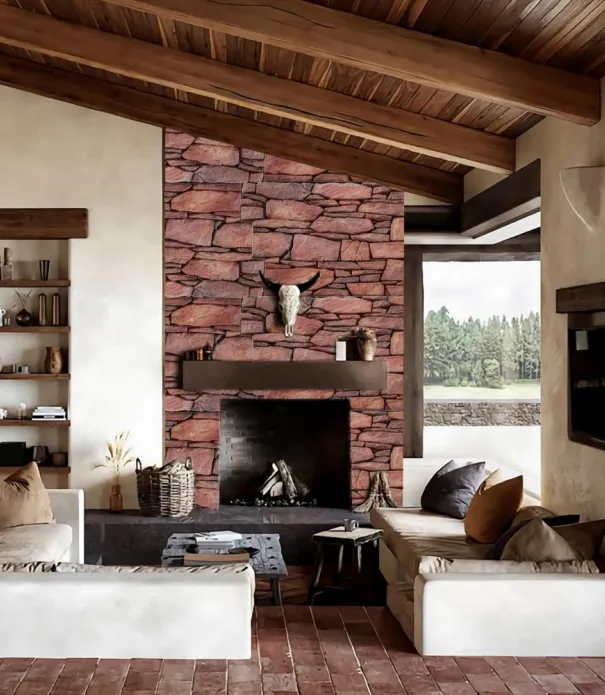
Talk is cheap—results matter. Take the Al-Majd Residences in Jeddah, a 20-building complex that switched to Coloria's PU stone panels after initial brick cladding failed within five years. "We were replacing cracked bricks and repainting every 18 months," says the project manager. "After installing Coloria's panels, maintenance requests dropped by 90%. Even better, residents say their apartments stay 5–7°C cooler in summer." Similar success stories dot the region: a Riyadh hospital using Coloria's fireproof CPL boards alongside PU panels; a Dubai hotel with curved exterior walls clad in custom-colored PU stone; a school in Dammam where easy installation meant classes weren't disrupted during renovation.
For commercial projects, the savings are even more dramatic. A shopping mall in Riyadh reported a 27% reduction in energy costs after recladding with PU panels, while a restaurant chain standardized on Coloria's solutions to ensure brand consistency across locations. "When you can get the same stone look in Jeddah, Riyadh, and Dammam, with zero variation in quality or performance, that's a game-changer for franchises," notes a Coloria sales director.
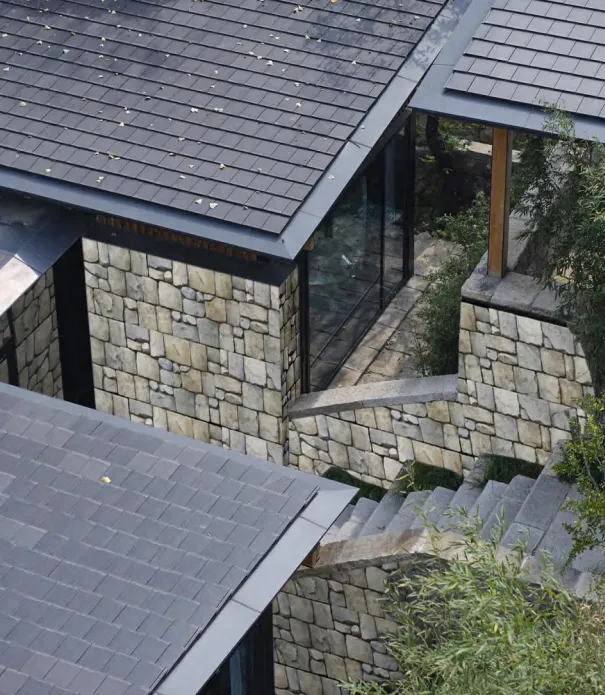
In a market flooded with generic building materials, Coloria stands out by prioritizing local needs. As a Saudi-based supplier, they understand the nuances of regional construction codes, climate patterns, and design preferences. Their PU stone panels are tested in local labs to withstand 55°C heat, 95% humidity, and 120 km/h sandstorms—conditions that would destroy lesser products. Plus, their one-stop model means clients don't juggle multiple suppliers: order walls, flooring, pipes, and even custom furniture from a single partner, with consistent quality and delivery timelines.
But don't just take their word for it. "We've worked with suppliers from Europe and Asia, but none understand the Middle East like Coloria," says an architect specializing in sustainable design. "Their PU panels aren't just imported—they're engineered here, for here. That local knowledge makes all the difference."
As the region continues to urbanize, with mega-projects like NEOM and the Red Sea Development underway, the demand for resilient, sustainable building materials will only grow. Coloria's PU stone wall panels represent the future: materials that don't just survive the climate, but enhance buildings' performance, aesthetics, and value. Whether you're an architect pushing design boundaries, a contractor focused on efficiency, or a homeowner wanting peace of mind, the choice is clear: stop fighting the Middle East's climate, and start building with it.
Coloria: Where Innovation Meets Resilience—Building the Middle East, One Wall at a Time.
Recommend Products











