
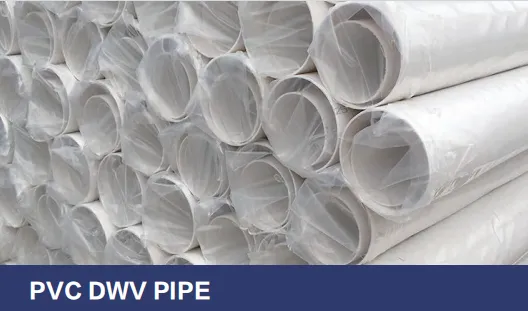
In the bustling world of construction, where every beam, brick, and pipe shapes the spaces we live, work, and heal in, there's a quiet revolution happening. It's not just about building taller or faster—it's about building smarter, with the planet in mind. As a leading building material supplier and one-stop architectural solution provider , Coloria has long understood that the future of construction lies in sustainability. Today, we're diving deep into one of our most impactful contributions to this movement: our PVC DWV pipe solutions . These unassuming yet critical components are redefining how we approach plumbing, proving that even the "hidden" parts of a building can lead the charge toward a greener tomorrow.
Let's start with a truth that's easy to overlook: the pipes running behind your walls and under your floors have a bigger environmental footprint than you might think. For decades, builders relied on materials like cast iron, clay, or even concrete for drain, waste, and vent (DWV) systems. While these materials served their purpose, their environmental cost was steep. Cast iron pipes, for example, require massive amounts of energy to mine and smelt iron ore—a process that releases significant carbon emissions. Clay pipes, though natural, are heavy and brittle, leading to high transportation emissions and frequent breakages during installation. Worse, once these traditional pipes reach the end of their lifespan (often just 20-30 years for cast iron), they're rarely recyclable, ending up in landfills where they take centuries to decompose.
The consequences aren't just ecological—they're financial, too. A 2023 study by the International Plumbing Association found that leaky, corroded pipes in commercial buildings waste an average of 10,000 gallons of water per year per structure. For residential buildings, that number drops but still adds up: a single cracked clay pipe can lose 200 gallons of water daily, driving up utility bills and straining local water resources. In a world where 2.2 billion people lack access to safe drinking water, this waste is unacceptable. It was this cycle of inefficiency and environmental harm that inspired Coloria to reimagine DWV systems from the ground up.
At Coloria, we don't see ourselves as just a PVC DWV pipe supplier —we see ourselves as partners in building a sustainable future. Our journey into sustainable plumbing began over a decade ago, when our team of engineers asked a simple question: "What if we could create a DWV system that's kind to the planet and kind to builders, homeowners, and businesses?" The answer was our PVC DWV pipe solutions—a line of products designed to address every pain point of traditional materials while slashing environmental impact.
But sustainability, for us, isn't a buzzword. It's a commitment woven into every step of our process, from raw material sourcing to production to end-of-life recycling. We believe that true sustainability means considering the entire lifecycle of a product, not just one "green" feature. That's why our PVC DWV pipes aren't just made with recycled materials—they're designed to be recycled again. They're not just lightweight to save on transportation costs—they're engineered to last decades, reducing the need for frequent replacements. And they're not just compliant with industry standards—they're setting new ones for eco-friendly performance.
Let's get technical—but in a way that matters to you. Coloria's PVC DWV pipes are made from polyvinyl chloride (PVC), a material often misunderstood in the sustainability conversation. The truth is, PVC itself isn't the problem; it's how it's traditionally made and disposed of. Coloria's approach flips the script. Here's how:
Producing our PVC DWV pipes requires up to 60% less energy than manufacturing cast iron pipes, according to third-party lifecycle assessments. How? We use advanced extrusion technology that minimizes heat waste, and we source our PVC resin from suppliers who prioritize renewable energy in their own production. The result? Each meter of Coloria PVC DWV pipe has a carbon footprint of just 0.8 kg CO2e—compared to 3.2 kg CO2e for cast iron and 2.1 kg CO2e for clay.
We're committed to closing the loop on plastic waste. That's why all our PVC DWV pipes contain at least 25% post-consumer recycled (PCR) plastic, sourced from plastic bottles and packaging that would otherwise end up in oceans or landfills. This not only reduces our reliance on virgin materials but also diverts thousands of tons of plastic from the environment annually. And because PVC is inherently durable, adding recycled content doesn't compromise performance—in fact, our PCR-blended pipes meet the same strength and safety standards as those made with virgin resin.
Ever tried to lift a cast iron pipe? It's not easy—and that weight comes with a hidden cost: fuel. A standard 10-foot cast iron DWV pipe weighs around 75 pounds; a Coloria PVC DWV pipe of the same size? Just 12 pounds. This drastic weight reduction means we can fit 5x more pipes per truckload, slashing transportation emissions by up to 70%. For a large commercial project requiring 1000 meters of DWV piping, that's the equivalent of taking 15 cars off the road for a year.
Traditional metal pipes corrode over time, especially when exposed to harsh chemicals (like those in cleaning products) or acidic wastewater. A corroded pipe doesn't just leak—it needs to be replaced, creating waste and requiring new materials. Coloria's PVC DWV pipes are inherently corrosion-resistant. They don't rust, pit, or degrade when exposed to common household or commercial chemicals, extending their lifespan to 50+ years—double that of cast iron. Fewer replacements mean less demand for new materials and less waste in landfills.
| Feature | Traditional Cast Iron Pipes | Traditional Clay Pipes | Coloria PVC DWV Pipes |
|---|---|---|---|
| Carbon Footprint (per meter) | 3.2 kg CO2e | 2.1 kg CO2e | 0.8 kg CO2e |
| Weight (10-foot pipe) | 75 lbs | 60 lbs | 12 lbs |
| Expected Lifespan | 20-30 years | 25-35 years | 50+ years |
| Recyclability | Low (often landfilled) | Low (brittle, hard to process) | High (100% recyclable at end-of-life) |
| Installation Energy Use | High (requires heavy machinery) | High (brittle, requires careful handling) | Low (lightweight, easy to cut/join by hand) |
One of the things we love most about our PVC DWV pipe solutions is their versatility. Whether you're building a 50-story commercial tower, a cozy residential complex, or a state-of-the-art hospital, these pipes deliver consistent sustainability and performance. Let's take a closer look at how they shine in different settings:
For homeowners, peace of mind is everything—and that includes knowing your plumbing won't let you down. Coloria's PVC DWV pipes are quiet (no more clanging cast iron!), resistant to clogs (thanks to smooth inner walls that prevent debris buildup), and easy to install, reducing labor costs for homebuilders. In a typical 3-bedroom home, switching to our PVC DWV pipes cuts the plumbing carbon footprint by 40% and lowers long-term maintenance costs by up to $3,000 over 20 years.
Commercial buildings—think offices, malls, or hotels—see heavy use of plumbing systems. From busy restrooms to restaurant kitchens, DWV pipes here need to handle high volumes of waste without faltering. Coloria's pipes stand up to this demand, with a high flow rate (thanks to their smooth bore design) and resistance to grease, detergents, and other commercial-grade chemicals. For a mid-sized hotel with 200 rooms, this translates to 90% fewer pipe-related maintenance calls compared to traditional systems.
When it comes to sensitive environments like hospitals and schools, safety is non-negotiable. Our PVC DWV pipes meet strict health and safety standards, including low VOC emissions (no harmful off-gassing) and compliance with NSF/ANSI 61, which certifies they're safe for use in potable water systems (though DWV pipes don't carry drinking water, this certification ensures they won't leach toxins into the environment). For schools, where budgets are tight, the long lifespan of our pipes means fewer unexpected repair costs, freeing up funds for classrooms and supplies.
Our PVC DWV pipe solutions are just one piece of Coloria's sustainability puzzle. As a residential building materials supplier and commercial building materials supplier , we've made it our mission to infuse eco-friendliness into every product we offer—from bamboo charcoal board wall panel solutions to Class A fireproof CPL inorganic board solutions for hospitals and schools. But our commitment doesn't stop at products. We've overhauled our manufacturing facilities to run on 30% renewable energy (and aiming for 50% by 2027), implemented zero-waste-to-landfill practices, and even offer clients carbon footprint assessments to help them choose the most sustainable materials for their projects.
We also believe in transparency. Every batch of our PVC DWV pipes comes with a "Sustainability Report Card," detailing its recycled content, carbon footprint, and recyclability instructions. It's our way of empowering builders and homeowners to make informed choices—because sustainability is a team effort.
As cities grow and the demand for new buildings rises, the choices we make today will shape the health of our planet for generations. Coloria's PVC DWV pipe solutions prove that sustainability doesn't have to mean sacrificing performance, durability, or cost-effectiveness. In fact, it's quite the opposite: by choosing materials that are kind to the planet, we're building structures that are kinder to people, too—safer, more efficient, and more resilient.
So the next time you walk into a building—whether it's your home, your child's school, or the hospital where you received care—take a moment to appreciate the innovation happening behind the scenes. Thanks to forward-thinking PVC DWV pipe suppliers like Coloria, even the smallest components are helping us build a future where construction and conservation go hand in hand. Because at the end of the day, sustainable building isn't just about the big, flashy features—it's about the pipes, the panels, and the people committed to doing better. And that's a future we can all get excited about.
Recommend Products












