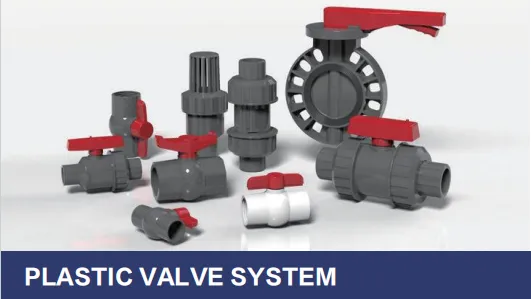
Even the best plastic valve system solutions will fail if installed without cold climate in mind. We spoke with Johnathan Reed, a master plumber with 25 years of experience in Minnesota, who shared his top tips for ensuring plastic valves and pipes hold up in winter:
1. Know Your Temperature Thresholds
"Always check the manufacturer's specs for 'minimum operating temperature' and 'cold impact resistance,'" Reed advises. "A plastic valve system solution rated for -10°C might work in a heated basement, but if it's going into an unheated garage in North Dakota, where temps hit -30°C, you're asking for trouble. I once had a client who saved $200 on valves that weren't rated for their climate—cost them $3,000 in repairs when they cracked in January." Reputable suppliers, like a trusted plastic valve system supplier, will provide detailed testing data, including results from ASTM D2122 (standard test for impact resistance of plastic pipes) at low temperatures.
2. Insulate, Insulate, Insulate
"Insulation isn't just for pipes—it's critical for valves too," Reed emphasizes. "Even a valve rated for -20°C will struggle if it's exposed to wind chill in an uninsulated crawl space. Use foam pipe sleeves with a minimum R-value of 3 for valves and adjacent pipes, and seal any gaps with weatherstripping to block cold air. For exterior walls, consider routing lines through interior, heated spaces whenever possible."
3. Avoid "Dead Legs" and Stagnant Water
Water that sits idle in a valve or pipe is far more likely to freeze. "Design systems to minimize dead legs—sections of pipe that don't get regular water flow," Reed explains. "For example, a guest bathroom that's rarely used in winter? Install a valve near the fixture to drain the line when not in use. Also, ensure valves are installed with proper slope (1/4 inch per foot for drainage lines) so water doesn't pool." This is where PVC DWV pipe suppliers often collaborate with engineers: their pipes are designed to maintain slope even in cold, preventing stagnation.
4. Use Cold-Weather Jointing Techniques
"The way you connect plastic valves and pipes changes in cold weather," Reed notes. "Solvent cement, for example, takes longer to cure when it's cold—what takes 30 minutes at 20°C might take 2 hours at 0°C. Some suppliers offer 'cold-weather cement' with faster curing times, or you can use mechanical joints (like compression fittings) which don't rely on chemical bonding. Just make sure the fittings are compatible with your plastic valve system solutions—mismatched materials can lead to leaks."