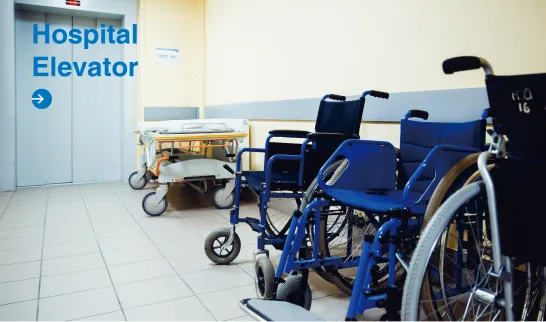
In any modern healthcare facility, vertical transportation is not a luxury — it is a critical operational necessity. From moving patients on stretchers between wards and operating theatres to transporting medical equipment, staff, and visitors, hospital elevators must perform reliably around the clock. Selecting the right
hospital elevators manufacturers is a decision that directly impacts patient safety, clinical workflow efficiency, and the overall functionality of the building.
Why Hospital Elevators Are Different from Standard Passenger Lifts
A hospital elevator is not simply a larger version of a passenger lift. It is a purpose-built vertical transport system engineered to meet the unique demands of healthcare environments. Unlike standard commercial elevators, hospital elevators must accommodate stretchers, wheelchairs, portable medical devices, and in many cases, an entire medical team alongside a patient.
The cabin dimensions are typically wider and deeper to allow stretcher rotation and comfortable positioning of medical personnel. Door openings are designed with generous width — often 1200 mm or more — to ensure unobstructed entry and exit. Beyond spatial considerations, hospital elevators must integrate features such as antibacterial surfaces, emergency power backup systems, and exceptionally smooth acceleration and deceleration to avoid disturbing patients during transit.
Key Features to Look for in a Hospital Elevator
When evaluating options from different
hospital elevators manufacturers, procurement teams should prioritize the following features:
Stretcher-grade cabin dimensions — The cabin must accommodate a standard hospital stretcher (typically 2000 mm x 600 mm) with enough clearance for medical staff to stand alongside. A minimum cabin depth of 2400 mm and width of 1500 mm is recommended for most hospital applications.
Anti-bacterial interior finishes — Stainless steel surfaces with antimicrobial coatings help maintain hygiene standards and reduce the risk of hospital-acquired infections. Easy-to-clean wall panels and seamless flooring are essential.
Automatic Rescue Device (ARD) — In the event of a power failure, the ARD system automatically moves the elevator to the nearest floor and opens the doors, ensuring that patients and staff are never trapped inside the cabin.
Smooth ride quality — Variable Voltage Variable Frequency (VVVF) drive systems with microprocessor controls deliver jerk-free acceleration and deceleration, which is critical when transporting patients with fractures, post-surgical conditions, or cardiac instability.
Quiet operation — Low-noise motor and door mechanisms reduce ambient stress in clinical settings. A well-engineered hospital elevator should produce minimal vibration and sound during operation.
Fire-rated landing doors — Compliance with fire safety regulations is non-negotiable. Hospital elevators should be equipped with fire-rated doors and integrated smoke detection systems.
Types of Elevators Commonly Found in Healthcare Settings
A well-designed hospital typically requires multiple elevator types to serve different functions. Understanding these categories helps facility planners and procurement managers make informed decisions:
Bed/Stretcher Elevators — The largest and most critical type, designed exclusively for patient transport. These elevators handle the heaviest traffic and must be available 24/7 with minimal downtime.
Service/Freight Elevators — Used for transporting medical supplies, laundry, food trolleys, and waste. These are typically placed in service corridors separate from patient and visitor pathways to maintain hygiene zones.
Passenger Elevators — For staff, visitors, and ambulatory patients. These may be standard commercial-grade units but should still offer smooth ride quality and reliable performance.
Dumbwaiters — Small service lifts for moving documents, lab samples, medications, and meals between floors, reducing the load on main elevators.
The Advantage of Sourcing from China
Over the past two decades, China has emerged as a global manufacturing hub for elevator systems, with many
elevator manufacturers in China now producing equipment that meets or exceeds international standards including EN 81, ISO 9001, and CE certification requirements. The combination of advanced manufacturing facilities, competitive pricing, and robust quality control systems has made Chinese elevator manufacturers an increasingly attractive option for healthcare projects worldwide.
Sourcing hospital elevators from China offers several practical advantages: significantly shorter lead times due to streamlined production capacities, access to a wide range of customizable configurations, and the ability to coordinate with a single supplier for multiple elevator types — reducing procurement complexity. For hospital projects in the Middle East, Africa, Southeast Asia, and South America, Chinese manufacturers have become preferred partners due to their ability to deliver reliable products at competitive price points.
COLORIA GROUP: A Trusted Hospital Elevator Supplier
COLORIA GROUP, headquartered in Foshan, Guangdong — one of China's premier manufacturing hubs — has established itself as a reliable
hospital elevator supplier for healthcare projects across multiple continents. The company's hospital elevator solutions are engineered to meet the rigorous demands of modern medical facilities, combining spacious cabin designs with advanced safety systems and customizable interior finishes.
What sets COLORIA GROUP apart is its positioning as a comprehensive one-stop building materials solution provider. For hospital construction projects, this means procurement teams can source not only elevators but also complementary products — from wall panels and flooring to sanitary fixtures, lighting systems, electrical cables, and solar panels — all through a single, coordinated supply chain. This integrated approach reduces supplier management overhead, ensures consistent quality standards, and simplifies logistics for large-scale healthcare developments.
COLORIA GROUP's elevator product range includes: Hospital Elevators, Home Lifts, Freight Lifts, Car Lifts, Commercial Escalators, and Moving Walks — covering the full spectrum of vertical transportation needs for healthcare, commercial, and residential projects.
What to Consider When Choosing a Hospital Elevator Supplier
Beyond the technical specifications of the elevator itself, the choice of supplier is equally important. Here are the key factors to evaluate:
International certifications — Verify that the manufacturer holds relevant certifications such as ISO 9001 for quality management and product-specific compliance with EN 81 or equivalent standards in your region.
Installation and after-sales support — A hospital elevator is a long-term investment. Ensure the supplier provides installation guidance, commissioning support, and access to spare parts and maintenance services over the equipment's lifecycle.
Customization capability — Every hospital has unique spatial and operational requirements. The supplier should be able to customize cabin dimensions, door configurations, interior finishes, and control systems to match your project specifications.
Track record in healthcare projects — Look for suppliers with demonstrated experience in hospital elevator installations. References and case studies from completed healthcare projects provide valuable insight into reliability and performance.
Logistics and export experience — For international buyers, the supplier's experience with shipping, customs documentation, and on-site coordination is critical to keeping the project on schedule.
Integration with Overall Hospital Building Design
Hospital elevators should not be considered in isolation. Their placement, quantity, and specifications must be integrated into the broader architectural and MEP (mechanical, electrical, plumbing) design. The number of elevators required depends on the building's total floor area, number of beds, expected daily traffic volume, and the separation of clean and dirty circulation routes.
As a rule of thumb, a hospital with 200–300 beds typically requires at least two dedicated bed elevators, plus separate passenger and service elevators. The elevator shaft should be positioned centrally within the floor plan to minimize travel distances for staff. Additionally, the elevator lobby on each floor should provide sufficient space for stretcher queuing without obstructing corridor traffic.
Looking for a reliable hospital elevator solution for your healthcare project?
COLORIA GROUP offers a comprehensive range of hospital elevators engineered for safety, reliability, and smooth operation in demanding clinical environments. With headquarters in Foshan, China, and an agent network including Saudi Arabia, the company provides end-to-end support — from product selection and customization to logistics and after-sales service. As a one-stop building materials supplier, COLORIA GROUP can also coordinate the supply of walls, flooring, sanitary fixtures, lighting, electrical systems, and more, simplifying procurement for your entire hospital construction project. Contact the team today to discuss your project requirements and request a quotation.