
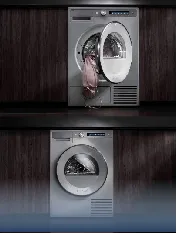
Picture this: you're sitting in a café in Berlin, your neighbor in Tokyo just started a load of laundry, and a family in Rio is unpacking their new washer. What connects these moments? There's a strong chance the machines humming in these homes came from Chinese factories. Let's explore how China transformed from appliance newcomer to global powerhouse.
Back in the 1980s, Chinese factories were mainly producing basic twin-tub models. Fast forward to today, and they're shipping smart washers with AI sensors to 150+ countries. This transformation came through a perfect storm of engineering talent, manufacturing scale, and consumer insights. Factories invested heavily in R&D centers, and the results speak for themselves.
What really makes Chinese manufacturers special? They've mastered the balancing act of innovation and affordability. Where European brands might spend years perfecting one feature, Chinese engineers rapidly prototype multiple solutions. This agile approach means features often debut in China before going global.
You've probably seen their appliances without realizing it. Haier's washing machines stand out for their smartphone integration – imagine starting a wash cycle while commuting home. Their factories near Qingdao use collaborative robots working alongside technicians, creating what they call "mass personalization." They've also been pioneers in eco-friendly production methods which aligns with growing environmental regulations globally.
What retailers appreciate most? Haier's modular designs let repair technicians replace parts in minutes rather than hours. That reliability has made them favorites for apartment complexes and laundromats worldwide.
Midea's approach is all about energy intelligence. Their flagship washers have sensors detecting load weight and fabric type, adjusting water and power automatically. It's like having a laundry expert inside each machine. In their Foshan factory, they've cut energy consumption 37% through solar panel installations on factory roofs – leading the way in sustainable manufacturing.
Contract manufacturers particularly appreciate Midea's flexible production lines. The same factory can switch from making basic 5kg models to commercial 30kg machines in under 24 hours.
Many luxury European brands quietly use Chinese manufacturing. That premium washer with an Italian nameplate? Its stainless steel drum was likely produced in Guangdong. This is the open secret – China dominates core components like brushless motors and touch interfaces even when assembly happens elsewhere. The combination of precision engineering and cost efficiency remains unmatched.
Chinese middle-class buyers are pickier than ever. They want whisper-quiet operation (<50dB), steam cleaning that removes tough stains, and app controls with laundry tracking. Factories respond with:
Visit factories like Changhong Meiling and you'll see engineers testing:
"We're no longer just chasing lower prices," explains engineer Liu Wei from Shanghai Laijie. "Western brands focus on 20-year lifespans, while we're adding intelligence so machines evolve with user needs. That's our competitive advantage."
Last year alone, China exported over 22 million washing machines. Smart features drove 30% of the growth as brands pushed what they call "intelligent laundry ecosystems." Commercial applications expanded too – factories like Jinan Oasis make industrial machines handling 10x more loads per day than three years ago.
Urban Chinese buyers prioritize differently:
Rural adoption jumped 15% as manufacturers developed low-water models for areas with unreliable plumbing. This adaptability shows how factories pivot based on regional needs.
Growth hasn't been without obstacles. When tariffs hit in 2018, factories got creative:
The pandemic revealed another strength: while competitors stalled, Chinese factories automated rapidly. Feilong Group added fifty new robots to maintain output during lockdowns, proving their resiliency.
Environmental concerns drive change. Top factories now:
Sustainability isn't just buzzword – it's becoming their competitive edge in European markets with strict environmental standards. This shift toward eco-friendly appliances reflects broader trends across China's manufacturing sector, particularly among architectural facade and building material specialists who increasingly value energy efficiency.
Factories are experimenting with exciting concepts:
Prototypes using ultrasonic vibrations and negative ions eliminate water usage completely – potential game-changers in drought regions.
Using integrated AI that alerts service centers before parts fail. Trial programs show repair call reduction by 60%.
Chinese manufacturers aren't just following trends – they're creating them. The focus has shifted from cost leadership to technological leadership. As Whirlpool China's R&D director Chen Li put it: "We want appliances to become invisible helpers in homes, not machines you babysit."
Based on industry insights:
Always verify certifications – the CCC mark for China and IEC standards for Europe. Quality-focused factories welcome virtual factory tours to show operations.
Final thought: Next time you toss in a load of laundry, check your machine's origin. There's good chance Chinese engineering made that convenience possible. From university dorms to five-star hotels, these machines keep the world spinning fresh – quiet revolutions coming from factory floors halfway across the globe.
Recommend Products












