
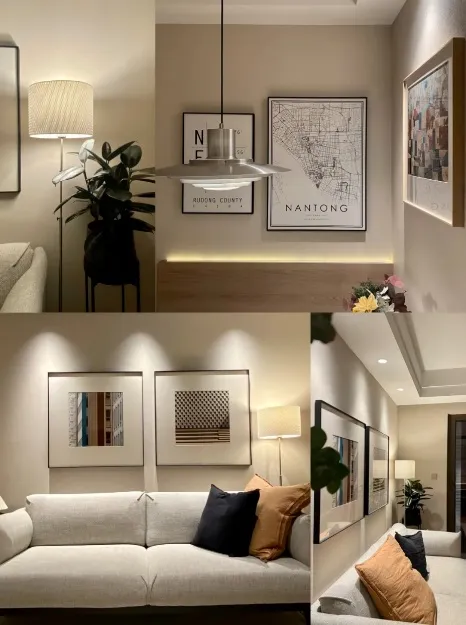
Ever walked into a room and been instantly captivated by how the light transforms the space? That magical moment often starts in places like Zhongshan, China's undisputed "Lighting Capital." Over the past two decades, residential lighting manufacturers in China have moved beyond simple bulb production to become sophisticated solution providers. Remember when led lights first hit the market? Chinese factories were quick to pivot, pouring resources into LED research. Today, Shenzhen's tech labs rival any in Europe for developing cutting-edge residential lighting systems.
What's fascinating is how these manufacturers shifted from OEM work to creating their own smart lighting ecosystems. They didn't just follow trends – they started developing voice-controlled systems and mood lighting algorithms before big Western brands considered them mainstream.
The industry's transformation reads like a business thriller. In the early 2000s, most factories focused on exporting cheap fixtures. Today, manufacturers invest 8-12% of revenue into R&D annually. That dedication shows in how lighting fixtures now integrate seamlessly with home automation – something I've seen firsthand visiting showrooms where lights sync with music and window shades automatically.
Let's talk about what really matters for homeowners – the actual experience. Today's Chinese manufacturers understand lighting isn't just about visibility; it's about creating environments. That's why top-tier companies now collaborate with psychologists to develop biologically effective lighting that supports circadian rhythms. For instance, their smart systems gradually shift from energizing blue tones to warm glows after sunset.
| Technology | Key Innovation | Home Application |
|---|---|---|
| Human-Centric Lighting | Mimics natural light cycles | Improves sleep quality & productivity |
| LiFi Systems | Data transmission through light | Secure home networking alternative |
| Self-Calibrating Luminaires | Automatically adjust for bulb aging | Maintains consistent brightness over years |
| Touchless Controls | Gesture and voice activation | Hygeinic kitchen/bathroom solutions |
The integration between ceiling panels and lighting systems particularly excites designers. In new luxury developments, we're seeing suspended ceilings with built-in tracks that allow homeowners to rearrange fixtures as easily as moving furniture. This adaptability solves that frustrating dilemma of being stuck with poorly placed lights after renovating.
Talk to any lighting wholesaler from Dubai to Detroit and they'll acknowledge China's dominance in residential lighting. But this success came from strategic evolution. After the EU's 2009 ban on incandescent bulbs, agile Chinese manufacturers repositioned themselves as led lights specialists rather than fighting obsolete technology.
China powers 65% of global lighting exports, with residential fixtures being the fastest-growing segment at 14% CAGR. Manufacturers developed modular production lines allowing custom orders as small as 500 units – unheard of before 2015.
Leading factories now achieve zero-landfill status by recycling 98% of materials. The PVC-free wiring initiative alone eliminated 12,000 tons of plastic waste annually. Solar-powered manufacturing plants are becoming standard among top-tier suppliers.
By vertically integrating from chip production to final assembly, manufacturers reduced lead times from 90 to 25 days since 2018. The most advanced facilities use AI-powered logistics that anticipates shipping delays and automatically reroutes cargo.
What impresses me most is how China lighting manufacturer facilities manage customization at scale. Visiting a Ningbo factory last year, I saw one production line seamlessly switch from making minimalist Scandinavian pendants to ornate Mediterranean chandeliers in under 30 minutes. This flexibility lets them serve diverse global tastes without sacrificing efficiency.
The real magic happens when lighting becomes invisible intelligence. Contemporary Chinese systems don't just light rooms – they enhance life rhythms. The latest offerings include:
Integration between ceiling panels and lighting has revolutionized installations. New magnetic track systems embedded in ceiling boards allow homeowners to reposition fixtures without electrical work. I've witnessed installations where entire lighting schemes were reconfigured during an open house – something impossible with traditional wiring.
The most impressive development may be "light architecture" – using precisely calibrated lighting fixtures to visually reshape spaces. With strategic illumination, manufacturers help small apartments feel spacious and large rooms feel cozy, solving spatial challenges without construction.
Having toured multiple R&D centers, I'm convinced we're entering lighting's golden age. The convergence of material science, connectivity, and design promises breakthroughs like:
| Emerging Technology | Potential Impact | Timeline |
|---|---|---|
| Organic LED Panels | Paper-thin luminous walls | 2026-2028 |
| Self-Repairing Lamps | Microcapsules restore filament integrity | 2027 |
| Dynamic Spectrum Glass | Windows that transform into light sources | 2030+ |
| Biometric Responsive | Adjusts based on real-time vital signs | 2025 |
The most exciting development isn't any single technology – it's the growing recognition that residential lighting represents the intersection of health, sustainability, and emotional wellbeing. Manufacturers increasingly measure success not by lumens sold but by sleep improved and energy conserved. This philosophy shift makes me optimistic that the future will be literally brighter – and smarter – for homeowners worldwide.
Recommend Products












