
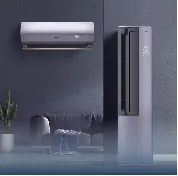
Picture this: It's a sweltering summer day, and you step into a cool, comfortable room. That sweet relief? It probably came from a Chinese-made air conditioner. In fact, about one-third of global households owe their comfort to these engineering marvels. China didn't just enter the HVAC market – it stormed the gates and rewrote the rulebook.
From humble workshops to global manufacturing powerhouses, China's AC journey mirrors its economic transformation. Companies like Gree and Midea started small but now dominate global markets through relentless innovation and jaw-dropping production scales. Think massive factories buzzing with robotic arms assembling thousands of units daily – it's manufacturing poetry in motion.
What's truly remarkable? This isn't just about quantity. Chinese manufacturers have pioneered energy-saving technologies that make older units look like electricity-guzzling dinosaurs. From solar-compatible systems to inverter tech that adapts to your room, these innovations have turned the global HVAC market on its head.
Based in Zhuhai, this $28 billion giant operates like a tech company disguised as an appliance maker. With 15 global factories pumping out over 27 million residential units annually, Gree's secret sauce is R&D. They've invested billions in developing breakthrough tech like their triple-cylinder compressors – innovations that helped them dominate markets from Brazil to Pakistan. What really makes customers smile? Units that slash energy bills by 50% compared to older models.
Operating behind familiar brands like Toshiba and KUKA, Foshan-based Midea is the quiet giant of the industry. Their genius lies in diversification: residential ACs sharing tech with their medical equipment division, commercial chillers benefiting from robotics research. Their vertical integration model means controlling everything from GMCC compressors to smart controls – a key advantage in today's IoT-driven market where smart home appliance solutions are increasingly in demand.
Haier transformed from a struggling refrigerator factory into a global appliance empire through smart acquisitions (Fisher & Paykel, GE Appliances) and boundary-pushing innovation. Their air conditioners feature self-cleaning tech and solar compatibility - perfect for regions with unreliable power grids. The real magic? Units so quiet you'll check if they're running.
Forget single-temperature settings. Units like Hisense's Party Mode dynamically adjust cooling capacity based on room occupancy – genius for large spaces where crowds gather.
Chigo's virus-fighting UV-C light systems and AUX's PM2.5 filters represent a shift toward wellness-focused cooling – especially relevant after recent global health events.
Game-changing innovations like flameless copper fittings make installations faster and safer – a quiet revolution transforming field operations worldwide.
Chinese manufacturers employ sophisticated localization strategies. Midea tailors units to desert climates with extra sand-resistant filters while TCL designs models specifically for regions with frequent power outages. This cultural fluency extends to distribution networks where companies like Chigo leverage partnerships across Africa and Central Asia.
Quality control happens both at massive central facilities like Galanz's "microwave city" R&D hub and through regional testing centers where units endure extreme conditions. Production flexibility allows factories to shift between window units for Middle Eastern markets and sleek inverter splits for European homes.
Facing criticism about environmental impact, manufacturers made sustainability a core mission. Kelon's double-efficiency units broke world records, while Yair's systems achieve radical energy savings with low-cost solutions. The bigger story? Companies like MBO actively participate in global refrigerant phase-outs while developing next-gen models using less-harmful alternatives.
China's commitment shows in the numbers: units that used to require 1500W now deliver comparable cooling with under 800W. As Sonlu's technical director puts it: "We're not just selling boxes that blow cold air. We're delivering comfort that doesn't bankrupt the planet."
The next frontier involves cloud-connected systems and AI optimization. Haier's current systems already learn usage patterns while companies like Shinco experiment with voice-controlled units that anticipate needs. Manufacturing innovations like Altaqua's precision climate control for vertical farms hints at specialized applications beyond traditional markets.
Simultaneously, smaller players leverage automation to compete on quality rather than price. Companies like Ventech prove you don't need mega-factories to make an impact when you pioneer innovations like modular air diffusion systems that outperform units twice their price.
Behind the technology are extraordinary human stories: Engineers in Qingdao developing hurricane-resistant units after seeing Caribbean hurricane damage. Factory workers designing comfortable housing concepts. R&D teams exchanging ideas across oceans through digital collaboration platforms.
The industry's commitment shows in the numbers: over 200,000 skilled manufacturing jobs created in Guangdong province alone in the past decade. Training academies like Gree University develop technicians serving global markets while maintaining quality consistency.
Market share statistics tell only part of the story. True influence comes through standards participation – Chinese engineers now co-author international HVAC efficiency protocols. Patent filings reveal another dimension: over 50,000 active HVAC patents held by featured companies.
Recommend Products












