
Redefining Efficiency in Modern Construction Projects
Walk into any modern construction site—whether it's a high-rise apartment in Riyadh or a boutique hotel in Dubai—and you'll notice a common challenge: space. Architects and builders are constantly squeezed to maximize living areas, minimize utility spaces, and keep installations clean and unobtrusive. Nowhere is this more critical than with electrical systems, where bulky components can turn utility closets into wasted square footage and complicate retrofits in older buildings.
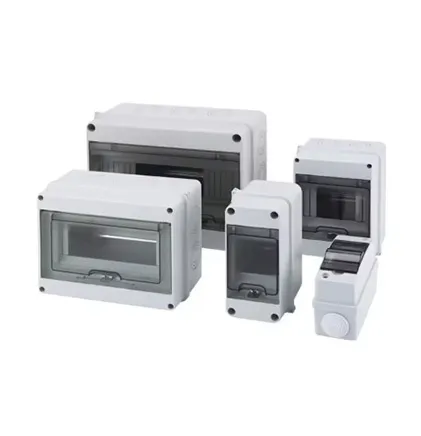
This is where the humble electrical distribution box steps into the spotlight. Often overlooked, this unassuming component is the nerve center of a building's electrical system, distributing power safely to every corner. But traditional designs? They're often clunky, rigid, and about as space-efficient as a filing cabinet in a broom closet. That's why forward-thinking suppliers are reimagining what a distribution box can be—and China's manufacturers are leading the charge with compact designs that prioritize space-saving without sacrificing performance.
As a one-stop architectural solution provider with deep roots in markets like Saudi Arabia, we've seen firsthand how these innovations are transforming projects. From residential towers where every inch counts to commercial spaces aiming for sleek, minimalist aesthetics, compact distribution boxes are becoming a non-negotiable for modern builds. Let's dive into why they matter, how they're made, and why partnering with the right supplier makes all the difference.
Let's start with the basics: why does size matter for a distribution box? Imagine you're designing a 500 sq. ft. apartment in downtown Jeddah. The client wants a walk-in closet, a home office nook, and a utility area that doesn't feel like an afterthought. The last thing you need is a distribution box that takes up half the wall in the utility closet, leaving no room for a washing machine or storage. Or picture a hospital renovation, where every corridor inch is needed for patient flow—bulky electrical components can disrupt workflows and even violate safety codes.
Compact design solves these headaches by shrinking the footprint without cutting corners on functionality. Modern distribution boxes from China are engineered to house the same (or better) electrical capacity in a package that's 30-40% smaller than traditional models. How? Through smart engineering: modular components, slimline casings, and optimized internal layouts that reduce wasted space between circuit breakers, terminals, and wiring channels.
| Feature | Traditional Distribution Box | Compact Chinese Design |
|---|---|---|
| Typical Dimensions (HxWxD) | 600x400x200mm | 400x300x120mm |
| Circuit Capacity | 12-16 circuits | 12-20 circuits |
| Installation Time | 2-3 hours | 1-1.5 hours |
| Material | Standard steel, non-recyclable | Recyclable aluminum alloy, low-VOC coatings |
| Weight | 15-20kg | 8-12kg |
The benefits go beyond space, too. A smaller, lighter box is easier to transport (critical for high-rise projects where elevator access is limited), faster to install (saving labor costs), and simpler to maintain (technicians can access components without wrestling with a bulky enclosure). For saudi arabia building materials supplier partners, this translates to happier clients, smoother project timelines, and a competitive edge in a market where efficiency is king.
Compact design doesn't happen by accident. It's the result of decades of iteration, investment in R&D, and a deep understanding of global building codes. Chinese manufacturers have honed their craft by combining three key elements: material science, modular engineering, and a focus on safety.
Material Innovation: Forget the heavy steel boxes of the past. Today's compact distribution boxes use high-strength, lightweight materials like aluminum alloys and fire-retardant plastics. These materials are not only lighter—they're also corrosion-resistant, which is a game-changer in humid climates like the Middle East. We've tested these boxes in Saudi Arabia's harsh conditions (temperatures up to 50°C, high dust levels) and seen them perform reliably for years, outlasting traditional steel enclosures that rust or warp.
Modular Magic: The real secret to compactness is modularity. Instead of a one-size-fits-all box, these systems let you mix and match components: circuit breakers, surge protectors, energy meters, and even smart monitoring modules. This means you only pay for the features you need, and the box size scales with your project. A small residential unit might need a 12-circuit box, while a commercial kitchen could opt for a 24-circuit model—both in footprints that fit tight spaces.
Safety First: Here's the thing about shrinking electrical components: you can't compromise on safety. Chinese distribution boxes meet rigorous international standards, including IEC 61439 and Saudi Arabia's SASO 2870. They're designed with features like flame-retardant casings (rated UL94 V-0), secure locking mechanisms to prevent tampering, and heat-dissipating designs that prevent overheating—critical in hot climates. We've had clients in Riyadh tell us that after switching to these boxes, they've seen a 50% drop in electrical maintenance issues, from tripped breakers to overheating components.
A great product is only as good as the support behind it. That's where partnering with a one-stop architectural solution provider matters. Unlike standalone manufacturers, we don't just sell distribution boxes—we integrate them into a full suite of electrical solutions, from electrical fixtures & cables to lighting systems. This means you get coordinated products that work seamlessly together, reducing compatibility issues and simplifying procurement.
Our presence in Saudi Arabia is a game-changer, too. With a local office in Riyadh and a warehouse in Dammam, we can deliver distribution boxes and related components in days, not weeks. No more waiting for shipments from Asia or navigating customs delays—critical for projects on tight deadlines. Our team of local engineers also provides on-site support, helping with installation guidance, code compliance checks, and troubleshooting. For example, when a hospital project in Jeddah needed to adjust their electrical layout mid-construction, our team was on-site within 24 hours to modify the distribution box configurations, keeping the project on track.
And let's talk about sustainability—a key priority in Saudi Arabia's Vision 2030. Our distribution boxes are part of a broader commitment to green building. They're made with recycled materials where possible, and our manufacturing facilities run on solar power (yes, we practice what we preach!). This aligns with the kingdom's push for carbon neutrality and makes it easier for clients to meet LEED or Estidama certification requirements. It's not just about selling a product; it's about partnering to build a more sustainable future.
Numbers tell a story, but real projects tell the whole story. Let's look at two examples where compact distribution boxes made a tangible difference for our clients in Saudi Arabia.
Case Study 1: Luxury Residential Tower, Riyadh
A developer was building a 30-story luxury tower with 2-bed and 3-bed apartments. The design called for utility closets that doubled as linen storage, but traditional distribution boxes were too large to fit alongside washing machines. We recommended a 16-circuit compact box (400x300x120mm) with modular surge protection. The result? Each apartment gained an extra 0.5 sq. m of storage space, and the developer was able to market "walk-in linen closets" as a premium feature. Plus, installation time per unit dropped from 4 hours to 2.5 hours, saving the project 200+ labor hours overall.
Case Study 2: Boutique Hotel, Al Khobar
A 50-room hotel wanted to maximize space in guest rooms, where every square meter impacts revenue. Traditional distribution boxes would have required a 60cm-wide utility in each room, eating into floor space. We supplied 12-circuit compact boxes (350x250x100mm) that fit into a slim 30cm-wide, freeing up space for larger wardrobes. The hotel also added smart energy monitoring modules to the boxes, allowing them to track and reduce energy use by 15%—a huge saving given Saudi Arabia's high electricity costs.
So, you're sold on compact design—now how do you choose the right box for your project? Here are the key factors we tell our clients to consider:
As a saudi arabia building materials supplier with decades of experience, we pride ourselves on guiding clients through this process. We start with a site visit to assess space and needs, then recommend a tailored solution—whether it's a basic residential box or a custom commercial system with smart features. It's this hands-on approach that turns a good product into a great project outcome.
The story doesn't end with compact design. The next frontier is smart integration. Imagine a distribution box that connects to your building management system, alerting you to power spikes, tracking energy use in real time, or even shutting down non-essential circuits during peak hours to save costs. Chinese manufacturers are already rolling out these "smart boxes," and we're seeing growing demand in Saudi Arabia—especially among commercial clients and developers aiming for smart city certifications.
Sustainability will also play a bigger role. We're investing in research to use more recycled materials in box casings and exploring biodegradable packaging for shipments. Our goal? To make the entire lifecycle of the product as eco-friendly as possible, aligning with both global "net-zero" goals and Saudi Arabia's Vision 2030 targets for sustainable construction.
And let's not forget about accessibility. Future designs will focus on making installation and maintenance even easier—think tool-free component swapping, color-coded wiring guides, and QR codes that link to digital manuals. For busy electricians in Riyadh or Dubai, these small touches can save hours on the job.
At the end of the day, construction is about solving problems—whether it's meeting a tight deadline, staying under budget, or creating spaces people love. Compact electrical distribution boxes from China solve a big problem: the battle for space. By combining smart engineering, safety, and sustainability, they're not just components—they're tools that let architects dream bigger, builders work faster, and clients enjoy better, more efficient spaces.
As a distribution box supplier deeply rooted in the Middle East, we're proud to bring these innovations to projects across Saudi Arabia and beyond. From the smallest apartment to the largest commercial complex, the message is clear: when it comes to electrical systems, size does matter—and smaller is smarter.
So, the next time you're planning a project, ask yourself: is your distribution box holding you back? With the right partner and the right design, you might just find that a little compact innovation goes a long way.
Recommend Products












