
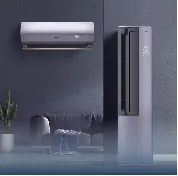
Picture this: relentless sun, soaring temperatures, and bustling urban centers pushing energy grids to their limits. That's daily reality across huge swaths of the Middle East and Africa (MEA), making advanced refrigeration and air conditioning systems not just conveniences but absolute necessities . The sheer intensity of the climate paired with rapid urbanization creates conditions unlike anywhere else globally.
Honestly, we can't grasp the MEA HVAC-R dynamics without first acknowledging the brutal environmental factors at play. During summer months, temperatures routinely hit 45°C-50°C across Gulf states. Northern Africa faces similar extremes. These conditions place unprecedented stress on cooling systems.
The impact shows up in some eye-opening ways:
It's mind-blowing how fast MEA cities are expanding. Saudi Arabia's NEOM project, Dubai's continuous skyline growth, Nigeria's Lagos supercity – these aren't isolated projects but parts of a pattern reshaping demand. Urban populations have ballooned by over 120% since 2000. More city dwellers means more buildings that need cooling systems designed specifically for regional climate conditions.
The refrigerant market is where environmental policy meets practical necessity. With traditional options under global scrutiny, MEA faces unique choices when selecting its cooling solutions.
Look around any construction site and you'll spot fluorocarbon-dominated systems. Their non-flammable nature and heat transfer efficiency made them default choices for projects built before environmental concerns became paramount. But the landscape's shifting.
The real excitement now centers around inorganic refrigerants like ammonia (R717) and CO2 (R744) . They deliver something critical: near-zero global warming impact. Think about Dubai's Burj Khalifa – its massive cooling system leverages ammonia refrigeration technologies that would've been considered impractical a decade ago. Similar projects across Qatar and Saudi Arabia signal a tangible shift.
Here's the pragmatic reality: With building codes rapidly adapting to sustainability demands, environmentally friendly building materials and climate systems become mandatory. That phrase captures an essential market evolution.
Across MEA's industrial corridors, you'll see a particular breed of machinery taking root: high-temperature refrigerators built to withstand 50°C ambient temperatures without performance degradation. These aren't your standard appliances.
Air conditioning units are getting specialized upgrades to handle regional extremes:
The growth numbers confirm these adaptations: AC application segments are outpacing all others at a projected CAGR of 5.2% through 2030 . That's no minor market adjustment – it's a wholesale transformation.
This transformation isn't uniform across the region. Certain territories stand out for their massive impact on market dynamics.
Under Vision 2030, KSA isn't just building infrastructure – they're engineering microclimates. Consider the Qiddiya entertainment city project: an entire urban zone being designed from the ground up to maintain comfortable temperatures during 50°C summers. This requires cooling architectures never attempted at this scale.
The numbers match the ambition: Saudi refrigeration market expansion is expected to hit 6.2% annually through 2030. That's the most rapid growth in the entire region.
Dubai's Burj Khalifa and Abu Dhabi's Louvre Museum represent more than architectural feats – they're case studies in extreme-environment climate control. Their systems can't merely function; they must deliver precise conditions while meeting sustainability goals.
What emerges is fascinating: High-power air conditioning deployment actually becomes more efficient through scale innovations. UAE projects demonstrate how 20% energy reductions can coexist with expanded capacity.
In Africa's northern and southern hubs, it's not just about cooling people but preserving industrial output:
These aren't niche requirements but foundational economic priorities driving specialized HVAC-R investment throughout Africa's industrial landscape.
Massive demand doesn't equal simple solutions. The region faces three intertwined challenges that will shape tomorrow's market developments.
Here's the painful irony: The very cooling systems combating heat are worsening the problem through massive energy consumption. MEA's cooling accounts for over 60% of summer peak electricity demand across many urban centers. This creates a self-reinforcing cycle where hotter temperatures drive more AC use, further straining grids and fossil fuel systems.
Regional initiatives now focus on breaking this pattern through:
The next generation of MEA cooling is taking shape through multiple vectors:
Materials Science: Ceramic cooling systems show exceptional promise at KACST research facilities. Unlike traditional refrigerant-based designs, they leverage unique physical properties to achieve cooling without chemical agents.
Hybrid Designs: At King Abdullah University, we see systems combining evaporative cooling with indirect-direct configurations delivering temperature drops of 10°-12°C using 80% less energy than conventional ACs.
Architecture Integration: The future isn't just better AC units – it's structures designed to minimize cooling demands. Wind towers, thermal labyrinths, and phase-change walls transform buildings into inherent climate buffers.
These innovations aren't theoretical concepts but emerging solutions gaining practical applications across Dubai's District 2020 and Riyadh's smart city projects.
Calling MEA's advanced refrigeration and air conditioning market a "cooling industry" misses the essential point. These technologies provide the necessary foundation enabling healthcare systems, food security, manufacturing, digital infrastructure – the fundamental building blocks for societies facing planet's most extreme temperatures.
The emerging solutions – from eco-friendly refrigerants to AI-optimized HVAC systems – represent more than technological responses; they become essential societal infrastructure enabling economic survival and continued development under environmental circumstances unmatched anywhere else.
As urbanization accelerates and temperatures continue challenging historic norms, MEA's cooling innovations provide essential blueprints for communities globally who find themselves confronting rising heat extremes.
Recommend Products












