


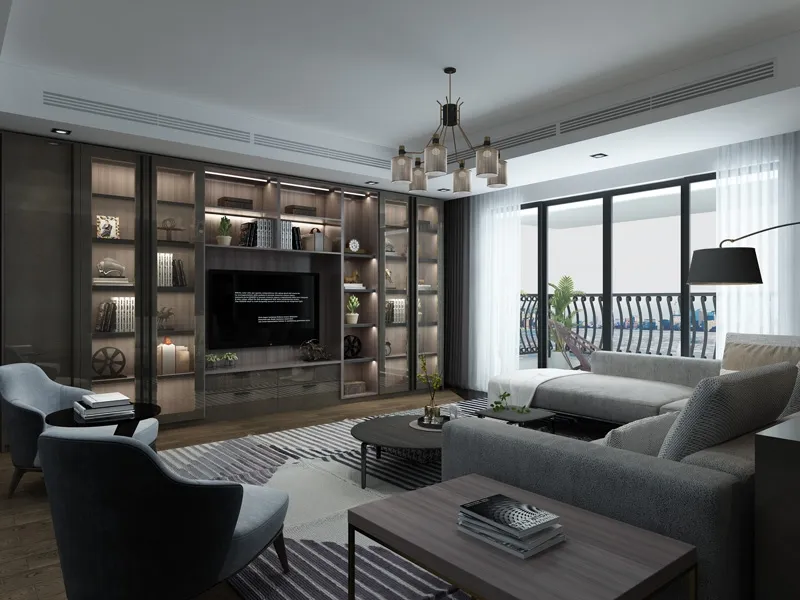
Remember when choosing a TV cabinet was simple? You'd measure your television, pick something sturdy at the local furniture store, and call it a day. My neighbor Jim still rocks that bulky 2005 oak relic – says it survived three moves and two toddlers. But walk into any modern living room today, and you'll notice something's shifted. What used to be purely functional storage now doubles as tech hubs and design statements.
This transformation isn't accidental. We're seeing seismic changes ripple through home furniture spaces worldwide. Just as supply chains quake and wallets tighten, consumers are quietly renegotiating their relationship with household staples. TV cabinets sit right at this crossroads – practical yet expressive, essential yet increasingly optional in our streaming age.
The New "Why": Functionality Over Formality
A decade back, design stores pushed ornate carvings and gleaming finishes. Today? It's all about purpose. Recent surveys reveal 68% of buyers now prioritize
wireless charging docks
and
hidden cord management
over wood grain patterns. As Manhattan interior designer Elena Torres puts it:
People stopped asking 'Does this match my rug?' and started demanding 'Can this charge my phone while hiding router spaghetti?'
This practical tilt mirrors broader economic pressures. With living spaces shrinking globally – Tokyo micro-apartments average 200 sq ft, London flats shrunk 22% since 2010 – multipurpose furniture isn't trendy; it's survival. We're noticing buyers repurposing kitchen islands near TVs and even hanging TVs above bathtubs. Necessity births strange hybrids when budgets squeeze.
Materials Matter: The Silent Sustainability Shift
Here's where things get revolutionary. Forget traditional hardwoods. The real action happens with materials like wood plastic composite (WPC) – a star keyword from the building sector that's storming living rooms. It delivers surprising durability for its lightweight nature and offers moisture resistance in humid climates.
This isn't just tree-hugging idealism. As Gina Lawson from Scandinavia Design Group explains:
People realized eco-friendly lasts longer on a cost-per-year basis. That bamboo cabinet paying for itself after 4 years makes sense when jobs feel less secure.
Supply chain snags accelerated this too – when oak shipments stalled during the pandemic, clever manufacturers pivoted to local recycled metals and mushroom-based composites.
The Disappearing Cabinet: Wall Tech Takes Over
Perhaps the starkest change? Many homes now skip cabinets entirely. Ultra-thin OLEDs cling directly to walls like high-tech paintings, while streaming devices tuck into outlet-sized boxes. This trend accelerates fastest among millennials with Netflix subscriptions – why dedicate floor space when virtual interfaces replace physical storage?
But the emotional residue remains. I spoke with homeowners hanging vintage radios beneath minimalist screens – useless but nostalgic. As tech consultant Raj Mehta observed:
We've moved from storing entertainment to curating experiences. Your cabinet isn't housing DVDs anymore; it's framing ambiance.
Regional Ripples: How Global Economies Play Out Locally
Zooming out reveals fascinating geographic splits while surveying architectural façade solutions:
- North America leans toward tech-integrated luxury – think cabinets with biometric locks and built-in Sonos systems
- Europe champions modular units that reshape for tiny apartments
- Southeast Asia favors elevated designs coping with monsoons and insects
- Scandinavia dominates hygge-inspired floating units doubling as room dividers
The common thread? Regional economic realities manifest in furniture form. Where disposable incomes dipped, multifunctional pieces surged. Where tech jobs boomed, so did smart home integration. Your TV stand subtly whispers your ZIP code's economic story.
Tomorrow's Trends: Where Change Is Heading Next
The next metamorphosis is already peeking through:
Transformative Tech
Prototypes include glass surfaces displaying recipes then switching to movie mode, cabinets adjusting height via posture-sensing AI
Invisible Integration
Korean designers show wall panels that seamlessly extend as needed then vanish flush against surfaces
Emotional Durability
Anti-anxiety features like warm-toned LED bases and textures responding to biometric stress signals
Economic uncertainty seems to amplify rather than stifle innovation. When homeowners hesitate to move, they invest instead in
forever pieces
that evolve – hence the boom in customizable bases where skins swap as styles change. This flexibility represents perhaps the most profound consumer psychology shift: commitment to adaptability itself.
A Personal Perspective: What We're Really Buying
At its core, this cabinet transformation reveals what Harvard sociologist Dr. Liam Chen calls
furniture as economic biography
. Walking through showrooms now feels different. Shoppers linger less over veneers, more over capabilities. Conversations focus not on
what is
but
what could be
–
Could this work if I rent out the basement?
or
If I switch to remote work permanently, does this partition space well?
The cabinet hasn't just changed; it's become a lens for our changing relationship with permanence. In fluctuating times, we build flexibility into our surroundings. The irony? Our grandparents' heavy cabinets embodied economic optimism – buy it once, keep it decades. Today's modular wonders respond to different values: resilience through reinvention.
Perhaps that's why Jim still loves his oak relic. It's not about the wood – it's what that steadfast bulk represents in uncertain times. But when his toddlers inherit his home, I'd bet they'll choose something leaner, smarter, ready to change as they do.










