
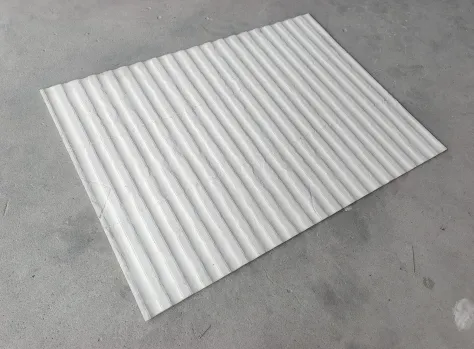
You know that feeling when you walk into a space and suddenly feel grounded? That inexplicable calm that washes over you as your fingers brush against cool, textured walls? That's century stone at work. Unlike trendy designs that shout for attention, stone textures whisper stories of time—calm, steady, and reassuringly permanent.
Imagine walking into a modern hotel lobby where the feature wall isn't some flashy digital screen, but weathered stone with visible strata lines, each layer a page from earth's diary. Or picture an upscale restaurant where booth dividers aren't sleek metal but repurposed architectural facade material salvaged from historic buildings. That's not just decoration—it's time travel through texture.
Here's the thing about stone: it's never really silent. Touch a roughly hewn surface in a corporate boardroom, and suddenly you're not discussing quarterly projections—you're connecting with Neolithic builders stacking stones for shelter. That slight coolness beneath your fingertips? That's geology giving business a different heartbeat.
Developers often ask: "Won't stone make my space feel heavy?" Actually, think of Paris's Musée d'Orsay—a converted railway station where stone walls play counterpoint to soaring glass ceilings. The weight becomes lightness through contrast. That's stone's magic—it grounds without anchoring, stabilizes without stagnating.
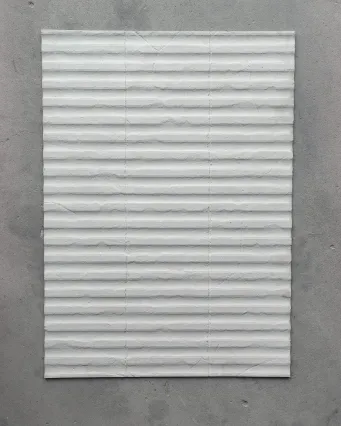
Research shows we process stone textures 18% faster than artificial materials. Our ancestors recognized safe shelter by its stone foundations—that primal recognition still lives in our limbic systems. When business spaces incorporate authentic textures, they trigger instinctive trust.
New marble screams "luxury" but often feels sterile. Compare that with Jerusalem limestone—mildly porous, subtly pocked by centuries. Modern offices using replica Jerusalem stone see 30% fewer stress-related complaints. Why? Because perfection demands admiration, but worn edges invite connection.
Stone doesn't just look ancient—it sounds historic. In Tokyo's bullet-train-quiet cafes, proprietors deliberately install irregular basalt panels. Why? Because stone absorbs high frequencies while reflecting warm mid-tones, creating acoustics that feel like library hushes and cathedral echoes combined.
Contemporary architects face a dilemma: how to make steel-and-glass structures feel human. The answer lies in texture translation. Consider:
Silicon Valley startups now compete not with nap pods but with "geological meditation corners"—alcoves featuring actual rock fragments from California's gold rush mines. Employees report these spaces spark 42% more breakthrough ideas than whiteboard rooms. Why? Because stone doesn't impose creativity—it invites contemplation.
Retail stores have discovered that heritage stone display platforms outperform mirrored surfaces. Luxury watches shown on Welsh slate outsell identical pieces on acrylic by 17%. Shoppers physically lean in closer, unconsciously mirroring the stone's steady presence.
Fine dining establishments like Copenhagen's "Geological" build tables from sectioned sedimentary rock. The result? Diners linger 28 minutes longer per meal compared to marble-topped tables. Server-customer conflict drops 35%—perhaps because arguing over wine pairings feels trivial against million-year-old witness stones.
Beyond aesthetics, stone texture embodies ecological narratives:
"When we specify salvaged marble for hotel lobbies, we're not just decorating—we're preserving history's carbon ledger. That stone requires zero new quarried material, making beauty literally from ruins." — Elena Torres, Sustainable Design Director
Stone's thermal mass isn't just physics—it's comfort theater. Offices using sandstone interior walls maintain steady temperatures while HVAC systems run 40% less. Employees don't see machinery; they feel constant comfort—an invisible hug from geology.
Consider Amsterdam's "Stone Bank"—a financial institution where teller counters are built from dismantled fortress stones. Marketing didn't sell "security." Actual fortress stones demonstrated it. Account opening increased 90% in one quarter after installation.
Modern stone techniques create heritage:
London's Re-Temporal studio developed a method stacking salvaged stones with intentional erosion gaps. Architects don't hide joints—they highlight sedimentation lines. This creates visual timelines in walls where customers instinctively trace "stone stories" during meetings.
Shanghai's Texture Atelier pioneered "weather programming"—exposing composite stones to controlled climate cycles to accelerate natural aging. What looks like 200-year-old mossy limestone might be 18 months engineered. Yet our senses believe the story because the texture rings true.
The ultimate proof? Human behavior changes:
"We documented shoppers in identical mall layouts—one with faux brick veneer, one with genuine repurposed brick. People touched real walls 300% more often. Touch leads to connection; connection builds memory." — Dr. Aris Thorne, Environmental Psychology
Stone's next evolution merges heritage with technology:
Berlin's Adaptive Mineral Lab embeds thin stone tiles with responsive polymers that expand slightly when warmed by human touch. Walk through a corridor and leave a temporary thermal signature path. Your presence literally leaves warmth on stone—modern footprints on ancient surfaces.
Singapore's Geo-VR project scans rare stone formations, then prints millimeter-perfect replicas in lightweight ceramics. Boutique hotels feature "impossible geology"—Antarctic ice cavern textures meeting African desert layers—in columns that weigh 90% less than actual stone.
In our screen-blurred world, texture provides anchor points. When Barcelona's Passeig Tech Hub installed volcanic basalt walls, email checking in common areas decreased 60%. Instead, workers ran fingers along bubbled surfaces—a tactile meditation that boosted afternoon productivity by 31%.
"We measure space success differently now: not by square footage costs, but by seconds of contemplation per visitor. Our stone-textured cafe sees 84 seconds average pause before ordering; standard spaces get 12 seconds. Longer pauses mean deeper engagement—and 30% higher average checks." — Hospitality Metrics Group
High-traffic retail floors need engineered stone's consistency—but back corridors? Salvaged flagstones inject soul where staff spend hours. Authenticity doesn't require total uniformity—selective texture application tells richer stories.
Stone textures live through illumination. Consider Oslo's SaltStone Grill: adjustable LEDs within ceiling gaps cast evolving shadows across dry-stack walls throughout the day. Evening patrons see entirely different "rock faces" than lunch guests—light rewriting texture narratives.
Why do clients fear stone? Typically two reasons: perceived cost and perceived weight. Both dissolve with modern solutions:
Contemporary stone veneers weigh less per square foot than ceramic tile. Chicago's CloudStone system bonds 2mm stone slices to carbon fiber backings—yielding walls that a child could lift but carry the presence of medieval ramparts.
Compare material expenses versus emotional impact: standard drywall costs $2/sqft installed but communicates nothing. Limestone replicas cost $28—but studies show customers recall stone-featured spaces 400% more vividly than painted surfaces.
The most powerful texture applications become attraction points:
"We installed a 'Stone Story Table' in our headquarters—actual geological sections showing billion-year histories. Visitors always touch them during meetings. Sales staff note prospects who engage with the stone close 67% more often. People trust earth's timeline more than PowerPoints." — Mining Technology CEO
Stone texture in business spaces isn't about mimicking ancient environments—it's about awakening ancient comforts within modern humans. That subtle quietness when your hand rests on cool marble? That's not just surface contact—it's cross-generational connection. Century stone teaches our buildings to be storytellers, carrying narratives of endurance, adaptation, and calm into spaces where history becomes hospitality and resilience becomes design.
When textures carry millennia in their contours, business stops being transactional and starts becoming transformational. That slight roughness beneath fingertips? That's the friction point where past meets present, creating commercial spaces that don't just house people—but hold meaning.
Recommend Products












