
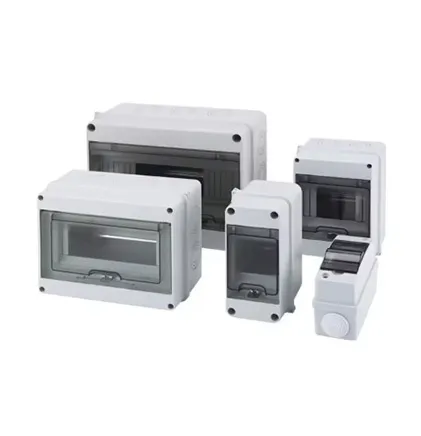
China's construction boom shows no signs of slowing down. With cities expanding, infrastructure projects multiplying, and millions of new homes and commercial buildings going up each year, the demand for reliable electrical components is skyrocketing. For international businesses—especially those in the electrical fixtures and cables space—this should sound like a golden opportunity. But here's the catch: breaking into China's market isn't as simple as shipping products and hoping for the best. There's a critical gatekeeper you can't ignore, and if you're a distribution box supplier, it's time to get very familiar with it: the CCC certification.
Let's cut to the chase. Whether you're selling distribution boxes, switches, sockets, or full electrical fixtures and cables solutions, China's regulatory landscape demands compliance. And when it comes to electrical products that touch safety—like distribution boxes, which are the "nerve centers" of any building's electrical system—CCC certification isn't just a recommendation. It's the law. So, what exactly is CCC certification? Why does it matter so much for your business? And how can you navigate the process without pulling your hair out? Let's dive in.
Let's start with the basics. CCC stands for "China Compulsory Certification," and as the name suggests, it's a mandatory certification system implemented by the Chinese government to ensure that products sold in the country meet specific safety, health, and environmental protection standards. Think of it as China's way of saying, "We want to make sure the products our people use every day won't harm them or the planet."
The system was launched in 2002, replacing a patchwork of earlier certification schemes, and it covers over 170 product categories—from electrical appliances and toys to automotive parts and, yes, electrical distribution boxes. For any distribution box supplier looking to sell in China, this isn't optional. Without that little CCC mark on your products, you're effectively locked out of the market. No retailer will stock your goods, no construction project will specify your solutions, and no government tender will consider your bids. It's that straightforward.
But here's the thing: CCC isn't just about ticking boxes. It's rooted in real concerns. Electrical fires are a major safety issue globally, and in China—with its rapid urbanization and high-density buildings—ensuring that distribution boxes (which control and protect electrical circuits) are up to snuff is a top priority. The certification process rigorously tests products for things like insulation resistance, short-circuit protection, temperature rise, and mechanical strength. These aren't arbitrary checks; they're designed to prevent accidents, save lives, and protect property.
You might be thinking, "Okay, so it's mandatory. Got it. But why should I care beyond just complying with the law?" Great question. Let's break down the real-world benefits that make CCC certification a game-changer for distribution box suppliers and anyone offering electrical fixtures and cables solutions in China.
First and foremost, let's get this out of the way: selling uncertified distribution boxes in China is illegal. The Chinese government enforces strict penalties for non-compliance, including fines, product seizures, and even bans on future imports. In 2023 alone, over 500 batches of electrical products were rejected at Chinese ports for lacking proper CCC certification—many of them from well-known international brands. Do you really want your distribution box solutions to end up on that list?
Chinese consumers are becoming increasingly savvy. They don't just buy products—they research them. Walk into any home improvement store in Shanghai or Guangzhou, and you'll notice something: customers flip products over, check labels, and specifically look for that CCC mark. It's become a symbol of quality and safety. For a distribution box supplier, that little mark isn't just compliance; it's a trust signal. When a developer is choosing electrical components for a residential complex or a hospital is outfitting its new wing, they're going to pick the brand with CCC certification every time. Why? Because it tells them, "This product has been tested and approved by the Chinese government. We can rely on it."
China's construction sector is booming, with billions poured into infrastructure, commercial real estate, and public projects each year. But here's the catch: most of these projects—especially government-funded ones—require suppliers to have CCC certification. Imagine bidding on a contract to supply distribution boxes for a new subway station in Beijing or a tech park in Shenzhen. The first question the procurement team will ask is, "Do you have CCC certification?" Without it, your proposal goes straight to the "rejected" pile. It's not personal; it's policy. These projects have strict safety standards, and CCC is the baseline.
Building a brand in China takes time, but CCC certification can fast-track that process. When your distribution box solutions are certified, it positions your company as a serious, responsible player in the market. It's not just about selling products today; it's about building relationships with distributors, contractors, and end-users who will come back to you for future projects. Think about it: if a developer uses your CCC-certified distribution boxes in one project and they perform well, they're far more likely to choose you for the next one. Over time, that translates to repeat business and a strong reputation in the industry.
Okay, so you're convinced—CCC certification is non-negotiable. Now, what does the process actually look like? Let's walk through it step by step. Keep in mind, every distribution box supplier's journey is a bit different, but these are the general stages you'll need to navigate.
| Step | What Happens | Timeline | Key Tips |
|---|---|---|---|
| 1. Application Preparation | Submit application to a CCC certification body (like CQC or CCIC), including product specs, technical documents, and company info. | 2–4 weeks | Double-check that your product specs align with GB standards (China's national standards). Missing documents are the #1 delay here. |
| 2. Product Testing | Your distribution boxes are sent to a CNAS-accredited lab for testing against safety standards (e.g., GB 7251.1 for low-voltage switchgear). | 4–8 weeks | Test early! Many suppliers fail the first time due to differences in temperature rise limits or material flammability requirements. |
| 3. Factory Inspection | Inspectors visit your manufacturing facility to check quality control processes, production consistency, and record-keeping. | 1–2 weeks (plus 2–3 weeks for scheduling) | Organize your records! Inspectors will ask for production logs, material sourcing docs, and employee training records. |
| 4. Certification Decision | The certification body reviews test reports and inspection results to decide on approval. | 2–3 weeks | Be proactive—follow up with the certification body if you haven't heard back. Delays here are rare but possible. |
| 5. Post-Certification Surveillance | Regular inspections (usually annual) to ensure ongoing compliance. | Ongoing | Stay compliant! A single failed surveillance can lead to certification suspension. |
Total timeline? Typically 3–6 months, but it can stretch to a year if there are hiccups. The good news? Once you're certified, it's valid for 5 years—with annual surveillance to keep it active.
Let's be real: getting CCC certification isn't always smooth sailing. Many distribution box suppliers hit roadblocks along the way. Here are the most common challenges we've seen—and how to navigate them.
Here's a common scenario: A European distribution box supplier has products certified to IEC standards, so they assume they'll breeze through CCC testing. Wrong. China has its own national standards (GB standards), and they're not always identical to IEC or UL. For example, GB 7251.1 has stricter requirements for creepage distances (the space between live parts) than IEC 61439-1. One supplier we worked with had to redesign their distribution box's internal layout because their original design failed this specific test—costing them an extra 2 months and $15,000.
Solution: Do your homework early. Hire a consultant who specializes in Chinese GB standards to review your product design before you apply. Many certification bodies also offer pre-testing services to identify issues upfront.
Factory inspections are where many suppliers stumble. Chinese inspectors are thorough—they'll check everything from how you store raw materials to whether your employees are trained on quality control procedures. One switches & socket supplier we know failed their first inspection because their production line didn't have clear labeling for different product models, leading to concerns about mix-ups. It took them 3 months to fix the issue and re-schedule the inspection.
Solution: Treat the inspection like a trial run. Hire a local expert to conduct a mock inspection 2–3 months before the real one. They'll point out red flags you might have missed, like incomplete training records or disorganized production logs.
Let's talk numbers: CCC certification can cost anywhere from $5,000 to $20,000 per product model, depending on testing complexity and factory size. And that's not including the time spent—6 months of waiting can mean missing out on seasonal construction booms (like the spring building rush in China). For small to mid-sized distribution box suppliers, this can feel like a huge investment.
Solution: Prioritize your top-selling models first. You don't need to certify every single distribution box solution at once—start with the ones you know will sell best in China. Many suppliers also partner with local distributors to share certification costs, turning it into a joint investment.
Enough about challenges—let's talk success. Meet "EcoElectrical," a mid-sized electrical fixtures & cables supplier based in Germany. Back in 2019, they decided to enter China but quickly realized their distribution boxes and switches lacked CCC certification. Their first attempt at certification failed (testing issues with temperature rise), but they didn't give up. They hired a Chinese standards consultant, redesigned their distribution box's heat dissipation system, and re-applied.
By mid-2020, they had their CCC mark. The results? In 2021, they secured a contract to supply distribution boxes for a 500-unit residential complex in Chengdu. By 2023, they were partnering with two major Chinese contractors and had increased their Asian revenue by 40%. "The CCC mark wasn't just a piece of paper," their export manager told us. "It was our foot in the door. Once developers saw we were certified, they didn't just consider us—they chose us over local suppliers because of our international quality reputation, backed by China's own certification."
EcoElectrical's story isn't unique. We've seen similar growth with distribution box suppliers from Turkey, South Korea, and even the U.S. The pattern is clear: invest in CCC certification, and the Chinese market rewards you.
China's regulatory landscape is always evolving, and CCC certification is no exception. Here's what distribution box suppliers need to watch for in the next 3–5 years:
China is pushing hard for "smart cities" and green buildings, and that means new requirements for electrical components. Expect to see CCC certification standards updated to include testing for smart distribution boxes—those with IoT connectivity, energy monitoring, and remote control features. GB 7251.1 is already being revised to address these technologies, so start preparing your smart distribution box solutions now.
In a bid to attract more foreign investment, China has pledged to streamline CCC certification for high-tech products. In 2024, the government launched a "fast-track" program for products with advanced safety features, cutting certification time by up to 30%. If your distribution boxes include innovative safety tech (like AI-powered fault detection), you could qualify for this program.
Green development is a top priority in China's 14th Five-Year Plan. We're already seeing hints that CCC certification may soon include environmental criteria, like recyclability of materials or energy efficiency. For distribution box suppliers, this means thinking beyond safety—start designing products with eco-friendly materials and energy-saving features to stay ahead of the curve.
At the end of the day, entering China's electrical market isn't just about having a great product. It's about speaking the language of compliance, trust, and quality—and that language is CCC certification. For distribution box suppliers, this mark isn't a hurdle; it's a bridge. A bridge to millions of customers, billions in revenue, and long-term success in the world's second-largest economy.
Yes, the process takes time and money. Yes, there will be challenges. But ask any international electrical fixtures & cables supplier who's cracked the Chinese market, and they'll tell you the same thing: it's worth it. The Chinese market is waiting—and with CCC certification, you're not just knocking on the door. You're opening it.
So, what are you waiting for? Start your CCC certification journey today. Your distribution box solutions deserve a spot in China's next big building project—and with the right preparation, they'll get there.
Recommend Products












