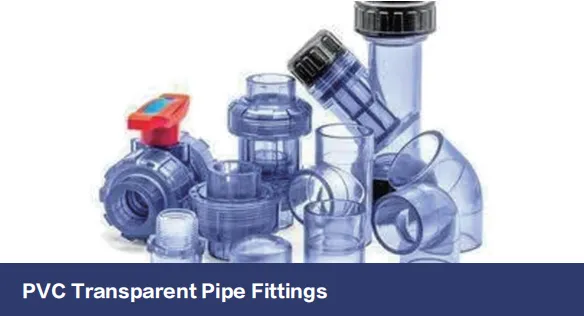
Let's be honest - PVC pipes are everywhere around us. From the water lines in our homes to the irrigation systems in our gardens, they're the unsung heroes of modern plumbing. But when we talk about
transparent PVC pipe connectors
, it's a whole different ball game. These see-through components give us a front-row seat to what's happening inside our pipes - which is both a blessing and a curse. When things go wrong with these fittings, you don't need X-ray vision to spot the problems. Today, we're rolling up our sleeves to dive deep into why these clear connectors fail and how to prevent those frustrating breakdowns.
The Double-Edged Sword of Transparency
There's something reassuring about being able to see the water flowing through your pipes. It's like having a window into your plumbing system. That visibility lets you spot debris, air pockets, or contamination before they become major headaches. But that same transparency makes every flaw, every tiny defect painfully obvious. Unlike their opaque cousins that can hide minor imperfections,
clear PVC fittings put everything on display.
Why Choose Transparent Fittings Anyway?
-
Problem-Spotting Superpower:
You can literally watch for issues like sediment buildup or biological growth before they cause clogs
-
Lab and Medical Must-Have:
In applications where purity matters (think pharmaceutical manufacturing or food processing), seeing is believing
-
Diagnostic Dream:
Ever tried finding an airlock in an opaque pipe? With clear fittings, it's like having built-in troubleshooting tools
-
Chemical Compatibility Checks:
You can spot discoloration or degradation immediately when nasty chemicals are flowing through
Where Things Go Wrong: Manufacturing Defects
Imagine spending good money on
clear PVC fittings only to find them failing right out of the box. It's infuriating! Most of these early failures trace back to manufacturing slip-ups. Unlike standard PVC, transparent varieties are unforgiving - any shortcut during production shows up like a spotlight on stage.
The Usual Manufacturing Suspects
-
The Phantom Line Defect:
That annoying visible line running through your fitting? It's often a "knit line" where molten PVC didn't fuse properly. The transparency magnifies what would be a minor flaw in opaque fittings
-
Crystal Clear Doesn't Mean Pure:
Contaminants that would go unnoticed in regular PVC turn into visible eyesores in transparent material. A single speck of dirt can become the focal point of your whole system
-
The Inconsistent Wall Tango:
Transparent pipes are especially vulnerable to uneven wall thickness. Thin spots become glaring weak points under pressure, like an overinflated balloon waiting to pop
-
The Stress Test Fail:
Residual stresses lock themselves into the material when cooling isn't carefully controlled. What you get is a fitting that looks fine until pressure is applied, then - crack!
Installation Pitfalls: Creating Problems That Weren't There
Even perfect fittings can fail if they're installed wrong. It's like buying a precision instrument and then bashing it with a hammer. The common thread? Impatience and improper handling.
Where Installations Go Off the Rails
-
The Over-Enthusiastic Jam:
Forcing pipe connections might feel satisfying but causes micro-fractures invisible until pressure reveals them dramatically
-
Chemical Warfare:
Using solvents meant for opaque PVC on clear fittings? That's asking for hazing and crazing. The solvents interact differently with transparency additives
-
Stress Beyond Imagination:
Bending pipes beyond their limits might work temporarily, but creates tension points screaming "Failure coming through!"
-
Support System Failure:
Skimping on pipe supports is like asking your fittings to do heavyweight lifting without gym training
The Chemical Combat Zone
Transparent PVC fittings have different chemical tolerances than their opaque siblings. That clarity comes at a price - reduced resistance to certain chemicals. What flows through them can literally eat them from the inside out, with front-row visibility to the damage.
Chemical Aggressors
-
Chlorine Shockers:
Municipal water's chlorine levels can turn clear fittings milky over time as the plastic degrades from within
-
Oil Slick Effect:
Hydrocarbons soften PVC in ways you'll see as distortion and warping long before failure - nature's early warning system
-
UV Betrayal:
Sunlight penetrating clear fittings acts like a magnifying glass on ants - accelerating damage silently until failure appears suddenly
-
The Thermal Expansion Trap:
Heat cycling causes expansion/contraction stresses that opaque PVC handles better. Clear versions show fatigue as surface crazing - like fine cracks in old porcelain
Pressure Problems: When Push Comes to Shove
Pressure fluctuations that standard fittings shrug off can wreck transparent ones. Why? Because those additives that provide clarity also subtly change the material's structural behavior. Water hammer isn't just noise - it's a jackhammer to your clear connectors.
Pressure-Related Pitfalls
-
The Hammer Effect:
Sudden pressure surges create shockwaves that brittle clear fittings withstand poorly compared to opaque versions
-
Temperature Tango:
Hot water expands while cold contracts - this dance stresses fittings where pipe meets connector repeatedly
-
Rating Roulette:
Assuming clear fittings share pressure ratings with opaque ones is like putting economy tires on a race car
Environmental Attacks: Nature's Silent Warfare
UV light doesn't just fade your patio furniture - it wages chemical warfare on PVC fittings. Unlike opaque pipes that are shielded by their own opacity, transparent fittings get full UV penetration. The damage starts internally and works outward.
Where Nature Strikes Hardest
-
UV Penetration Paradox:
The very transparency that's beneficial allows UV to reach deep into material integrity where stabilizers must work overtime
-
Oxidation Onslaught:
Air exposure at connection points initiates slow degradation visible as creeping yellow-brown discoloration from edges inward
-
Thermal Hammering:
Sun heating expands fittings while shade cooling contracts them - this daily flexing creates fatigue like bending a paperclip repeatedly
Material Flaws: The Hidden Time Bombs
You know that crystal clear look? It comes from carefully balanced formulation. But when manufacturers cut corners, the results can be catastrophic. Compromising on UV stabilizers might save pennies per foot but costs dollars in premature failures.
Formulation Failures
-
Stabilizer Shortfall:
UV inhibitors cost money. Under-dosing creates fittings that look beautiful initially but yellow and embrittle within months
-
Recycled Roulette:
Incorporating recycled material introduces contamination that shows as dark flecks and haze in otherwise transparent walls
-
Moisture Misfires:
Inadequately dried pellets steam-expand during extrusion, creating trapped bubbles that weaken structural integrity
-
The Plasticizer Problem:
Achieving clarity requires exact plasticizer balance. Overuse creates soft sticky surfaces while underuse yields brittle crack-prone fittings
Solutions That Actually Work
Enough about problems - let's talk solutions. Preventing transparent fitting failures requires attention throughout the lifecycle from specification to installation to maintenance. The solutions aren't complicated - they just require disciplined application.
Installation Wisdom
-
Preparation Perfection:
Cut pipes square and deburr thoroughly. A minute saved in prep costs hours fixing leaks later
-
Primer Precision:
Use clear-compatible primers sparingly. Swabbing like you're painting a wall guarantees solvent damage
-
Alignment Matters:
Misaligned pipes create constant stress. Use straight edges during assembly to prevent angled connections that warp fittings
Material Selection Smarts
-
UV Protection Priority:
Specify UV-stabilized grades with premium inhibitors. The label "natural clear" often indicates insufficient protection
-
Chemical Compatibility Checks:
Insist on chemical resistance charts specifically for transparent formulations - standard PVC ratings mislead
-
Pressure Rating Reality:
Derate pressure specifications at least 20% below opaque equivalents to account for reduced stress tolerance
Maintenance Must-Dos
-
Schedule Inspections:
Make quarterly visual checks mandatory - transparency lets you see developing issues before failure
-
UV Armor Application:
Apply UV-blocking paint or wraps to exposed sections - think sunscreen for your plumbing
-
Pressure Management:
Install water hammer arrestors and pressure regulators - your clear fittings will thank you with longevity
Forensic Failure Analysis: Become a PVC Detective
When failure happens, don't just replace - investigate. Like a crime scene, every ruptured fitting tells a story. Understanding what went wrong prevents repeat failures. Here's how to interpret the evidence.
Evidence Examination
-
Pattern Recognition:
Multiple fragments indicate high-speed brittle failure. Single fractures suggest slow stress cracking
-
Coloration Clues:
Yellowing localized at joints points to adhesive/solvent issues. Overall discoloration signals UV degradation
-
Crack Trailblazing:
Radial cracks spreading from one origin indicate impact or pressure surge. Parallel cracks suggest material fatigue
Investigation Protocols
-
Material Verification:
Perform FTIR analysis comparing failed material against specification - it reveals substandard formulations
-
Microscopic Forensics:
Examine fracture surfaces under magnification. River-line patterns reveal fracture propagation direction
-
Durometer Testing:
Measure hardness variation across the fitting - significant differences indicate uneven stabilization
Final Thoughts
PVC transparent
pipe connectors give us something precious - visibility. But that transparency demands respect. By understanding the unique failure modes of clear fittings, we can prevent the frustrating breakdowns that plague poorly specified and installed systems. The solutions aren't mysterious - proper specification, careful installation, and smart maintenance make all the difference. Treat your transparent fittings as specialized tools rather than generic plumbing parts, and they'll deliver years of reliable service with crystal-clear performance.