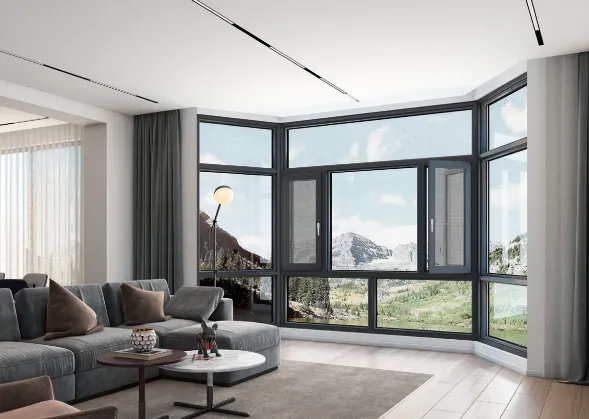
Casement Window Series Solutions: A Comprehensive Guide for Modern Construction Projects
Understanding the role of casement windows in residential, commercial, and hospitality projects — and how to source them efficiently.
When architects and project managers evaluate fenestration options, casement windows consistently rank among the most versatile and performance-driven choices available. Unlike sliding or double-hung designs, casement windows open outward on side hinges, offering superior ventilation control, unobstructed views, and a tighter seal against wind and water. For developers, contractors, and procurement professionals working on everything from single-family homes to large-scale hospitality projects, sourcing the right
casement window series solutions can significantly impact both project timelines and long-term building performance.
COLORIA GROUP, a comprehensive
building material supplier headquartered in Foshan, China, offers a wide selection of casement window configurations designed to meet diverse architectural and climatic requirements. With an overseas agent in Saudi Arabia and decades of combined industry experience, the company provides end-to-end support for international buyers seeking reliable
windows & doors solutions.
Why Casement Windows Remain a Top Choice for Modern Projects
Casement windows have been a staple of architectural design for centuries, but their advantages remain highly relevant in contemporary construction. Several factors contribute to their enduring popularity among builders and property owners alike.
Superior Ventilation and Airflow Control
Because casement windows open fully outward — unlike sliding windows that only expose half the opening — they can capture and direct breezes into a room more effectively. When multiple casement windows are positioned strategically on different walls, they create cross-ventilation that naturally cools interior spaces, reducing reliance on air conditioning in temperate climates.
Excellent Weather Sealing
When a casement window closes, the sash presses firmly against the frame, compressing the weatherstripping around the entire perimeter. This creates a significantly tighter seal than sliding or hung windows, which rely on brush seals that can degrade over time. For projects in coastal areas, high-wind zones, or regions with heavy rainfall, this sealing performance translates directly into better energy efficiency and lower long-term maintenance costs.
Unobstructed Views and Natural Light
Casement windows typically feature a single pane of glass without a central rail or meeting stile, offering uninterrupted sightlines. For residential projects where scenic views are a selling point, or for hotel rooms where guests expect a premium experience, this design characteristic adds tangible value.
Key Considerations When Selecting Casement Windows
Choosing the right casement window for a specific project involves more than just picking a design that looks good. Below are the critical factors that project stakeholders should evaluate before placing an order.
Frame Material: Aluminum, uPVC, or Wood
Each frame material brings distinct characteristics to the table. Aluminum offers slim profiles, high strength-to-weight ratio, and excellent corrosion resistance — making it ideal for large openings and coastal environments. uPVC provides strong thermal insulation at a lower cost, suitable for residential projects in moderate climates. Wood frames deliver a classic aesthetic and natural insulation properties, though they require more maintenance over time. The choice should align with the project's climate zone, budget, and design intent.
Glazing Configuration
The glass package is arguably the most important specification for thermal and acoustic performance. Double-glazed units with low-E coatings and argon gas fill are now standard for many markets, while triple glazing may be required for colder regions or projects targeting higher energy ratings. For projects near busy roads or airports, acoustic laminated glass can significantly reduce noise transmission.
Hardware Quality and Operation
Casement window hardware — including hinges, handles, multi-point locking systems, and friction stays — directly affects daily usability and long-term durability. European-standard hardware from established manufacturers tends to offer smoother operation and longer service life. For projects specifying large or heavy sashes, reinforced hinges and restrictor stays become essential safety components.
Opening Direction and Egress Requirements
Building codes in most jurisdictions require bedroom windows to serve as emergency egress points, which means the opening must meet minimum clear width and height dimensions. Casement windows naturally excel in this regard because they open fully, unlike sliding windows that only expose half the opening. However, the hinge side and opening direction must be coordinated with furniture placement, landscaping, and adjacent walkways to avoid conflicts.
Casement Windows Across Different Project Types
| Project Type | Typical Requirements | Recommended Configuration |
|---|
| Residential Homes | Energy efficiency, easy operation, aesthetic appeal | Thermal break aluminum frame with double glazing, multi-point lock |
| Hotels & Resorts | Acoustic insulation, large openings, consistent finish | Heavy-duty aluminum with acoustic laminated glass, uniform color finish |
| Commercial Offices | Ventilation control, security, low maintenance | Aluminum frame with restrictor stays, lockable handles |
| Coastal Properties | Corrosion resistance, high wind load rating | Marine-grade aluminum or stainless steel hardware, impact-rated glass |
| Educational Facilities | Safety compliance, durability, natural light | Restricted opening with safety stays, laminated safety glass |
The Sourcing Advantage: Why Work with a Specialized Supplier
For international buyers, sourcing casement windows from overseas factories involves navigating technical specifications, compliance requirements, logistics coordination, and quality assurance — all while managing project timelines. A specialized supplier with direct factory relationships in Foshan, the heart of China's building materials industry, can streamline this entire process.
COLORIA GROUP bridges the gap between international project requirements and Chinese manufacturing capabilities. The company's team helps clients clarify technical specifications before factory matching, ensuring that the quoted system aligns with the project's wind load requirements, thermal performance targets, and local building code expectations. This front-end clarity reduces the risk of costly revisions and delays later in the project cycle.
One-Stop Efficiency: Beyond casement windows, COLORIA GROUP supplies a comprehensive range of building materials — from flooring, walls, and ceilings to sanitary fixtures, customized furniture, home appliances, elevators, and solar panels. For projects requiring multiple product categories, consolidating orders through a single supplier reduces coordination overhead, shipping costs, and supply chain complexity.
Quality Control and Export Preparation
Quality assurance is a critical concern for any overseas procurement. Reputable suppliers implement systematic inspection protocols at key production stages. Before shipment, each casement window unit should undergo dimensional verification, opening direction confirmation, hardware functionality testing, and surface finish inspection. Glass condition, gasket integrity, and weatherstripping fitment also require attention.
For export, proper packaging is essential. Protective film on aluminum profiles, corner protectors, foam or pearl cotton wrapping, and plywood or wooden crate reinforcement help prevent transit damage. Each unit should be clearly labeled with a reference number matching the approved shop drawings and window schedule, enabling the site team to identify and position each window correctly during installation.
Installation: The Final Piece of the Puzzle
Even the highest-quality casement window will underperform if installed incorrectly. Before production begins, the supplier should understand the planned installation method and the wall structure — whether concrete, block, timber frame, or steel — so that appropriate fixing accessories, brackets, and drainage details can be prepared. After goods arrive on site, the installation team should follow a systematic process: unpack carefully, verify quantities against the packing list, check for any transit damage, install according to the wall-specific method, test operation, and complete perimeter sealing for weather tightness.
Ready to Source Casement Windows for Your Next Project?
COLORIA GROUP provides tailored casement window solutions backed by extensive product knowledge and international project experience. Whether you are outfitting a single residence, a hotel complex, or a multi-building commercial development, our team is ready to assist with product selection, specification review, and supply chain coordination. Contact us today to discuss your project requirements and receive a customized quotation.
At COLORIA GROUP, we believe that every building material decision should move your project forward — not create new obstacles. With a comprehensive product portfolio spanning 13 categories and over 560 products, we are committed to being your trusted partner in construction. Together we build the future.