Imagine standing on a sun-drenched Greek island, the Aegean shimmering in the distance. It's paradise—until you realize there's no water coming from the tap. For decades, this wasn't just imagination for residents of places like Thirassia or Strongili Island. While tourists sipped cocktails, locals lived with water shortages that threatened their very existence. It's ironic, really—surrounded by endless saltwater, yet parched by thirst.
Greek islands face what hydrologists call the "liquid paradox": Over 6,000 islands scattered like jewels in the sea, yet most can't sustain their own drinking water. Back in the 1960s, officials shipped water to Syros Island by tanker—a stopgap measure that somehow became permanent. By 2009, this absurd reality saw 429,075 cubic meters of water hauled to Cyclades alone, costing €8.32 per cubic meter. That’s like paying champagne prices for tap water.
"People are unaware of the challenges behind their vacations to Greece," says Prof. George Papadakis from Athens Agricultural University. "Water problems are nearly always connected to electricity problems."
He nailed it. Traditional desalination plants guzzle power from diesel generators—expensive and dirty. Solar solutions? That felt like trying to solve thirst by drinking seawater. Until recently.
Thirassia, a tiny dot near Santorini, became ground zero for revolution. With tourism booming and water reserves crashing, they deployed a Norwegian-Greek collaboration: A 200 m³/day desalination plant powered by a 60-kW photovoltaic system.
Here’s what made it work:
-
Net-metering magic: Excess solar energy fed back into the grid
-
Battery costs dropped 40% since 2018, making storage feasible
-
Norwegian tech optimized reverse osmosis membranes
Results were stunning: €56,000 annual savings, drinking water purity at 99.8%, and 320 residents gaining water autonomy. For fishermen and taverna owners alike, it meant no more rationing showers or buying bottled water.
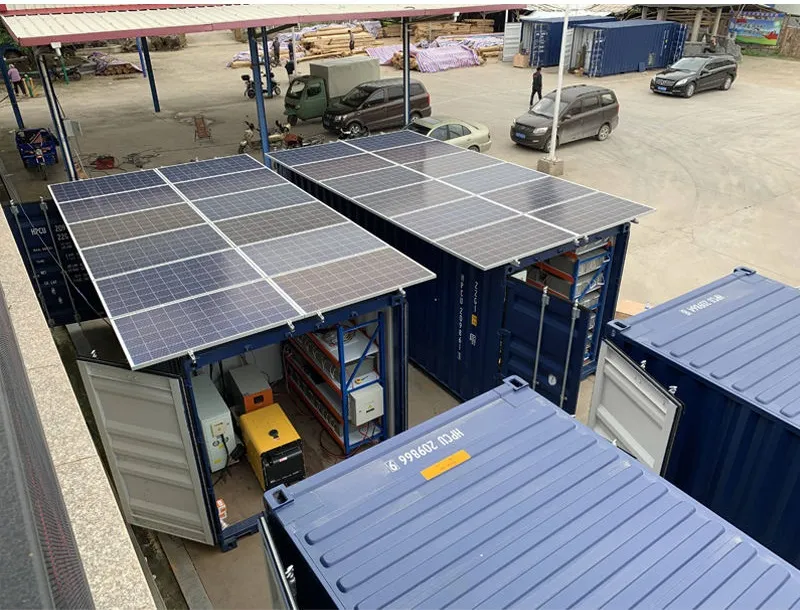
No power grid? No problem. On Strongili, home to a remote military base, engineers packed desalination tech into shipping containers. Five photovoltaic panels and reverse osmosis systems now produce 5 m³/day—enough for the base and surrounding families.
Engineer Ziad Taraby, who designed the system, grins recalling the payoff: "Soldiers used to conserve every drop. Now we catch them washing Jeeps! Payback period? Less than four years." The system cost €150,000—far cheaper than eternal water barges.
What makes these projects hum? Forget clunky old-tech: Modern solar desalination uses:
Variable Frequency Drives
: Smart pumps adjusting to sunlight intensity
Hybrid Systems
: French firm Mascara's trials in Abu Dhabi combine solar/wind
Modular Design
(as seen on Strongili): Plug-and-play units deployable in 72 hours
Battery limitations once made off-grid impossible. Now, lithium-ion systems work flawlessly through moonless nights. As Prof. Papadakis notes: "Ten years ago, we needed miracles. Today's tech? It's straightforward engineering."
For islanders, water freedom reshapes communities. Take Maria, who runs a Santorini guesthouse: "Before, tourists complained about shower pressure. Now? We advertise 'sustainably sourced water'—it’s a marketing bonus!" Farmers now irrigate herb gardens, and schools stay open during summer droughts.
Crucially, it halts depopulation. Young families aren’t fleeing to Athens anymore. "Why leave?" asks fisherman Yiannis. "We've got sun, sea, and now... security."
Greece currently has 200,000 m³/day desalination capacity, but solar’s share remains tiny. With projects expanding in Mauritius and Cape Verde using lessons from Greek islands, the template is spreading.
As VP Nektario Santorinio declared: "Water autonomy is non-negotiable. No island should depend on boats for survival."
Challenges linger: Membrane fouling from Aegean algae needs better filters, and storms occasionally batter equipment. But the trend is irreversible.
Looking ahead, AI-powered systems will predict solar output and water demand, while floating solar farms—like those tested in Singapore—could surround islands. "We're just scratching the surface," says Taraby. "Imagine desalination hubs powering entire archipelagos."
These solar-powered water revolution stories reveal something profound. As climate change intensifies, drought-plagued regions worldwide—from California to Cape Town—could replicate these sun-drinking marvels. The Greek islands, once victims of geography, became pioneers turning seawater into hope.
So next time you sip water on Mykonos, pause. That refreshing gulp? It’s the taste of ingenuity—salt transformed by sun.