
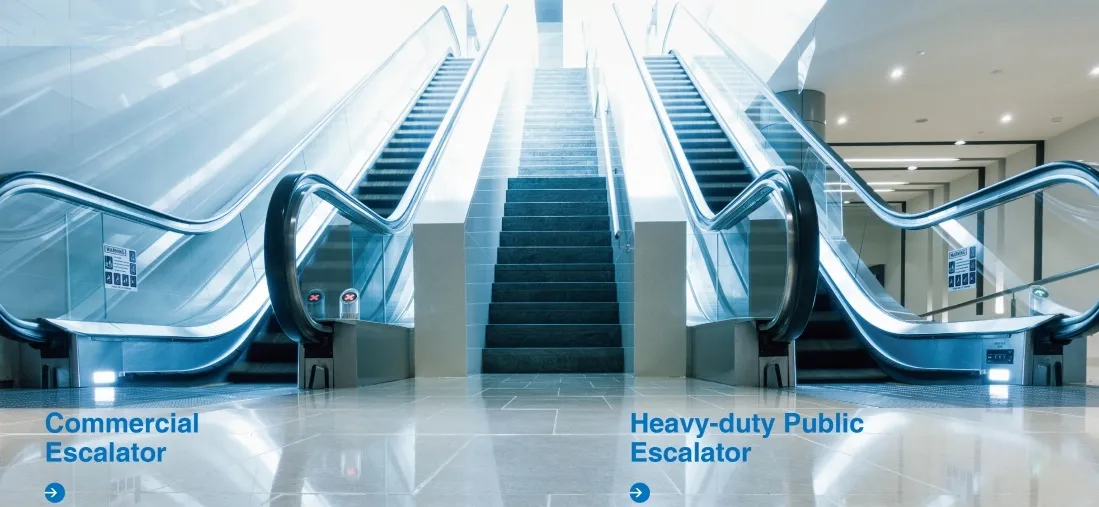
Ever wondered why escalators seem to effortlessly move thousands of people through shopping centers, airports, and transit hubs? It all comes down to precision engineering – and at its core are three critical parameters: inclination angle, step width, and conveying capacity. Getting these right doesn’t just save space; it ensures smooth traffic flow and avoids those awkward pile-ups when escalators get clogged.
Commercial escalators function like carefully choreographed dances. Every movement – from step mechanics to passenger flow – depends on these core calculations:
That gentle slope you ride isn’t random. Decades of human factors research led to the magic numbers:
Where L is the escalator’s slope length. This creates two industry favourites:
Ever watched rush hour at Grand Central Terminal? Here’s how engineers prevent escalators from turning into logjams:
Let’s unpack this:
| Symbol | Meaning | Typical Value |
|---|---|---|
| V | Speed | 0.5-0.7 m/s (1.6-2.3 ft/s) |
| W | Step Width | 600-1000 mm (24-40 in) |
| Step Length | Standard step depth | 400-500 mm (16-20 in) |
Real-world example : An 800mm escalator at 0.6 m/s speed carries ≈6,750 people/hour in ideal conditions – but always allow 20% buffer for bags, strollers, and distracted phone-scrollers!
Architects and engineers often face the “Tetris challenge” of cramming escalators into existing footprints. Here’s their playbook:
Commercial projects in Dubai and Singapore frequently adopt these techniques, working closely with **elevator suppliers** to integrate vertically efficient solutions.
Beyond calculators, human behavior dictates safety specs:
The Copenhagen Airport expansion proved how calculations translate to reality:
That "escalator temporarily stairs" sign appears faster when specs are neglected. Maintenance essentials:
Mastering escalator calculations isn't just about trigonometry and physics – it’s about predicting human behavior under pressure. That step width? It’s where a parent will park their stroller. That incline angle? It determines whether an elderly passenger feels secure enough to ride solo. And conveying capacity? It’s the difference between a smooth morning commute and rush hour chaos.
Next time you glide effortlessly up an escalator, remember: that smooth ride came from thousands of precise calculations balancing steel efficiency against human unpredictability. Now that's engineering with soul.
Recommend Products












