
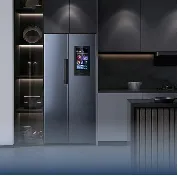
Smart purchasing decisions for restaurants, offices, and retail businesses
Refrigerators aren't just nice-to-have appliances – they're the backbone of many businesses. Whether you're running a bustling restaurant kitchen, maintaining employee break rooms in a corporate tower, or storing products in a retail setting, these workhorses keep things running smoothly day in and day out.
Think about it: from keeping dairy products at safe temperatures in cafes to preserving medication samples in medical offices, refrigerators perform countless invisible duties. When you're buying for business needs – especially multiple units – wholesale becomes your most financially savvy option. Bulk purchasing dramatically reduces your per-unit costs without compromising on quality.
The true value emerges when you view refrigerators as more than just metal boxes. They represent food safety compliance, operational continuity, and smart resource allocation. Choosing wisely affects everything from your monthly electricity bills to customer satisfaction.
When purchasing wholesale, you're not limited to basic models. The market offers premium brands that deliver top-tier performance. Take Bosch, for instance – their German-engineered units feature precision temperature control perfect for delicate ingredients. Maytag provides American-built durability that handles high-volume environments. Then there's KitchenAid with their pro-style designs that combine form and function.
For specialized needs, brands shine in particular areas:
From corporate campuses to family-owned diners, wholesale refrigeration meets diverse needs:
Take restaurant owners – they might need separate units for produce, dairy, beverages, and backup storage. Large offices require multiple break room refrigerators across different floors. Retail pharmacies need specialized medical refrigeration for sensitive products. Purchasing these individually adds substantial costs that impact your bottom line.
Commercial buyers find wholesale particularly advantageous because their applications often require specific features: restaurant-grade shelving that withstands heavy sheet pans, medical units with precise temperature monitoring, or dorm-style refrigerators with lockable compartments.
Choosing refrigerators isn't just about finding the cheapest price tag. Consider these factors:
Measure your available space and calculate your storage requirements. Remember that an overstuffed refrigerator works harder and costs more to operate. For commercial kitchens, counter-depth models often work better than residential units.
Look for ENERGY STAR® certified models that save 15-20% on electricity costs. Commercial-grade insulation and compressors make significant long-term differences in operational expenses.
Glass doors create attractive displays but increase energy usage. Temperature alarms protect valuable inventory. Smart technology enables remote monitoring – a game-changer for multiple-location businesses.
Always choose reliability over flashy extras unless those features directly serve your business needs. The best kitchen appliances balance functionality with durability.
Reputable wholesalers provide more than just boxes arriving at your loading dock. They offer:
These suppliers essentially become refrigeration partners who understand that your restaurant can't function when a refrigerator fails, or your research samples can't survive temperature fluctuations. The best offer white-glove service including installation coordination and warranty management.
Building relationships with wholesale partners pays dividends when urgent needs arise or when planning major facility upgrades. They become an extension of your operations team.
Behind every humming refrigerator is sophisticated engineering. The thermal compartment's magic comes from heat pumps transferring internal warmth to the external environment. Commercial units maintain temperatures around 38°F—critical for preventing bacterial growth while avoiding ice crystal formation on delicate items.
Advanced compressors adjust their cooling intensity based on internal loads rather than running in constant on/off cycles. This not only extends equipment lifespan but maintains more consistent temperatures – a crucial advantage when preserving delicate bakery ingredients or expensive pharmaceuticals.
Commercial units also feature heavier-duty components designed for near-continuous operation – stainless steel shelving rated for heavy loads, gaskets maintaining seals despite constant door openings, and condensate systems handling significant humidity fluctuations. These engineering differences matter when refrigerators run 24/7 rather than the residential average of 8-10 hours daily.
Extend your refrigerator's lifespan and efficiency with proper maintenance:
Monthly condenser coil cleaning prevents dust buildup that increases energy consumption by up to 25%. Use specialized brushes for hard-to-reach areas.
Check gaskets quarterly by closing a dollar bill in the door. If it pulls out easily, replace seals to prevent cold air leaks.
Place thermometers in warmest spots (typically door shelves) and log readings weekly to catch problems early.
Scheduling professional tune-ups every 18-24 months prevents minor issues from becoming expensive repairs. Technicians measure refrigerant levels, calibrate thermostats, and inspect electrical components.
Recommend Products












