
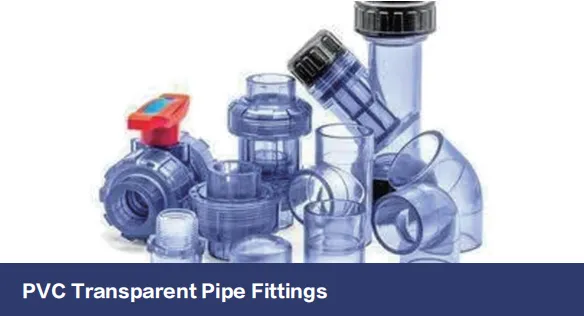
Picture this: you're running a critical system where knowing exactly what's flowing through your pipes makes all the difference between smooth operations and costly downtime. That's where clear PVC fittings come into play – your window into the hidden world of fluid dynamics! These transparent connectors aren't just plumbing components; they're peace-of-mind insurance for anyone managing flow systems.
Unlike traditional opaque fittings, these crystal-clear alternatives let you literally see what's happening at every joint, turn, and junction. Imagine spotting a blockage before it shuts down your entire operation or catching algae growth the moment it starts. That's proactive maintenance made simple!
In industries ranging from pharmaceutical manufacturing to commercial aquariums, these see-through fittings have revolutionized monitoring practices. Operators no longer need to guess about sediment buildup or flow consistency – they can visually confirm system health during routine checks. It's like having X-ray vision for your plumbing network!
These fittings act as both functional connectors and diagnostic tools. In scientific research labs, for example, transparent pipe connectors become essential for visual data collection during experiments. Biological studies rely on them to monitor organism behavior in closed systems without introducing contaminants.
Just like a well-stocked toolbox, you'll want different fittings for different jobs. Here's what your plumbing arsenal should include:
90° & 45° elbows: Your go-to for clean directional changes. These let you navigate around obstacles while maintaining visibility through every bend. The precision-molded corners ensure flow consistency without dead zones where contaminants collect.
Tees and Wyes: The decision-makers in your flow network. Watch how fluids mix and separate at junction points - crucial for chemical processing where reactions need monitoring. The transparency ensures you catch phase separation or incomplete mixing immediately.
Couplings & Adapters: The unsung heroes joining different pipe types or extending runs. Their clear design means you verify proper alignment and seating during installation - no more guessing games about connection integrity.
Caps & Plugs: More than just end-points, these serve as inspection ports. Temporarily cap a line during maintenance and peer inside without disassembly. Their threaded variants create convenient access points for sampling.
Bushings & Reducers: The transition specialists handling diameter changes while maintaining full visibility. See how flow characteristics change at constriction points - invaluable for flow calibration and troubleshooting.
From monitoring nutrient flow in hydroponic farms to ensuring chemical purity in semiconductor manufacturing, these fittings deliver unparalleled visual verification across sectors. Their non-reactive nature makes them particularly invaluable in situations where material purity is paramount, such as medical infusion systems or beverage production lines.
Municipal water authorities increasingly use transparent PVC fittings in treatment facilities to visually monitor filtration effectiveness. You can literally see particulate matter being captured - immediate validation that systems function correctly before water enters distribution networks.
Biolabs rely on these fittings to observe organism behavior in closed ecosystems without introducing contamination. Pharmaceutical facilities install them at critical junctions where visual confirmation of solution clarity provides quality assurance before filling operations.
Aquatic applications form another significant sector, where zoo habitats, public aquariums, and aquaculture facilities all depend on clear fittings. They allow staff to monitor life-support systems without disruptive testing, watching for biofilm development or debris accumulation that might impact sensitive species.
Understanding the technical specs ensures you get fittings that perform:
Size Spectrum: Ranging from ¼" for precision instrumentation to 8" for industrial process lines, each size serves specific applications. Laboratory setups typically use ½" to 1" fittings, while commercial systems employ 2"-4" for main lines.
Schedule 40 Standard: This wall thickness provides the ideal balance between durability and visibility. Thicker than drainage pipes but without sacrificing transparency, it withstands industrial pressures up to 150 PSI depending on diameter.
Connection Types: Primarily socket-type for solvent welding, with threaded adapters available. The clear PVC cement recommended creates nearly invisible bonds while maintaining structural integrity - critical for pressurized systems.
Premium transparent PVC fittings meet rigorous standards ensuring reliability:
These certifications aren't just paperwork - they represent real-world performance. The FDA approval specifically matters for pharmaceutical applications where leachables could compromise products. Similarly, NSF certification guarantees no harmful compounds migrate into drinking water systems.
Double containment systems represent an increasingly important application, where the transparent outer layer allows visual inspection of containment integrity - an essential safeguard when handling hazardous materials where primary pipe failure could have environmental consequences.
Achieving leak-free, crystal-clear connections involves proper technique:
Cutting & Preparation: Use fine-tooth saws and deburring tools to create perfectly square ends. Any angular cut creates uneven stress points and distorts visibility through the joint.
Priming: Yes, you need specialty clear primer! It's not optional - this step prepares the PVC surface for molecular bonding. Watch the solvent wipe dissolve the surface layer, creating a fused connection rather than just a glued joint.
Welding: Apply cement to both fitting socket and pipe end using the applicator brush. Work quickly - you've got about 30 seconds before flashing starts. Push and twist components together to distribute cement evenly throughout the joint surface.
The twist action distinguishes amateurs from pros - this rotation ensures complete cement coverage and eliminates dry spots. Hold joints firmly for 30 seconds as initial flash curing occurs. Remember - you shouldn't see any cement bubbles or haze inside transparent fittings when done right!
Curing times vary by pipe diameter - wait at least 30 minutes before pressure testing small fittings. Larger diameter fittings need several hours. Patience prevents do-overs!
Even with quality fittings, issues can arise. Here's how to keep your systems crystal clear:
Hazing & Cloudiness: Usually results from chemical exposure beyond rating limits. Verify compatibility charts before introducing new chemicals. For existing systems, specialized polishes can restore clarity if caught early.
Surface Scratching: Despite good impact resistance, abrasives will cloud surfaces. Install in protected locations where possible. For unavoidable high-contact areas, protective covers maintain clarity without restricting visibility.
Biological Growth: A benefit becomes a challenge - seeing buildup means it's time for cleaning! Develop regular maintenance schedules using NSF-approved sanitizers that don't degrade PVC.
Solvent Fogging: Happens when joints cure too quickly in hot environments. Schedule installations during cooler periods and work in small sections. Proper ventilation prevents vapor buildup that creates internal condensation before seals set.
Shopping for PVC fittings online shouldn't be confusing when you know what to look for:
Material Authentication: Reputable sellers provide mill certificates and compliance documentation on request. Don't settle for vague claims - verify actual certifications matter.
Bulk Savings: Many wholesalers offer tiered pricing starting at just 10 pieces. Combining orders with other maintenance items often unlocks freight discounts.
Virtual Assistance: Leading suppliers have chat support with product specialists - not just salespeople. Describe your application and get expert configuration guidance before purchasing.
Search Optimization: Use precise terminology like "clear PVC socket tee" or "transparent reducer bushing" when searching. Filter by size, schedule rating, and connection type to eliminate incompatible options.
The most satisfied customers combine smart filtering with expert advice. They check diameter compatibility with existing systems first, then confirm pressure ratings for new applications. Finally, they verify chemical compatibility specifics rather than assuming "all PVC is the same." This triple-check approach prevents installation surprises.
Remember that specialized applications like double containment systems need more than standard fittings. Discuss your project specifics with technical staff - they often know niche solutions like specialized adhesives that maintain transparency under unique conditions.
While initial cost matters, the real value of transparent fittings emerges over time:
Preventative Maintenance Savings: Identifying problems early avoids expensive system-wide failures. A $5 fitting that catches a blockage can prevent thousands in downtime.
Training Value: New technicians learn system behavior by seeing flow dynamics directly. This accelerates troubleshooting competency without expensive simulation equipment.
Documentation Benefits: Regular inspection photos showing pristine interiors serve as compliance records. During audits, these visual histories demonstrate consistent maintenance better than log sheets alone.
Upgrade Planning: Over time, transparency reveals system improvements needed. Watch where sediments consistently collect and redesign problem areas during scheduled maintenance.
Transparent PVC technology continues evolving with exciting developments:
Hybrid Sensor Fittings: Prototype fittings now incorporate optical sensors at critical points, digitally recording flow characteristics while maintaining visual verification options.
Self-Cleaning Surfaces: Nano-coating research aims to create fittings that resist biofilm adhesion and mineral buildup without affecting transparency or chemical resistance.
Enhanced Materials: Next-gen PVC compounds promise wider temperature tolerance beyond the current 140°F limit, potentially replacing glass in some laboratory applications.
As industrial IoT advances, these humble transparent fittings will become data collection points in smart plants. Future technicians might glance at fittings during rounds while algorithms continuously analyze digital flow patterns - the perfect marriage of human intuition and machine precision!
Recommend Products












