
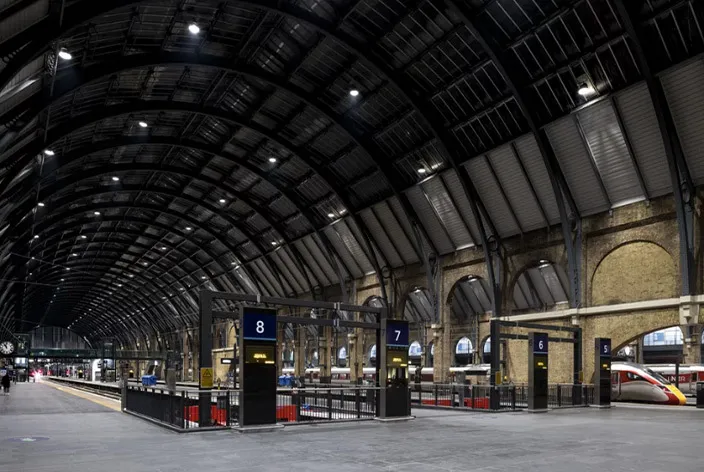
Walking into a dimly lit warehouse feels like stepping into a cave, doesn't it? You squint to read labels, productivity drops, and safety hazards lurk in every shadowy corner. That's exactly why savvy facility managers are turning to wholesale lighting fixtures solutions. But here's the kicker – not all industrial lighting is created equal, and paying retail prices for commercial-scale projects? That's basically burning money.
Let me share a quick story. Last year, a distribution center manager friend of mine was struggling with energy bills that'd make your eyes water. After switching to wholesale LED lights through a direct manufacturer relationship? He slashed his lighting energy costs by 62% while tripling brightness. The ROI came faster than he'd ever imagined.
When we talk industrial spaces, we're not discussing your aunt's cozy reading nook. We're talking warehouses the size of football fields, manufacturing plants running 24/7, and logistics hubs where every minute of downtime costs thousands. In these environments, lighting isn't decorative – it's mission-critical infrastructure.
Let's cut to the chase: traditional high-bay fixtures are energy vampires. Modern LED industrial lights consume up to 75% less power while delivering brighter, more uniform illumination. For a mid-sized warehouse running 100 fixtures? That translates to $12,000+ in annual savings right off your utility bills.
Remember those old metal halide fixtures needing scaffoldings and specialized crews for bulb changes? LEDs last 5-10 years with zero filament to break. When your lighting solution outlasts most of your equipment, you eliminate disruptive maintenance cycles that kill productivity.
Proper industrial lighting reduces accidents by up to 60% according to OSHA studies. When forklift operators can see cross-traffic clearly and assembly line workers spot micro-defects? That's not just compliance – that's protecting your team and your bottom line.
The lighting industry loves its acronyms and technical specs. Let's decode what actually matters for industrial buyers:
| Feature | Traditional Options | Modern Solutions | Why It Matters |
|---|---|---|---|
| Lumens/Watt | 50-80 lm/W | 130-200 lm/W | More light per dollar spent on electricity |
| CRI (Color Accuracy) | 60-70 CRI | 80-95+ CRI | Critical for quality control and safety inspections |
| Lifespan | 10,000-20,000 hours | 50,000-100,000 hours | Reduces replacement costs and downtime |
| Durability | Glass bulbs, fragile | Impact-resistant polycarbonate | Survives tough industrial environments |
Industrial lighting markets have seasonal patterns just like anything else. Q4 is golden – manufacturers push to meet annual targets and offer their steepest discounts. Alternatively, watch for industry trade shows where vendors announce show specials.
Here's a pro tip most sales reps won't share: Many industrial fixtures share identical internal components regardless of housing design. By opting for standard rather than fully customized architectural lighting solutions , you can save 15-30% without sacrificing performance.
Coordinating with regional peers through industry associations creates massive bargaining power. When three manufacturing plants jointly order 500 fixtures instead of separate orders for 150? That triggers serious volume discounts from China lighting manufacturer sources.
Skipping distributors isn't just about eliminating their markup. Direct relationships with manufacturers give you access to engineering teams who can help optimize layouts – often reducing fixture counts by 20% while improving light distribution. That's double savings.
The wholesale lighting market resembles the Wild West at times. Some guidelines to avoid costly mistakes:
Certifications That Actually Matter:
For industrial settings, UL 1598 isn't optional – it's mandatory insurance. For wet locations like food processing? IP65 rating or higher. Extreme temperatures require fixtures rated for -40°F to 140°F operation.
The Warranties Trap:
A 5-year warranty sounds great until you realize labor isn't covered. True premium suppliers offer comprehensive parts + labor coverage. And watch for "pro-rated" warranties that become worthless after Year 3.
Sample Testing Protocol:
Never commit to pallets of fixtures without first testing samples. Run them 24/7 in your actual environment for two weeks. Check for: consistent brightness, audible buzzing, abnormal heat patterns, and dimming consistency if applicable.
Lighting tech evolves rapidly. While upgrading your industrial space, consider these forward-thinking strategies:
Smart Controls Integration:
select fixtures compatible with motion sensors, daylight harvesting controls, and IoT systems. Even if you don't deploy immediately, having DALI-dimmable drivers installed means effortless upgrades later.
Dealing With Obsolescence:
Request manufacturers' product lifecycle roadmaps. Insist on multi-year availability guarantees for replacement parts. Better yet – store 3% extra fixtures in climate-controlled storage for emergencies.
The Solar Synergy Play:
Pairing efficient LED lighting with solar isn't science fiction. Modern systems allow DC-powered lighting runs directly from solar arrays. For daylight operations? Your lighting effectively becomes free after payback period.
The Challenge:
Midwestern auto parts factory (425,000 sq ft)
- 800 old fluorescent fixtures
- Frequent bulb replacements disrupting assembly lines
- Lighting-related safety incidents averaging twice monthly
- Annual energy costs: $216,000 just for lighting
The Solution:
- Wholesale purchase of 820 high-bay LED fixtures
- Strategic layout redesign reducing required fixtures
- Integration with motion sensors in low-traffic areas
- Group purchase through automotive trade association
The Results (Year 1):
- Energy costs dropped to $82,000 (-62%)
- Zero lighting-related safety incidents
- Production line defects decreased by 17%
- Maintenance labor savings: 320 hours annually
- Full project ROI achieved in 14 months
That last bullet is crucial – a well-executed wholesale lighting overhaul paid for itself in barely over a year. Show me another industrial upgrade that delivers that speed of return.
Navigating the wholesale industrial lighting landscape requires expertise, but pays tremendous dividends. Whether retrofitting existing facilities or lighting new construction, strategic sourcing delivers better illumination at dramatically lower lifecycle costs.
Remember the fundamentals: - Never pay retail for industrial-scale lighting - Technical specs matter more than brand names - Partner with manufacturers who understand industrial realities - View lighting not as an expense, but as a productivity tool
Upgrading your facility's lighting might not sound as exciting as new robotics or automation systems. But when it transforms your bottom line while making your workspace dramatically safer and more efficient? That's not just illumination – that's industrial transformation.
Recommend Products












