
You know that feeling when you plug in your phone charger or flip a light switch without a second thought? That seamless confidence comes from an intricate safety system governed by British Standards. These regulations are the unsung heroes in our daily electrical interactions - the engineering marvels ensuring your home doesn't become an accidental science experiment.
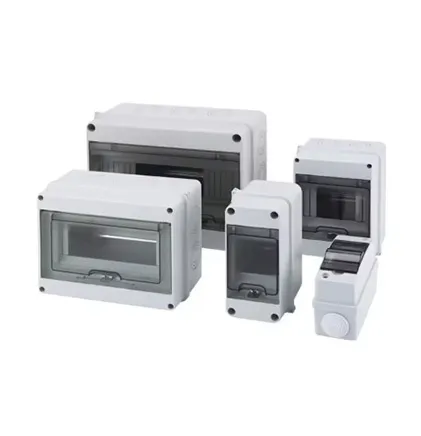
Distribution boxes and sockets quietly orchestrate power flow through our homes while preventing potential disasters. These electrical components might seem like humble plastic rectangles adorning your walls, but beneath their unassuming exteriors lie meticulously engineered safety systems governed by exacting British Standards.
Think about the countless electrical appliances humming in your home at this moment. Your kettle, television, gaming console – all demanding power through sockets governed by BS 1363. This standard prevents overloading through fuse protection, ensures child safety with shutter mechanisms, and specifies fire-resistant materials that can withstand years of use.
The introduction of the three-pin plug under BS 1363 during post-war Britain revolutionised home electrical safety, creating what many experts consider the world's safest domestic plug system . Its innovative fused plug design was so effective that it became a model for numerous international standards.
Distribution panels meanwhile serve as the traffic controllers of your home's electrical flow. They route power where it's needed while circuit breakers stand guard like electronic sentries, ready to cut supply the millisecond something goes wrong. This complex dance of electrons stays contained and controlled thanks to specifications within BS EN 61439.
When you examine that ordinary-looking socket on your wall, you're seeing decades of safety evolution captured in plastic and brass:
Built-in Protectors: Ever notice how you can't stick a screwdriver into just one hole? That's the shutter mechanism demanding equal pressure on both live and neutral pins, preventing accidental contact with live components.
Thermal Resilience: Materials must withstand 960°C glowing wire tests without igniting or excessive deformation - imagine a paperclip heated to cherry-red temperatures pressed against the plastic.
Physical Toughness: Impact tests require sockets to survive a 1kg steel ball dropped from 150mm without compromising safety barriers or exposing conductors.
Water Resistance: Vertical surface splash tests guarantee protection against accidental liquid exposure during everyday use.
These features explain why British sockets include those famously large plugs instead of the slimmer continental versions. That extra bulk contains essential engineering that's prevented countless electrical accidents in UK households.
Manufacturers undergo rigorous testing procedures before receiving British Standard certification:
| Test Category | Examples | Certification Impact |
|---|---|---|
| Electrical Safety | Dielectric strength tests, earth continuity measurements | Prevents electric shock hazards under fault conditions |
| Mechanical Durability | Plug insertion/extraction cycles, impact resistance testing | Ensures long-term reliability through physical wear |
| Thermal Performance | Temperature rise evaluations, heat resistance verification | Prevents overheating and potential fire hazards |
| Environmental Safety | Flammability testing, toxic emission analysis | Protects both property and human health |
Certification bodies like BSI conduct regular factory audits to ensure continued compliance. They inspect manufacturing processes, quality control systems, and even trace raw material sources. This constant vigilance maintains the ecosystem of electrical safety that we often take for granted.
BS 1363 doesn't work in isolation but forms part of a comprehensive electrical safety ecosystem:
BS 7671 (IET Wiring Regulations) governs the installation ecosystem that connects distribution boxes and sockets.
BS EN 60669 covers switches controlling the power flowing through your sockets.
BS EN 61439 regulates distribution board construction and safety features.
BS 5266 ensures emergency lighting continues operating during power failures.
Distribution boxes, the nerve centers of your electrical system, must integrate safety standards seamlessly. Their metal enclosures require specific earthing arrangements governed by BS 7430, while internal circuit breakers must adhere to BS EN 60898 trip characteristics. Even the screw terminals connecting wires have torque specifications within BS EN 60947 to maintain safe, reliable connections over decades of service.
The real-world impact of these technical specifications becomes tangible when considering the alternative. Before comprehensive safety standards existed, electricity caused approximately 1,500 UK fatalities annually in the 1920s. Today, that number has dropped to fewer than 50 per year despite exponential increases in electrical appliance ownership and usage.
A fascinating historical footnote: Early 20th century sockets often lacked shutters, allowing children to insert objects into live contacts. After BS 1363 introduced mandated shutters in the 1940s, childhood electrical fatalities dropped by over 90% within just five years.
Modern building regulations leverage British Standards to protect vulnerable populations too. Requirements like RCD protection specified in BS 7671 have virtually eliminated bathroom electrocutions since becoming mandatory, while socket placement regulations prevent dangerous trailing cables across living spaces.
The certification journey transforms theoretical standards into tangible safety:
Material Certification requires polymers to meet glow-wire ignition temperature ratings
Production Testing includes automated visual inspection with sub-millimeter precision
Consistency Verification tracks dimensional accuracy through laser scanning
Sample Destruction involves cutting random units to confirm internal construction
Post-Brexit regulatory changes initially brought uncertainty about UKCA versus CE marking. But as government harmonization continues, manufacturers must ensure products meet both UKCA requirements and the enduring principles of British Standards. This dual-compliance landscape requires constant attention to detail throughout the design and manufacturing process.
Distribution boxes, traditionally passive metal enclosures housing circuit protection devices, are evolving into active energy management systems. Modern consumer units incorporating smart technology can now detect arc faults undetectable by conventional breakers, monitor circuit loading patterns to prevent overloading, and even integrate with home automation systems.
Similarly, socket technology hasn't remained static. USB-C charging ports are being integrated directly into BS 1363 compliant sockets, raising interesting safety considerations around isolating transformer circuits within the same plastic enclosure as 240V contacts. Innovation in electrical safety never stops as our power needs grow increasingly complex.
These unassuming components demonstrate a remarkable truth: that excellent design often becomes invisible design. The countless safety features engineered into every certified socket and distribution box operate silently - protecting you daily without fanfare or recognition. Their reliability becomes apparent only through their absence when substandard components fail.
As consumers, we can appreciate these hidden safety ecosystems by looking for BS certification marks on electrical equipment. That printed mark represents thousands of hours of engineering expertise, decades of safety evolution, and a shared national commitment to preventing electrical harm - all condensed into your humble wall socket.
Recommend Products












