
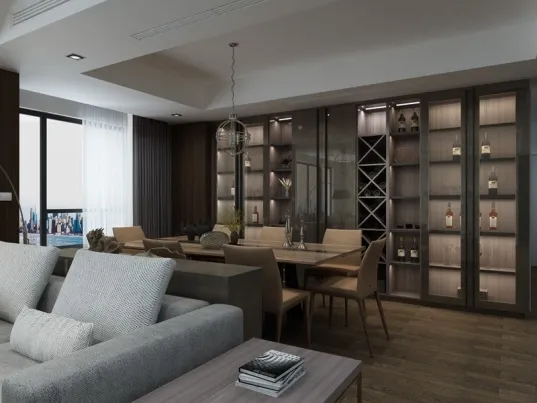
Why Your Wine Deserves More Than Just a Price Tag Consideration
When most people shop for a wine cabinet, the first thing that jumps out is the price tag. And hey, I get it – budgets matter. But if you're serious about your wine collection, whether it's a few special bottles or a growing cellar, there's so much more to consider. Choosing a wine cabinet purely based on price is like buying a car just because it's cheap, without checking what's under the hood.
Think about it: wine is alive. It breathes, evolves, and responds to its environment. The right storage isn't just about keeping bottles cool; it's about preserving stories, memories, and investments. That bargain cabinet might save you money today, but if it ruins your prized Bordeaux in a year, was it really a good deal?
So let's dive into what really makes a wine cabinet worth your hard-earned cash. Forget the price for a moment – we'll explore the stuff that actually matters to your wine's wellbeing and your long-term satisfaction.
Temperature stability is like oxygen for your wine. Fluctuations cause the liquid to expand and contract, which can push corks out, let air in, and basically turn your carefully aged Cabernet into vinegar soup. This isn't just wine snob talk – it's basic chemistry.
The magic number? Around 55°F (13°C) is the sweet spot for long-term aging. But here's what's more important than the exact temperature: consistency. A high-quality temperature-controlled wine cabinet will maintain this within ±1°F, no matter if your kitchen turns into a sauna during holiday cooking. Cheaper units? They might swing 5-10 degrees daily – slow death for delicate vintages.
If temperature is the headline act, humidity is the backup singer that makes the whole show work. You won't see it mentioned on flashy sales tags, but ignore it at your wine's peril.
Corks are natural materials – they dry out below 50% humidity, letting air sneak into the bottle. Too damp (over 80%)? Hello moldy labels and rusty capsules. Ever opened a bottle to find the cork disintegrated? That's humidity failure.
Premium cabinets solve this elegantly. They use natural convection systems that maintain 50-70% RH automatically. Bargain bins? They often have desert-like conditions that'll turn your corks to dust within months. Some don't even have humidity controls – just a "cold box" approach.
Here's a pro tip: Touch the inside walls after a cabinet's been running. If condensation forms, the humidity system is actually working. Bone dry? Your corks are crying.
Ever wonder why wine bottles are tinted? Ultraviolet light literally breaks down organic compounds in wine. That fancy glass door might look sleek, but without UV-protective coating, it's bombarding your bottles with radiation.
Vibration is sneakier. Constant shaking (from compressors or household traffic) disturbs the sediment and accelerates chemical reactions. Some collectors swear vibration-ruined wines taste "tired" before their time.
Top-tier solutions:
Manufacturers love bragging about "150-bottle capacity!" What they don't say? That counts every inch, including space you can't practically use.
Real capacity depends on:
- Bottle dimensions (Burgundy and Champagne bottles take more space than Bordeaux)
- Shelf adjustability – can you fit magnums or odd-shaped bottles?
- Door storage – useful or just marketing fluff?
The truly valuable cabinet grows with your collection. Look for:
-
Modular shelving
with at least 6 adjustable heights
-
No center column
that wastes space
-
Actual measurements
(not just bottle counts)
An efficient cabinet costs less to run and won't drive you nuts with constant humming. Consider:
Calculate electricity costs: A 24/7 runner might cost $50 more annually than a premium unit – that $300 "savings" disappears in under a decade.
Here's where premium cabinets really shine. While cheaper units might last 3-5 years, professional-grade ones run for 15+ years with proper maintenance. Why?
Serviceable compressors
: Can be replaced like a car part vs. throwing out the whole unit
Modular shelving
: Damaged shelves can be ordered individually
Warranties
: 3-5 years full coverage vs. 1 year on budget models
Ask about part availability: Can you get replacement shelves, handles, or seals 10 years from now? That "disposable" cabinet might become landfill much sooner than you think.
Since temperature-controlled wine cabinets increasingly live in kitchens and dining rooms, aesthetics matter. But good design isn't just about looks:
The best units treat furniture integration as seriously as temperature control.
App connectivity is cool, but filter the gimmicks from genuine innovations:
So how do you actually evaluate value? Here's a simple framework:
Short-term Value = Purchase Price
Long-term Value = (Preservation Quality + Energy Savings + Service Life) / Price
Let's say Cabinet A costs $1,200 and lasts 4 years. Cabinet B costs $2,800 but lasts 14 years with better energy efficiency. The real annual cost? Cabinet A is $300/year, Cabinet B is $200/year plus better wine protection.
This is why sommeliers and serious collectors invest in temperature-controlled wine cabinet solutions built for decades, not years. It's about protecting liquid assets that can appreciate significantly with proper aging.
Ultimately, a wine cabinet isn't just an appliance – it's the guardian of your collection. Choosing one based solely on price is like picking a babysitter because they charge the least. Consider what your wine needs to thrive over years: stable temperature-controlled environments, gentle humidity management, and vibration-free peace. When you evaluate through that lens, value emerges not from the cheapest sticker price, but from what's preserved inside those glass doors over time.
The true measure of value isn't how much you spend today, but how much your wines are worth years from now when you pop those perfectly preserved corks. Invest in the guardianship, and every future sip will thank you.
Recommend Products












