
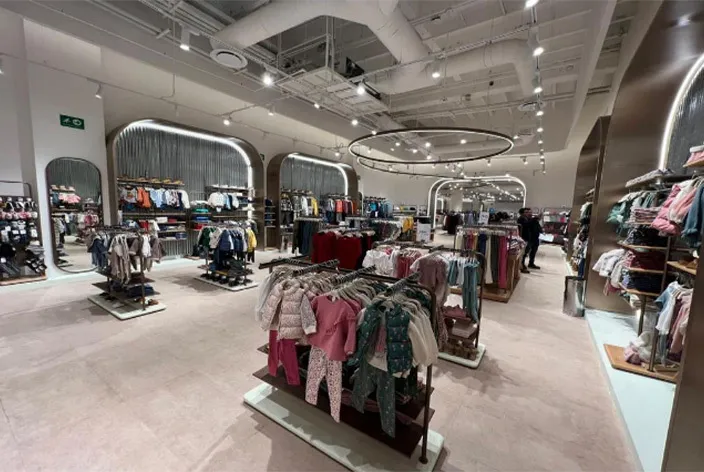
Ever walked into a shop where everything just looked... magical? Where colors popped, textures came alive, and you instinctively reached for your wallet? Chances are, exceptional commercial lighting was the invisible salesperson working behind the scenes. Lighting's impact goes far beyond mere visibility—it shapes customer behavior, influences purchasing decisions, and defines your brand's personality.
Interesting fact: Studies show well-lit spaces can increase sales by up to 30%. Customers spend 2-3x longer in well-lit environments and perceive merchandise as 15-20% more valuable.
Whether you're designing a boutique clothing store, a bustling supermarket, or a cozy bookstore, lighting serves three critical functions:
| Function | Purpose | Implementation Tip |
|---|---|---|
| Practical Visibility | Ensure customers can see products clearly and navigate safely | Combine overhead ceiling panels with localized spotlights |
| Emotional Engagement | Create atmosphere that aligns with brand identity | Use dimmable led lights to adjust mood throughout day |
| Visual Merchandising | Highlight key products and guide customer flow | Install directional track lighting for focal points |
Getting your lighting strategy wrong? That's when shops feel like interrogation rooms or cave expeditions. But when done right? You create memorable experiences customers crave to revisit.
Remember those buzzing fluorescent tubes that made everyone look slightly ill? Thank goodness we've moved past that era. Today's led lights are transforming commercial spaces with benefits that go far beyond energy efficiency:
The most exciting innovation? Smart LED systems that integrate with your building management. Picture this: your changing room lighting fixtures automatically brighten when occupied, while energy-saving sensors dim display areas during quiet hours. Or color-tunable LEDs that shift from energizing cool white during morning sales to relaxing warm tones for evening shoppers.
Pro Tip: Always choose dimmable LEDs – even if you don't plan dimming today. Future flexibility costs little now but saves expensive retrofits later when you decide to upgrade ambiance control.
Ceilings are retail's most underestimated canvas. Modern ceiling panels do triple duty: concealing infrastructure, enhancing acoustics, and becoming lighting platforms. Today's options break traditional limitations:
| Ceiling Type | Best For | Lighting Integration |
|---|---|---|
| Suspended Grid Systems | Large retail spaces needing accessibility | Recessed troffers, panel lights |
| Acoustic Clouds | Echo-prone spaces like footwear sections | Integrated LED strips, spotlights |
| Tensioned Fabric | Premium environments wanting seamless look | Back-lighting creates glowing canopy effect |
| Wood Slat Systems | Lifestyle stores seeking natural warmth | Directional spots mounted between slats |
The magic happens when ceiling and lighting collaborate. Consider layered approaches: general ambient light from recessed led lights in main panels, supplemented by strategic accent lighting mounted between architectural elements. In clothing boutiques, linear LEDs tracing perimeter coves draw eyes upward while eliminating harsh shadows on clothing displays.
Don't forget practicalities! Opt for moisture-resistant panels near entrances or above food displays where temperature fluctuations cause condensation. In stock rooms, durable fire-rated panels provide safety without sacrificing function.
Creating effective lighting resembles choreography—every fixture plays a specific role in guiding customer journeys. Use this blueprint to ensure your layout shines:
The most common mistake? Over-lighting everything equally. This creates visual noise where nothing stands out. Instead, embrace contrast psychology: our eyes naturally seek brighter areas. In bookstores, create destination hotspots with intimate reading nooks bathed in warmer light than brighter main aisles. For jewelry counters, use precise 10° beam angles to make diamonds literally sparkle under crisp 5000K LEDs.
Expert Trick: Before finalizing layouts, do paper cutouts representing each fixture type. Move them around a floorplan to experiment with light pathways that lead customers past strategic displays while avoiding glare points near reflective surfaces.
Modern architectural lighting solutions transcend mere functionality—they become integral storytelling elements. Consider these transformative approaches:
Material Fusion Techniques:
In practice? We recently saw a boutique using LED-lined arched portals between departments. As customers passed through, sensors triggered subtle color shifts that reflected each section's theme—cool blues transitioning to warm golds as shoppers moved from swimwear to jewelry sections.
Don't neglect the power of shadow play either. Positioning lighting fixtures to graze textured walls creates dramatic depth, turning plain surfaces into visual features. For outdoor applications, architectural lighting solutions transform building facades into nighttime beacons, extending brand presence after hours through precisely illuminated logos or feature walls.
The future of commercial lighting balances ecology with intelligence:
| Trend | Application | Benefit |
|---|---|---|
| Circular Design | Recyclable aluminum fixtures | 95% recyclability at end-of-life |
| Human-Centric Lighting | Tunable white systems | Boosts staff alertness by 15% |
| IoT Integration | Lighting networks sharing occupancy data | Optimizes HVAC and security systems |
| Self-Powered Fixtures | Integrated mini solar panels | Eliminates wiring for seasonal displays |
We're already seeing innovations like tiles harvesting energy from footsteps to power nearby LEDs, or magnetic track systems allowing effortless seasonal reconfigurations. For larger spaces, centralized lighting control systems provide dashboard control over every fixture across multiple locations—dim whole areas during cleaning hours or schedule dazzling opening sequences that transition from rest mode to full illumination.
Forward Tip: When upgrading, insist on DALI-2 compatible fixtures. This open protocol ensures future integrations won't require complete system replacements as new technologies emerge. It's like giving your lighting system a universal translator!
Ready to transform your space? Follow this prioritization guide:
Phase 1: Immediate Wins
Phase 2: Strategic Improvements
Phase 3: Transformational Projects
Remember: Great commercial lighting pays for itself through extended customer dwell times, reduced return rates (better color accuracy = fewer disappointed customers), and staff productivity gains. It's not an expense—it's your most visible profit generator.
So whether retrofitting an existing space or dreaming up a new one, make lighting a primary design consideration, not an afterthought. Because when you light with intention, everything else shines brighter.
Recommend Products












