
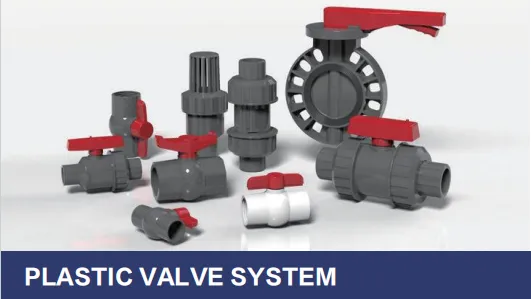
Hey there! If you're navigating the world of plastic valve systems, you've hit the jackpot. Today, we're diving deep into everything from PVC ball valves to butterfly valves and flow meters - no jargon, no fluff, just straight talk about what works and why plastic is taking over the valve game.
Ever wonder why more industries are switching to plastic valves? It's not just about cost (though that helps!). Plastic valves bring corrosion resistance, lightweight flexibility, and killer performance in demanding environments like chemical processing or water supply systems. We'll explore real-world applications, compare top products, and share pro tips you won't find in manufacturer brochures.
Picture this: A valve that won't rust when exposed to harsh chemicals, weighs half as much as its metal counterpart, and costs 30% less. That's the plastic valve advantage in a nutshell. But there's more to the story:
Not all plastics are created equal. PVC (Polyvinyl Chloride) is your reliable everyday performer – great for residential and commercial water applications. But when temperatures rise? That's where CPVC (Chlorinated Polyvinyl Chloride) steps up. It handles heat like a champ while keeping PVC's erosion resistance.
2-Way Ball Valves (e.g., P2 Series) - The Swiss Army knife of valves. Their full-port design means unrestricted flow – perfect when every drop counts. True union ends? That's tech-speak for "easy to install and remove without wrestling pipe threads."
3-Way Valves (PTP Series) - When you need traffic control for fluids. T-port or L-port configurations let you redirect flow on the fly. The smooth machined ball? That's why it won't jam after years of use.
PVC Butterfly (FE Series) - That trapezoidal elastomeric liner isn't just fancy wording – it gives you bubble-tight seals while isolating the valve body from harsh fluids. No liner slippage thanks to special channeling in the body cavity.
Polypropylene Option (FK Series) - Glass-reinforced for extra muscle. Handles higher temps (212°F vs PVC's 140°F) and pressure, with wafer or lugged connections for secure mounting. The PTFE-seated shaft seals? That's why they last longer in gritty environments.
Meters measure what matters – and these plastic champs specialize in accuracy without breaking the bank:
| Model | Type | Flow Range | Special Features |
|---|---|---|---|
| WM-PC | Multi-jet | 1-160 GPM | Hermetic seals, magnetic drive, pulse output |
| WM-PD | Piston | 4.3-1320 GPH | Liquid-filled registers, orientation independence |
| WM-PT | Paddle wheel | 0.6-3200 GPM | Field calibration, battery life 5,000+ hours |
| TM Series | Turbine | 1-600 GPM | Multiple mounting options, large digital displays |
Picking plastic valves isn't just specs on paper. Here's the real-world wisdom I've gathered:
That max pressure rating? It's not just a number – it drops as heat rises. Always consult the pressure/temperature curve for your specific valve. Pro tip: Add a 20% safety margin.
Not all rubber seals work in all fluids:
After installing hundreds of these systems, here’s my field-tested advice:
Both have their place:
Secret hack: For threaded connections, always use thread sealant compatible with plastic – standard pipe dope can degrade the material.
That integrated mounting pad isn't decoration – especially with actuators. Weight plus vibration equals stress points. Always anchor valves properly and consider additional support brackets for large assemblies.
Plastic valves can be virtually trouble-free... when handled right.
If stem leaks appear:
Most leaks come from improper installation or exceeding design limits.
Seized balls often trace back to temperature/pressure mismatches or incompatible fluids. Regular cycling prevents sediment buildup that causes seizures. If stuck? Don't force it – disassemble and inspect seats.
Switching from brass to CPVC ball valves in a Florida treatment plant slashed maintenance costs by 60%. Chlorine resistance? Total game-changer for water supply systems battling corrosion.
A mid-sized brewery switched to PVC butterfly valves for transfer lines. Savings? 40% on installation plus zero corrosion issues. Cleaning crews love the smooth internal surfaces too.
Smart valves with integrated sensors? We're already seeing flow meters with IoT connectivity. And sustainable materials – bioplastics might soon enter industrial valve territory.
But the core remains: Plastic valves deliver unbeatable value where corrosion, weight, or cost matter. Understanding your application beats fancy features every time.
Hope this guide gives you confidence to tackle your next plastic valve project. Remember: The right valve doesn't just control flow – it controls your maintenance budget too!
Recommend Products












