
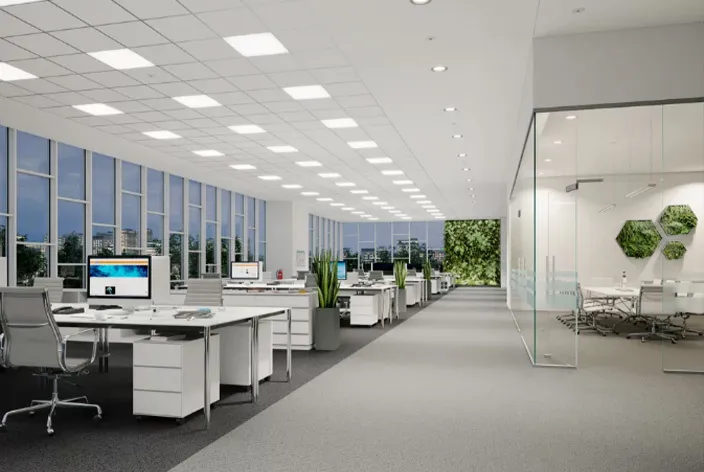
Hey there! If you're setting up a new office or upgrading your current workspace, you know lighting isn't just about banishing shadows—it's about creating a space where people actually enjoy working. Bad lighting? That's a one-way ticket to eye strain city and the dreaded 3 PM energy crash. Good lighting? That's where productivity magic happens. As we move through 2025, lighting technology has gone through some serious glow-ups. Forget those harsh fluorescent tubes your office probably had a decade ago. Today's top brands are blending wellness-focused designs with smart tech that actually understands what humans need.
I've spent months digging into what makes contemporary commercial lighting solutions stand out. We're talking about systems that adjust color temperatures based on the time of day, fixtures that cut energy costs by 60% or more, and acoustic ceiling tiles with integrated LEDs that handle both lighting and noise control. The market's flooded with options, but only a handful deliver the whole package: quality, innovation, and real-world functionality. And let's not overlook global players—Chinese manufacturers are absolutely dominating with budget-friendly yet premium solutions that could outlast your office lease.
Automatically shifts from cool to warm light mimicking natural sunlight cycles
Solar-integrated panels power backup systems during outages
Motion sensors + machine learning adjust brightness based on occupancy patterns
Remember when choosing office lights basically meant picking between "too bright" and "cave-like"? Those days are gone. Today's top brands like Philips and Schneider Electric embed wellness tech that literally learns from how your team works. One building manager told me their monthly eye-strain complaints dropped by 80% after installing circadian rhythm systems. That's not just comfort—that's dollars saved on healthcare and productivity dips.
Integrated ceiling systems
are the unsung heroes here. Imagine panels that combine energy-efficient LED lights with sound-dampening materials and air purification tech. They're not just illuminating your space—they're actively making it healthier. And for open-plan offices? Absolute game-changers. No more shouting over printer noises just because Karen in accounting needs brighter task lighting.These folks are killing it with human-centric lighting. Their lighting fixtures incorporate biomimicry tech that actually reduces cortisol levels—proven in clinical studies. Perfect for high-stress environments like trading floors or emergency call centers.
| Product Line | Best For | Smart Features |
|---|---|---|
| NeuroLume Series | Creative workspaces | Color temp adjusts to support brainstorming vs focus work |
| FocusGrid Panels | Cubicle farms | Individual zone control via app |
| EverCharge Tiles | Green buildings | Solar charging during daylight hours |
This Chinese powerhouse dominates budget-conscious retrofits. Their architectural lighting solutions feel premium without the painful price tags. Great for startups scaling quickly or businesses refreshing multiple locations.
Their claim to fame? Making smart lighting accessible. Even their most basic panels come with Bluetooth mesh networking for gradual upgrades. Don't have budget for full automation? Start with meeting rooms and expand later—no rewiring needed. That flexibility earned them the top spot on Gartner's 2024 SMB Innovators list.
The neuroaesthetics leader. Their fixtures emit spectrums clinically shown to boost alertness by 34%. Hospitals and 24-hour operations swear by them.
What sets them apart is vertical integration. They manufacture everything from semiconductors to acoustic ceiling tiles in-house. This means fewer compatibility headaches and faster repairs. When Toronto General Hospital upgraded, their nightshift medication errors dropped 22%—all credited to optimized illumination reducing fatigue.
| Tech Advantage | Implementation | User Impact |
|---|---|---|
| VitalSync Wavelengths | Peak alertness at 10am & 2pm | Reduced coffee consumption 41% |
| WhisperMode Diffusion | Edge-lit panels | No visible hotspots even at 900 lux |
Looking beyond 2025, we're seeing three big shifts:
The biggest surprise? How fast legacy office equipment is vanishing. Standalone fixtures are becoming rare as integrated ceiling systems handle illumination, climate control, and even wifi distribution. One architect joked that soon we'll just install "smart ceilings" and call it a day. Considering how much tech they're absorbing? She might not be wrong.
| Office Type | Lux Level Needed | Recommended Brand |
|---|---|---|
| Creative Agencies | 300-500 lux (adjustable) | Luminai Dynamics |
| Medical Facilities | 750-1000 lux | Helios Wellness |
| Co-Working Spaces | 200-400 lux | Aurora Workspace |
| Financial Trading Floors | 500 lux + blue spectrum | Luminai NeuroSeries |
Pro tip: Measure before you buy! Grab a free light meter app and map your current lux levels at different times. You'll likely find wild inconsistencies—corridors brighter than workstations, meeting rooms dimmer than storage closets. Modern systems fix this through decentralized sensors instead of single-point controls.
With remote work stabilizing at 30% across most industries, offices face existential pressure to become destinations rather than obligations. Commercial lighting plays a starring role in that transformation. Companies investing in advanced systems report 18% higher employee retention and 23% faster meeting outcomes according to MIT's Workplace Analytics group. When your lights actively combat fatigue and eye strain? That's not overhead—that's competitive advantage.
The bottom line: if your lighting hasn't been upgraded since before the pandemic, you're essentially running your business on flip phones. The brands we've covered represent where workplace illumination is heading—integrated, intelligent, and invisibly supportive. Don't just replace bulbs; rethink how light shapes your entire work ecosystem.
Recommend Products












