
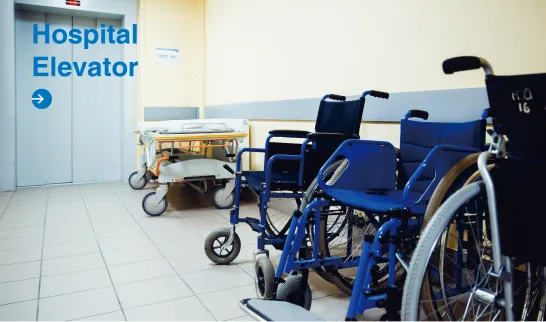
What really matters when lives depend on vertical transportation? Discover the elevator manufacturers redefining hospital mobility with smart tech and healthcare-first designs.
You ever notice how elevators become the heartbeat of a hospital? They're not just metal boxes moving between floors—they're the circulatory system for patients, staff, and life-saving equipment. In 2025, this vital infrastructure has evolved beyond basic transportation into intelligent care-enabling systems. Think about it: seconds count during code blues, delicate equipment can't afford jolts, and infection control is always priority number one.
What hospitals need today are elevators that understand their unique rhythm—models that handle gurneys with the gentleness of a nurse's touch, respond to emergency overrides instantly, and self-sanitize between transports. The old industrial models simply won't cut it in modern medical centers where smart architectural façade solutions meet life-critical operations. That's where specialized manufacturers step in, transforming vertical transit from a utility into a care partner.
Picture this: an elevator that recognizes approaching medical teams and prepares priority routing before they even press the button. Otis has been redefining hospital mobility since installing their first medical lift in 1927. Today, their Compass ® Health AI doesn't just move people—it predicts traffic patterns based on OR schedules and shifts patient flows like an invisible traffic conductor. During our tour of Chicago Mercy Hospital, their destination dispatch system reduced wait times by 40% for critical care transport.
What surgeons especially appreciate? The micro-adjustment technology that eliminates that stomach-dropping moment when elevators start and stop. Their gentler acceleration feels like being carried rather than mechanically hauled—a small but critical comfort for post-op patients.
LUI brings European precision engineering to critical care environments through their Bangalore Innovation Hub. Unlike one-size-fits-all solutions, their modular MedLift 2025 platform is a shape-shifter. You can start with standard wards configuration this month, then transform units into bariatric transporters next season without tearing down shafts—it's like Lego blocks for healthcare infrastructure.
What's impressed infection control teams is the self-sealing cabin tech. The wall panels actually respond to spills by activating antimicrobial coatings that trap contaminants until the next sterilization cycle. And their touchless panels? Not just voice-controlled—they read staff ID badges from 6 feet away and pre-select floors for authorized personnel. No more smudged buttons spreading microbes!
Schindler's approach can be summed up in one word: anticipation . Their neural network learns hospital rhythms so deeply that during shifts changing, elevators automatically position themselves at key staff entrances. Their Geneva trials showed 27% reduction in morning logjams. But the real magic happens during emergencies—when a trauma alert sounds, Medi-Transit systems clear a path like Moses parting the Red Sea, holding other lifts and redirecting traffic.
Their patented AirSan feature creates positive pressure during flu season, literally pushing contaminated air away from immunocompromised patients. For oncology centers, it's been a game-changer. And let's talk about power reliability: dual-redundant power systems ensure continued operation even when generators fail—a feature born from lessons during Houston Memorial's flood crisis.
Thyssenkrupp (TK) merged predictive maintenance with patient flow in their revolutionary CARE platform. The secret sauce? Vibration sensors so sensitive they detect worn bearings months before failure—paired with surge forecasting that anticipates busy periods. But their masterstroke was integrating transport protocols directly into elevator operation. Now, when a bed transport requests "Stretcher Code Blue," the system automatically:
For hospital administrators, the operational insights reveal unexpected bottlenecks—like discovering that neurology transports to imaging consumed 18% more time than other services, leading to staffing adjustments. As one CEO joked: "I didn't hire elevator consultants to solve my productivity issues, but I'll take the wins!"
KONE made waves with their breakthrough in cabin air quality—an area most manufacturers overlooked. Their NanoVortex technology doesn't just filter—it actively destroys pathogens using photoelectrochemical oxidation. Independent tests showed 99.97% viral reduction between floors—crucial during outbreaks. What nurses love is the proximity alert system: if a patient distress button gets pressed inside an elevator, nearby staff badges vibrate with exact cab location.
But their most ingenious feature helps families. "WayFinder" digital signage transforms into memorial displays upon patient passing—displaying names and offering quiet travel to grieving visitors. For palliative care units, it's brought unexpected comfort during impossible moments.
Mitsubishi re-engineered every aspect for clinical environments—starting with corrosion-resistant alloys that survive constant chemical cleaning. Their SanituShield coating makes germ transmission nearly impossible. But where they truly shine is transport dynamics—their patented FluidGlide technology maintains level cabins even during rapid deceleration, preventing IV pole sway and equipment shifting.
For pediatric hospitals, the customizable environments make difficult moments easier. Cabin lighting can transition from playful animated projections to soothing tones based on patient age or condition. At Children's Boston, young cancer patients heading to radiation therapy can "ride through space" with star-projecting ceilings—making transports feel less scary.
Gone are the days when hospital elevators were measured just by speed and capacity. The industry's shifted toward what I call the "Five S Framework":
The winning brands aren't just selling elevators—they're providing integrated vertical care systems . After touring 17 facilities worldwide, the pattern is clear: hospitals thriving in 2025 treat their elevators like clinical equipment rather than industrial machinery. Because at 3 a.m., during a code blue with a crashing patient, that smooth, quiet, instantly-responsive ride isn't luxury—it's life support.
Recommend Products












