
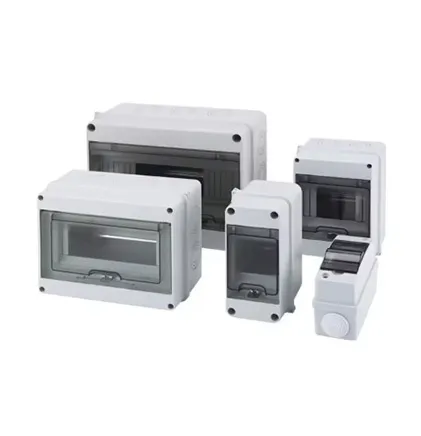
Ever wonder how modern buildings maintain seamless power flow? It all starts with an unsung hero - the distribution box. As the nervous system of any electrical setup, these unassuming metal cabinets quietly manage electricity flow while preventing overloads. China's manufacturing ecosystem has mastered producing these critical components.
Picture this: Architects finalize designs for a smart hospital where sensitive medical equipment needs ultra-reliable power. The solution lies in distribution boxes precisely engineered to work with specialized hospital wall materials and advanced electrical equipment . This integration ensures consistent power to critical systems like surgical lighting and patient monitors.
The evolution has been remarkable. While traditional models provided basic circuit protection, contemporary Chinese manufacturers now produce units meeting international safety certifications. These incorporate cutting-edge features like remote monitoring through IoT-enabled systems.
When Saudi Arabia develops futuristic cities or European companies upgrade factories, they consistently turn to Chinese distribution box specialists. This isn't coincidence but the result of three key advantages:
Shanghai-based manufacturer VoltTech shares: "Last year, we developed waterproof distribution units for a luxury Maldives resort. They needed seamless integration with bespoke custom furniture in each villa, requiring millimeter-precise dimensions. Our flexibility made it possible."
Modern distribution boxes aren't just metal containers but smart power management centers. Manufacturers now incorporate:
| Feature | Traditional Models | Next-Gen Chinese Designs | Practical Benefits |
|---|---|---|---|
| Thermal Management | Basic ventilation | Active cooling systems | Prevents overheating in server rooms |
| Safety Mechanisms | Standard circuit breakers | AI-powered load prediction | Anticipates surges before they occur |
| Space Optimization | Fixed dimensions | Slim modular designs | Fits within decorative profiles installations |
| Environmental Resistance | Basic IP ratings | Corrosion-proof nano-coatings | Withstands coastal or industrial zones |
| Monitoring | Manual inspection | Real-time remote diagnostics | Reduces maintenance costs by 60% |
These innovations shine in complex installations like Dubai's Expo pavilions, where distribution systems coordinate thousands of intelligent lighting fixtures while maintaining critical backup power pathways.
With hundreds of manufacturers across Guangdong and Zhejiang provinces, how do you identify the right specialist? These markers distinguish industry leaders:
Engineering Heritage: Leading suppliers like PowerGrid Solutions trace their expertise to large-scale infrastructure projects. Their teams understand how distribution systems interact with commercial flooring systems and architectural spaces.
When evaluating manufacturers, prioritize these often-overlooked aspects:
Industry veteran Mark Benson advises: "You're not just buying metal boxes but reliability insurance. Partners should proactively suggest safety enhancements like seismic bracing in earthquake zones or salt-resistant coatings for portside facilities."
Distribution box quality manifests through meticulous manufacturing protocols:
| Production Stage | Standard Practice | Premium Manufacturer Protocol | Quality Impact |
|---|---|---|---|
| Metal Fabrication | Basic sheet bending | Laser-cut precision with deburring | Eliminates sharp edges protecting installation crews |
| Surface Treatment | Standard powder coating | Multi-layer zinc phosphate + epoxy + polyurethane | 30-year corrosion warranty even in chemical plants |
| Component Assembly | Manual torque application | Calibrated electric drivers with torque logging | Guaranteed connection integrity |
| Final Testing | Basic continuity check | 72-hour thermal cycling simulation | Ensures performance from -40°C to 85°C |
Through this quality lens, materials matter immensely. Premium manufacturers use electro-galvanized steel rather than standard cold-rolled variants, adding negligible cost but dramatically improving longevity in humid environments where moisture-proof tiles alone can't protect electrical systems.
Smart distribution box installation solves two common headaches: space constraints in luxury apartments and retrofitting challenges in protected buildings.
Consider Shenzhen's high-rise renovation project where engineers needed to upgrade power systems without altering historical interior decorative wall boards . The solution? Shallow-depth distribution cabinets installed behind precisely matched wall panels with custom front-access design.
Forward-thinking manufacturers now offer integrated packages including:
The evolution continues toward modular systems where distribution units connect like building blocks. This proves invaluable in factories where production line changes require rapid power redistribution without reconstruction.
Modern distribution box manufacturing embraces eco-responsibility through:
The sustainability trend extends to power monitoring. New units analyze consumption patterns, helping commercial buildings reduce 18-25% wasted energy while ensuring compatibility with emerging power sources like solar panels .
The next generation distribution boxes transition from passive containers to active power managers. Manufacturing leaders now integrate:
| Technology | Current Application | Near-Future Development |
|---|---|---|
| IoT Sensors | Remote temperature monitoring | Predictive maintenance with component life forecasting |
| AI Optimization | Load balancing across circuits | Integration with utility demand-response programs |
| Enhanced Safety | Arc fault detection | Self-analyzing degradation patterns in control cables |
| Physical Design | Slim profiles | Structural integration with specialized fireproof ceiling tiles |
These innovations aren't theoretical. Zhejiang manufacturer ElectroGuard recently deployed smart distribution cabinets at a Singapore hospital, where they maintain redundant power paths for critical care equipment while coordinating with building management systems.
Selecting distribution box manufacturers ultimately comes down to technical alignment. For residential projects focusing on aesthetics, prioritize partners experienced in concealed installations within custom furniture . Industrial users should emphasize customization options for specialized cables including robust electrical equipment for high-vibration environments.
The competitive advantage of Chinese manufacturers lies beyond pricing in their solution-oriented approach. As Shenzhen Electric's lead engineer notes: "Whether developing fire-resistant versions matching hospital wall materials or units accommodating massive power cables , we engineer answers before clients fully articulate challenges."
Recommend Products












