
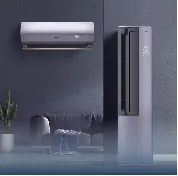
Stepping into China's air conditioning landscape feels like walking through a technological wonderland. As the undisputed global leader, China doesn't just produce units - it crafts climate control systems that redefine how we experience indoor environments. From high-efficiency residential solutions to massive commercial installations, Chinese manufacturers have reshaped what's possible in thermal comfort.
China currently dominates over 70% of global AC production capacity, a testament to its manufacturing ecosystem. This supremacy didn't happen overnight. It's built on decades of relentless R&D, strategic infrastructure investment, and responding to global climate challenges with eco-conscious solutions that prioritize both performance and sustainability.
Walk through Beijing's tech parks or Guangzhou's manufacturing corridors, and you'll feel the fusion of tradition and innovation that makes Chinese ACs exceptional. The convergence of skilled engineering talent, cutting-edge research institutions, and robust supply chains creates an ecosystem where thermal technology evolves at breakneck speed.
Pro Tip: Beyond sheer volume, China's success stems from its diverse regional manufacturing ecosystems. Each production hub specializes in different product categories and technologies, allowing buyers to source precisely what they need.
Insight: Guangdong's AC production tripled between 2010-2020, transforming the Pearl River Delta into the world's most concentrated HVAC manufacturing region. Today, over 60% of China's AC exports originate from this powerhouse zone.
The heartbeat of China's air conditioning industry pulses strongest in Guangdong. Guangzhou, Shenzhen, and Zhuhai form a "golden triangle" of innovation where giants like Gree and Midea have built empires. The region excels at mass production while maintaining quality control standards that rival anywhere globally.
Zhejiang represents the artisan approach to cooling technology. Factories here specialize in smaller runs with high customization potential - perfect for specialized applications or niche markets. Their expertise spans residential units to commercial installations requiring tailored solutions.
Getting to know these companies isn't just about product specs - it's about understanding corporate cultures pushing cooling technology forward. Each brings unique strengths to the table that make them standouts in China's crowded AC landscape.
Gree isn't just a manufacturer - they're efficiency evangelists. With 36,329 active invention patents, they approach air conditioning as environmental engineering. Their secret sauce? Treating every watt of energy as precious. Gree's factories implement circular water systems that reduce consumption by 40% compared to industry standards - a commitment that extends to their products where units achieve SEER ratings that make competitors blush.
Midea understands that modern air conditioning needs to do more than cool air - it needs to understand people. Their IoT-enabled systems learn usage patterns, anticipate needs, and automatically optimize performance. Walking through their futuristic showroom in Guangzhou feels like stepping into tomorrow. Midea's partnerships with tech giants result in systems that interface seamlessly with smart homes, reacting to voice commands and adjusting settings based on smartphone location.
AUX redefines quiet operation standards. While others advertise decibel levels, AUX engineers concentrate on psychoacoustics - how humans perceive sound. Their residential units operate below 18dB, making them whisper-quiet companions rather than mechanical intrusions. AUX's passion extends to developing specialized wall panels that enhance thermal retention while creating unique aesthetics - including bamboo charcoal wallboard solutions that actively improve indoor air quality while complementing modern design aesthetics.
What separates Chinese manufacturers isn't just production capacity - it's their forward-thinking approach to integrated climate solutions. From IoT optimization to materials science breakthroughs, China's AC industry addresses tomorrow's challenges today.
Did You Know? Leading manufacturers now install air purification systems surpassing standalone units, removing up to 99.98% of PM2.5 particles while balancing humidity levels automatically - creating true climate ecosystems rather than simple cooling devices.
Forget conventional solar ACs - China's latest generation seamlessly blends photovoltaic power with grid connectivity. Units intelligently switch between power sources while excess solar energy charges backup batteries. The result? Cooling continuity during outages and up to 90% reduction in traditional power consumption. Installations now feature monitoring dashboards showing real-time energy savings.
Modern inverter technology represents quantum advancement beyond traditional systems. Rather than cycling on/off, these systems intelligently modulate power delivery maintaining temperatures within 0.5°C of the target - eliminating temperature swings while reducing energy consumption by 30-50%. The most advanced units now incorporate humidity control algorithms that prevent the "cold-damp" feeling associated with conventional AC.
Successfully sourcing from China requires understanding both opportunities and potential pitfalls. The most sophisticated buyers approach manufacturing relationships as long-term partnerships rather than transactional exchanges. This means vetting for three non-negotiable factors.
While ISO 9001 remains fundamental, progressive manufacturers now hold specific credentials:
Beyond capacity numbers, savvy buyers examine:
Pro Insight: The smartest buyers now monitor social compliance scores through platforms like EcoVadis alongside quality certifications - ensuring ethical manufacturing standards.
What excites industry observers isn't just incremental improvements but fundamental technology shifts. Top manufacturers have dedicated research wings exploring revolutionary concepts that will transform temperature management in the coming decade.
Leading manufacturers like Haier and Chigo are experimenting with microencapsulated phase-change materials in indoor units. These materials absorb excess thermal energy during operation, releasing it during compressor rest cycles - dramatically reducing power requirements. Early tests show 27% reduction in peak power demand without sacrificing cooling performance.
The next generation isn't just programmable - it's predictive. Systems like Midea's upcoming Athena platform analyze weather patterns, occupancy schedules, and personal preferences to create optimal environmental conditions. By learning human behavior patterns, these systems anticipate needs automatically - pre-cooling spaces before occupants arrive while managing energy consumption against utility pricing schedules.
Exploring China's air conditioning capabilities reveals an industry constantly reimagining environmental comfort. Beyond impressive technical capabilities, the true distinction lies in manufacturers' commitment to enhancing human experiences through sustainable innovation. From whisper-quiet bedroom units to massive commercial systems maintaining perfect conditions in server farms, Chinese engineers treat temperature management as both science and art form. This fusion of precision engineering, environmental responsibility, and user-focused innovation continues positioning China at the forefront of climate control technology - fundamentally changing how the world experiences indoor environments.
Recommend Products












