


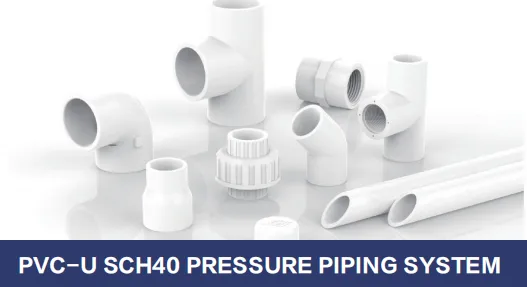
If you've ever worked with piping systems, you know the headaches that come with corrosion, tricky installations, and maintenance nightmares. That's where PVC-U SCH40 comes in like a breath of fresh air. These robust piping systems have become the go-to solution across industries for their remarkable blend of durability, ease of use, and cost-effectiveness. Unlike traditional metal pipes that groan under chemical attacks or metal pipes that require heavy machinery just to position them, PVC SCH40 shows up ready to perform with minimal fuss.
The "U" in PVC-U stands for "unplasticized" - meaning these pipes come with extra backbone. They're not just rigid tubes; they're engineered solutions designed to withstand pressures while saying "no thanks" to corrosive elements. What makes Schedule 40 special is that sweet spot between thickness and flexibility - sturdy enough for demanding industrial applications yet forgiving enough for DIY weekend warriors. Whether you're plumbing a new building, setting up irrigation, or managing chemical processes, this piping system meets the moment.
Material Science: The Chemistry Behind PVC-U's Magic
At the molecular level, PVC-U is like the superhero of thermoplastics. Its vinyl chloride chains create a tight-knit structure that laughs at chemical attacks. While metal pipes deteriorate when facing acids or alkalis, PVC-U remains unfazed. This material doesn't just resist corrosion - it actively prevents it, maintaining its structural integrity decade after decade.
The SCH40 designation isn't just a random number either. It refers to specific wall thickness standards measured precisely against pipe diameter. Think of it as the engineering Goldilocks zone - thick enough to handle pressures up to 450 psi at room temperatures without being needlessly bulky. As temperatures climb, the pressure rating adjusts accordingly, giving you predictable performance parameters.
Why Professionals Keep Choosing PVC-U SCH40
Unmatched Corrosion Resistance
This is where PVC-U truly outshines the competition. While metal pipes develop scale and rust when exposed to water treatment chemicals, industrial solvents, or even soil conditions, PVC-U pipes remain pristine. In coastal areas where salt air destroys metal pipes in record time, PVC-U SCH40 installations just keep performing season after season. Chemical plants especially appreciate how PVC stands up to harsh substances that would eat through stainless steel.
Effortless Installation & Handling
You know that backache after wrestling iron pipes into position? Forget about it. PVC-U SCH40 weighs about 1/5 of comparable metal pipes, making handling significantly easier. But the real magic happens with joining methods:
- Solvent Welding: Creates molecular bonds stronger than the pipe itself
- Threaded Connections: Perfect for areas needing occasional disassembly
- Mechanical Couplings: Great for quick repairs and temporary installations
These joining techniques eliminate the need for expensive welding gear or specialized labor - a major cost saver on any project timeline.
Smooth Operator: Hydraulic Efficiency
Ever notice how mineral deposits gradually choke metal pipes? PVC-U's non-stick surface prevents scaling, maintaining that buttery-smooth interior surface. This translates to better flow rates using smaller diameter pipes compared to corroded metal alternatives. That smoothness also means lower pumping costs - the hydraulic advantages add up to significant energy savings over the system's lifetime. When designing a water supply and drainage system , this hydraulic efficiency becomes a game-changer.
Cost-Effective Performance
The initial price point is attractive enough, but the true savings emerge post-installation. Without corrosion eating away at the pipes, you eliminate replacement costs and the labor nightmares of emergency repairs. The lightweight nature also reduces shipping costs dramatically compared to metal alternatives. When you factor in the extended service life (often exceeding 50 years), PVC-U SCH40 delivers exceptional return on investment.
Where SCH40 Systems Shine: Application Showcase
Residential Applications
Beyond just water lines, SCH40 handles home sewer systems, landscape irrigation, and pool plumbing with ease. Homeowners love the freeze resistance - while copper pipes can burst during cold snaps, PVC-U gives a little flex room. Its smooth interiors prevent the gunk buildup that plagues older pipes in bathroom and kitchen applications.
Commercial Solutions
In high-occupancy buildings, PVC-U's fire-retardant properties provide extra safety. The material excels in:
- Fire sprinkler systems
- HVAC condensate lines
- Laboratory waste systems
- Restaurant plumbing
Building managers especially appreciate how the non-conductive nature prevents stray electrical currents from causing corrosion.
Industrial Performance
Chemical processing plants rely on PVC-U's resistance to acids, salts, and solvents. In mining operations, it handles abrasive slurries that would destroy metal pipe in months. Food processing plants value its NSF certification for potable water applications. Its non-metallic nature also prevents electrolysis issues in industrial environments loaded with electrical equipment.
Critical Specifications at a Glance
| Parameter | Specification Range | Notes |
|---|---|---|
| Size Range | ½" to 24" | Covers majority of residential to industrial applications |
| Temperature Range | 0°C to 60°C (32°F-140°F) | Maintains pressure ratings throughout range |
| Pressure Capacity | Varies by diameter | From 450 PSI for ½" pipes to 90 PSI for 6" pipes @73°F |
| Chemical Resistance | Excellent | Resists acids, alkalis, alcohols, and corrosive chemicals |
| Standards Compliance | ASTM D1784, D1785, D2466 | NSF/ANSI 61 & 14 certified for potable water |
The Fitting Connection: Making Systems Work
A piping system is only as strong as its joints, and PVC SCH40 fittings provide versatility and reliability:
- Tees & Crosses: Efficiently manage flow division in multiple directions
- Elbows (45° & 90°): Navigate obstacles without flow restriction
- Couplings & Unions: Enable repairs and maintenance access points
- Caps & Plugs: Create secure end-points and testing ports
- Bushings & Reducers: Transition smoothly between pipe sizes
Unlike metal fittings that corrode at joints, PVC fittings maintain complete chemical resistance. When solvent-welded, they create monolithic systems without weak points.
Environmental Advantages: The Greener Choice
In today's environmentally conscious world, PVC-U SCH40 brings impressive credentials. Its production requires significantly less energy than metal alternatives, creating a smaller carbon footprint from day one. The pipes' natural insulating properties reduce heat transfer, saving energy in hot water applications.
At end-of-life, PVC material can be recycled into new piping systems or other construction products, unlike composite materials that end up in landfills. The longevity factor also means fewer resources consumed in replacements over decades of service.
Installing with Confidence: Best Practices
Proper installation ensures maximum benefit from your SCH40 system:
- Cutting: Use plastic-specific cutters for clean, square edges - crucial for strong joints
- Deburring: Remove all cut fragments and smooth edges to prevent turbulence points
- Solvent Welding: Apply primer first to soften surfaces, then cement within its working time
- Support Spacing: Install supports every 4 feet for horizontal runs to prevent sagging
- Expansion Management: Include expansion joints for long runs (>20 feet) subject to temperature changes
Always follow manufacturer recommendations for primers and cements, as formulations vary. Proper solvent welding creates joints actually stronger than the pipe itself.
Beyond Installation: Maintenance Advantages
One of the most appreciated aspects of PVC-U SCH40 is its low-maintenance nature. The smooth interior prevents buildup that requires frequent cleaning. Inaccessible areas that would condemn metal pipe sections become non-issues with PVC's resistance to degradation.
When repairs are needed, solvent welding creates perfect joints without requiring pipe threading equipment. The simplicity often turns complex metal pipe repairs into straightforward PVC fixes. And unlike metal systems requiring corrosion monitoring and cathodic protection, PVC systems operate for decades with essentially zero maintenance.
The Future of PVC Technology
Material science continues advancing PVC formulations. New developments include:
- Enhanced high-temperature formulations pushing the upper limits
- Improved impact resistance for extreme environments
- Clear PVC options for visual flow monitoring
- Bio-based plasticizers for increased sustainability
- Anti-microbial formulations for medical applications
These advancements promise even broader applications while maintaining the core advantages that made PVC-U SCH40 so popular in the first place.
Making the Right Choice for Your Project
Selecting piping is a long-term decision. While cheaper alternatives might tempt on initial cost, PVC-U SCH40 pays dividends across its entire service life. For engineers, the predictable performance and established standards remove guesswork. For installers, the workability and safety factors improve job satisfaction. And for facility managers, the minimal maintenance creates operational efficiency.
The key is partnering with reputable manufacturers who maintain consistent quality control. Look for certifications like NSF, ASTM compliance, and third-party testing documentation. Quality PVC-U SCH40 systems shouldn't have visual imperfections like bubbles, discolorations, or non-uniform thickness.
Whether replacing problematic metal systems or specifying a new installation, PVC-U SCH40 delivers performance that stands the test of time - often outlasting the buildings and structures it serves.










