


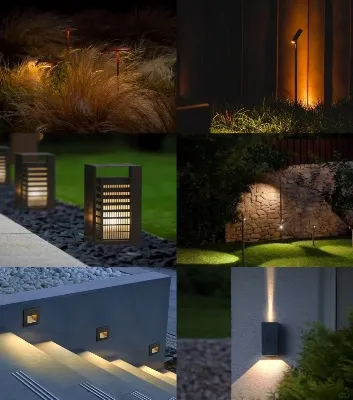
Weatherproof Warriors: Built for the Elements
Let's be honest - garden lights take a beating. One minute it's scorching sun, the next it's pouring rain. Top-tier lights laugh at weather drama thanks to military-grade sealing. We're talking serious waterproof tech here – the kind that makes puddles look like minor inconveniences. While cheap lights fog up or short-circuit after one season, quality units use compression gaskets and vacuum-sealed joints. I've seen lights submerged during floods that still worked perfectly after drying out!
| Feature | Budget Lights | Premium Lights |
|---|---|---|
| Water Protection | Basic splash resistance | IP68 Submersible rating |
| UV Resistance | Yellowing in 6-12 months | UV-stabilized polycarbonate |
| Temperature Range | 0°C to 40°C | -30°C to 60°C |
Ever noticed how cheap plastic turns brittle? Premium fixtures use marine-grade aluminum housings with powder-coated finishes. That matte black or bronze exterior isn't just pretty - it's armor against salt air, lawn chemicals, and that clumsy weed-whacker incident we all pretend never happened.
Efficiency That Actually Shines
Gone are the days of garden lighting doubling your electric bill. Modern quality lights embrace energy efficient tech that gives you drama without drama on your utility statement. The secret weapon? Advanced LED lighting . Unlike old halogen bulbs that turned 90% of energy into heat, LEDs convert over 80% directly into light. That's physics working for your wallet!
But the real revolution? Solar panels integrated with battery systems so smart they'd put your phone to shame. Quality solar lights don't just have a panel slapped on top - they use mono-crystalline silicon cells angled for maximum absorption, paired with lithium batteries that store juice like camels store water. Even after three cloudy days, my premium solar path lights still glow eight hours nightly.
Consider automated systems that combine outdoor lighting with dawn/dusk sensors and motion detection. Why light an empty patio? My neighbor's system uses 78% less energy than his old "always-on" setup while providing better security. That's smarter than most humans before their morning coffee!
The Brilliance Factor: Light Quality Matters
We've all seen those cheap blue-tinted garden lights that make your roses look like they're in a horror movie. Quality illumination understands nuance:
-
Color Temperature Intelligence
Premium LEDs offer warm white (2700K) for cozy patios, bright white (4000K) for task areas, and adjustable spectrums. My favorites? Systems mimicking moonlight (1800K) that don't disrupt your night vision.
-
Beam Precision
No more "glare bombs" blinding guests! Quality optics use prismatic lenses and reflectors to shape light exactly where needed. Think spotlight precision on your prize Japanese maple, not accidental bedroom illumination.
-
Consistency Quotient
Uniform brightness matters - premium brands test each LED bin for identical output. Your garden shouldn't look like a disco floor with hotspots and dim zones!
Installation difference? Huge. Quality fixtures include tool-free height adjustment, directional rotation joints that stay put, and wiring channels that make "oops" moments nearly impossible. While my first cheap set required engineering degree to assemble, premium lights clicked together intuitively.
Smart Lighting: Brains Meet Beauty
Modern garden lighting isn't just dumb bulbs - it's an ecosystem. The best systems integrate with wider smart home appliance networks. Picture this: Your landscape lights gradually brighten as dusk falls, pathway sensors trigger as you walk toward the hot tub, and everything syncs automatically with shorter winter days.
Control has evolved too:
App Integration
Group lights into zones ("Patio", "Pond"), set vacation modes, and create lighting "recipes" for entertaining
Wireless Connectivity
Mesh networks ensuring every light communicates even across large properties - no more dead zones
Health Focus
Tunable circadian rhythms lighting supporting natural sleep/wake cycles - wellness for your garden evenings
Maintenance becomes nearly nonexistent with quality lights. Self-cleaning lenses shed dust and pollen, while aluminum housings develop attractive patinas instead of corroding. Unlike my old set requiring bulb changes every season, current LEDs boast 50,000-hour lifespans - that's over a decade of nightly use!
Beyond Brightness: The Intangibles
What finally sold me on investing in quality? The silence. No buzzing transformers. No flickering when humidity spikes. Just pure, consistent illumination that feels like part of the landscape. Quality garden lighting respects darkness too - creating welcoming pools of light without contributing to light pollution.
It comes down to intentionality. Cheap lights happen to your garden. Quality lighting happens with it - enhancing textures, playing with shadows, and creating depth. That magical moment when fireflies seem to dance with your path lights? That's not accidents - that's engineering artistry.










