


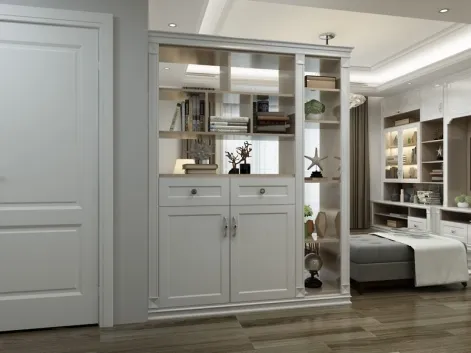
Beyond Storage – Crafting Functional Art for Your Living Space
Let's talk about something we all interact with daily but rarely appreciate enough – console cabinets. That elegant piece hugging your entryway or anchoring your living room isn't just furniture; it's a silent guardian of your clutter-free sanctuary. When chosen wisely, it transforms from a simple storage box into a conversation-starting statement piece that ages like fine wine. But how do you spot true quality in a market flooded with lookalikes?
Having helped countless homeowners navigate this decision, I'll share a secret: Quality whispers, it doesn't scream. It reveals itself in the details most overlook – the gentle glide of a drawer, the satisfying heft of a door, the invisible joinery holding everything together. Through this guide, we'll explore how discerning the extraordinary from the ordinary comes down to understanding seven foundational pillars of excellence, blending proven design principles with smart functionality to ensure your investment lasts generations.
1. The Foundation – Material Integrity
Imagine running your hand across a console cabinet's surface. What you're actually feeling is its soul . Quality begins with material selection, where manufacturers make their first compromises or commitments. Let's decode what really matters:
Solid Wood: The Gold Standard
High-end cabinets often use hardwoods like oak, maple, or walnut not just for beauty, but for their structural integrity. Unlike particleboard that crumbles under pressure, solid wood develops character over time. Its cellular structure adapts to minor environmental changes, minimizing warping or cracking – a crucial feature for consoles placed near entryways where temperature fluctuates.
Engineered Woods – Know Your Layers
Not all composites are created equal. Premium plywood with 11-13 cross-grained layers outshines cheaper MDF alternatives. Think of it like plywood vs. cardboard – both technically wood products, but only one will support your grandmother's antique vase collection without bowing. For moisture-prone areas, moisture-resistant marine-grade plywood makes all the difference.
2. Silent Testimony – Construction Techniques
Here's where the magic happens – where flat boards become heirloom furniture. While contemporary adhesives have their place, they can't replace mechanical joints' longevity:
Dovetail Drawers – The Hallmark
What to look for: Interlocking "pins and tails" resembling swallowtails. Unlike stapled or glued joints that fail under load, dovetails distribute weight evenly across drawer corners. Open any drawer – if you see fan-shaped joints with no visible fasteners, you've found quality craftsmanship. This time-tested technique prevents sagging even when storing heavy books or electronics.
Frame & Panel Stability
Quality cabinets employ frames that allow panels to "float" within grooves, accommodating natural wood movement. Without this technique, seasonal humidity changes cause splits or busted joints. Run your finger along panel seams – they shouldn't feel tight or gaping, just consistently snug yet forgiving.
3. The Unseen Workhorses – Hardware & Joinery
The parts you don't see define daily joy. High-frequency touchpoints like hinges and slides determine whether using your cabinet feels luxurious or frustrating:
The Soft-Close Revolution
Quality dampened hinges and slides transform the user experience. Test doors and drawers – they should close silently in the last 1-2 inches, no slamming. This isn't just convenient; it reduces wear by 80% compared to impact-closing hardware. Look for brands like Blum or Salice – their engineering extends hardware lifespan beyond 100,000 cycles.
Metal vs. Plastic Components
Inside mechanisms, metal always outperforms plastic. Open a drawer – examine the slides' inner rails. Steel ball bearings ensure smooth operation for decades, while plastic wheels wear down quickly. Similarly, hinge plates should be steel, not bent tin that deforms under weight.
4. Surface Poetry – Finishes That Last
A finish is more than color – it's armor and artistry combined. Quality finishing penetrates beyond the surface:
The Microscope Test
Examine surfaces at eye level under bright light. Quality spray lacquer creates an imperceptibly thin, uniform layer without drips or bubbles. Press your fingernail gently into an inconspicuous spot – no mark should remain. Premium catalyzed varnishes cure into surfaces rather than sitting atop them, making them resistant to water rings and scuffs.
Edge Banding Integrity
Inspect where laminates meet edges. Cheap cabinets reveal adhesive gaps or fraying within months. Quality banding uses heat-activated adhesive and precision trimming that feels seamless to the touch – literally and visually. This prevents delamination, maintaining cabinet integrity for years.
5. Adaptable Beauty – Tailored Design
Standard sizing rarely fits unique spaces. That's where customization becomes more than a luxury – it's practical necessity:
Proportional Flexibility
Can height be adjusted without compromising stability? Quality manufacturers build proportional scaling into designs. For example, increasing width strengthens internal bracing accordingly. Avoid companies that simply stretch designs without reinforcing – a recipe for mid-shelf sagging.
Interior Configurations
Look beyond doors to interior versatility. Adjustable shelves (thick enough to resist bowing), removable dividers, and specialized compartments for cables or routers turn consoles into smart solutions. Test shelf pins – metal sleeves embedded in cabinet sides beat flimsy plastic inserts.
6. Structural Confidence – Weight Distribution
Heft often indicates substance, but only if distributed intelligently:
Center of Gravity Check
Place a few heavy books on one side of an empty cabinet. Quality pieces won't wobble or tip thanks to balanced internal ballast – often thicker base platforms or strategic reinforcement behind lighter decorative fronts. Uneven furniture fails this basic safety test.
Leg & Base Engineering
Splay legs outward slightly? That's deliberate stability engineering. Inspect base joinery where legs meet cabinet bodies – should have visible tenons or thick dowels glued into deep sockets, not surface-mounted with corner brackets. For plinth bases, integrated block feet prevent water wicking into wood.
7. Daily Rituals – Functional Ergonomics
Great cabinets feel right before they look right. Design nuances you'll appreciate every day:
The Reach Test
Cabinets shouldn't force uncomfortable bending. Depth matters – consoles between 12"-16" deep let you retrieve items without overextending. Test drawer depth – shallow drawers (under 4") become junk catchers, while very deep ones (over 20") require arm-diving. Quality finds that Goldilocks balance.
Anti-Friction Design
Notice drawer sides – slightly recessed centers prevent wood-on-wood friction that causes sticking. Felt-lined compartments protect valuables. Even subtle chamfered drawer edges make fingernail access smoother. These unconscious conveniences define premium experiences.
Creating Your Legacy Piece
The console cabinet is among the most underestimated heroes of home design – a functional workhorse dressed in elegance. When chosen with discernment, it transcends trends, becoming both useful now and nostalgic later. Remember:
- ️ Patience pays – scrutinize joints, feel surfaces, test hardware
- ️ Weight whispers truth – quality materials have dignified heft
- ️ Movement matters – every hinge and slide should feel intentional
Ultimately, investing in quality isn't about extravagance; it's about respecting your space, your daily rituals, and your future self. The console cabinet that welcomes you home deserves to be crafted with integrity – because how we fill our spaces reflects how we value our lives.










