
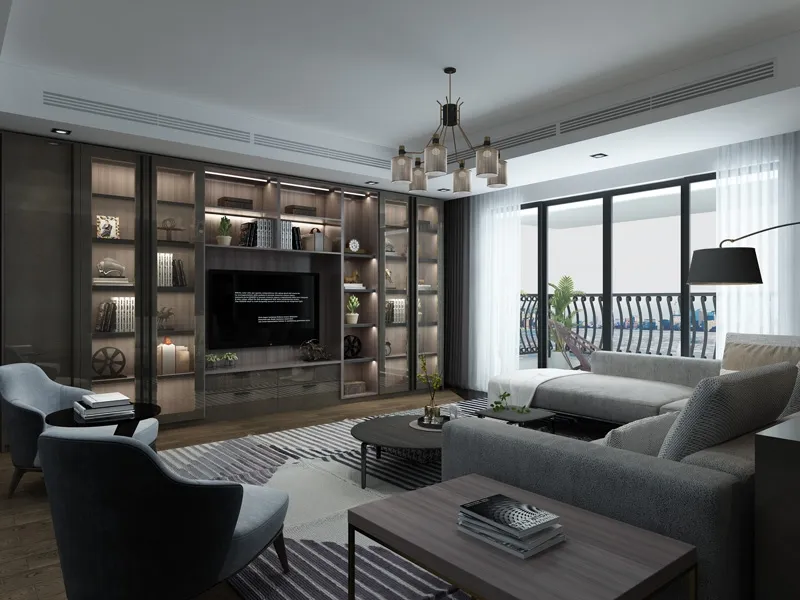
Your TV cabinet shouldn't just be furniture—it's the command center of your living room. Whether you're in a cozy apartment or sprawling house, dimensions matter more than you think. Aim for wall cabinets around 20-30cm deep—they save you from that bulky, cramped feeling—while floor cabinets can stretch to 35-40cm without overwhelming your space.
Ever notice how some rooms feel cluttered even when tidy? That's often down to poor proportions. For small rooms, simple "I" or "L" shapes work magic because they don't compete visually. Meanwhile, larger spaces can handle "U" configurations or floor-to-ceiling designs that make walls work harder. Pro tip: Leave at least 12-15cm clearance behind for cables and air flow—your electronics will thank you.
Let's be honest—most TV units become junk magnets. The trick is creating purposeful zones: Keep remotes/controllers in shallow top drawers, stash game consoles in ventilated middle cubbies, and tuck blankets/magazines in deep bottom drawers. Built-in dividers and adjustable shelves transform chaos into order.
For serious storage ninjas, whole-wall hutches reign supreme. Picture this: Your TV floats in the center while cabinets with discrete-closing mechanisms hide board games on the left and display heirlooms on the right. It's about balancing concealment and curation—about 70% hidden storage to 30% open display keeps rooms feeling airy.
That gorgeous cabinet in the showroom? Might look tragic against your vintage rug. Matching your unit to your room's vibe isn't about trends—it's about harmony. Modern rooms sing with clean lines and metallic accents, while traditional spaces warm up to rich woods and detailed molding.
Floating designs create visual lightness, especially in tight spaces, and work beautifully with open-plan layouts. Or blend rooms effortlessly with back-to-back solutions where media storage faces the living area, while the reverse side serves your home office. Don't forget color psychology—darker units ground rooms; light hues expand them.
When off-the-shelf options just don't fit—literally or stylistically—that's where custom TV cabinet solutions shine. Whether retrofitting awkward alcoves or creating seamless built-ins around fireplace bump-outs, tailor-made units solve spatial headaches. One homeowner transformed a structural column into a library-TV hybrid with asymmetrical shelving that became the room's focal point.
Nothing kills a living room vibe faster than dangling cords. Quality cabinets solve this elegantly: Look for rear punch-outs for cables, built-in power strips with USB ports, and dedicated ventilation channels behind electronics compartments. Those little metal mesh panels on cabinet sides? They prevent your PlayStation from overheating during marathon sessions.
Cable management is truly the unsung hero—internal raceways or vertical channels keep cords organized and accessible. Tech evolves, so ensure new additions won't require cabinet surgery. Leave some "breathing room" behind mounted TVs, and consider removable back panels for future retrofits.
All cabinets aren't created equal. Engineered woods with formaldehyde-free certifications work harder without environmental guilt—melamine finishes shrug off juice spills and marker mishaps. For tactile luxury, hardwood frames with UV-cured lacquer tops become family heirlooms.
Leg support matters more than you think—opt for cabinets with corner legs or full plinths rather than center posts which warp over time. High-wear areas like drawer fronts deserve aluminum edge banding, not PVC that peels. Think about weight distribution too—solid backing panels prevent sagging when packed with books or gear.
Before committing, tape out dimensions on your wall with painters tape—live with it for three days. Notice how it affects foot traffic? Where sunlight hits at 4 PM? These dry runs prevent "oops" moments. If multitasking is your need, integrated elements like pull-out desks or retractable trays let the unit work overtime.
Lighting elevates cabinets from functional to fabulous. LED strip lights under floating units create that gallery glow, while spotlights inside glass-front cabinets highlight collections. And if budget's tight, focus investment on frames and drawers—you can always upgrade hardware later.
Recommend Products












