
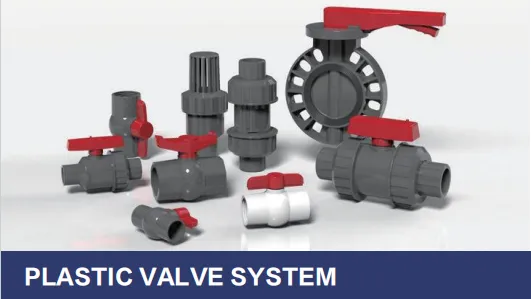
Ever wonder what makes certain plastic valves last decades while others fail within months? Or why industrial facilities increasingly trust plastics over metals for critical applications? Modern plastic valves are genuinely transforming how we manage fluids, but only high-quality systems deliver on their full promise.
Choosing plastic valves isn't just about cost savings – it's about matching material properties to your unique needs. Picture an offshore rig battling corrosive seawater. Now imagine a semiconductor factory where microscopic metal particles could ruin million-dollar chips. Or consider the scorching water in a power plant heat exchange system. Each demands different material strengths.
The backbone of countless residential and industrial systems. True UPVC (rigid PVC without plasticizers) handles surprisingly high pressure despite the humble "plastic" label.
Fun fact: Many "PVC valves" are actually UPVC for strength – check manufacturer specs!
Like PVC went through superhero training. Added chlorine atoms create a molecular structure that laughs at hot water many metals can't handle.
Perfect for hot chemical lines and factories recycling high-temp wastewater.
The Rocky Balboa of plastics – takes brutal chemical punishment and keeps going. Where PVC falters, PP shines.
In wastewater plants, PP valves resist H2S corrosion that destroys stainless steel.
For extreme challenges:
Ever opened a $500k analyzer ruined by metal ions? That's why chip fabs demand these.
Valves aren't interchangeable tools. Selecting the right type is like choosing between a scalpel, a cleaver, or a wrench – each serves fundamentally different purposes.
Ball valves provide the best sealing integrity for critical shut-off applications. Their full-bore design minimizes turbulence – imagine water flowing through an open pipe rather than squeezing past obstacles.
Butterfly valves rule in large-diameter systems where budget and space matter. That lightweight wafer design saves thousands in support structures. Their secret? The disc position creates minimal pressure drop even at partial openings.
Modern innovations like trunnion-mounted ball valves make them viable for demanding industrial pressures exceeding 200 PSI – impressive for plastic!
Overlooked but absolutely critical in prevention scenarios:
Ever heard water hammer? That's your pipes begging for proper check valve selection.
Superior polymer seals make or leak systems. The winners:
Pro tip: Look for proprietary stem seals guaranteeing zero external leakage - crucial for hazardous chemicals.
Plastic valves fail differently than metals. Smart design anticipates:
The difference between a 2-year and 20-year valve life often comes down to additive packages you can't see.
| Application Profile | Material Recommendation | Critical Design Factor | Cost vs. Metal |
|---|---|---|---|
| Municipal Chlorinated Water | UPVC with EPDM seals | AWWA C507 compliance | 40-60% savings |
| Pharmaceutical CIP Systems | PFA-lined with FFKM seals | Zero crevices/SIP compatibility | 10-20% premium |
| Battery Manufacturing Acids | PP with PTFE diaphragms | ISO 15848 fugitive emissions | 70% savings |
| Geothermal Brine | CPVC with graphite packing | Pressure derating at 80°C+ | 50% savings |
Installation Tip: Plastic valves need different support than metal. Every 4 ft intervals prevent stress fractures. And never tighten flange bolts metal-style – use a torque wrench to manufacturer specs!
Different sectors place unique demands on valve systems:
Modern plants need valves that handle unpredictable mixes of abrasives and chemicals. The winners:
Case study: A Florida plant switched to lined valves for seawater intake – reduced replacements by 85% compared to super duplex steel.
Where a single micron particle destroys silicon wafers:
Clean room secret: Valves must comply with SEMI F57 particle shedding limits.
Abandoning sterilization cycles changes the game:
A COVID vaccine plant cut changeover from 2 days to 2 hours with disposables.
The future beckons with exciting developments:
Emerging R&D tip: Watch graphene-enhanced plastics – early tests show phenomenal wear resistance.
Final Wisdom: Top-tier plastic valves outlast cheap alternatives exponentially. That UPVC valve costing 20% more? It saves thousands in replacement downtime. Specify certified products meeting AWWA, FDA, or ISO standards relevant to your application. Your future self will thank you.
Recommend Products












