
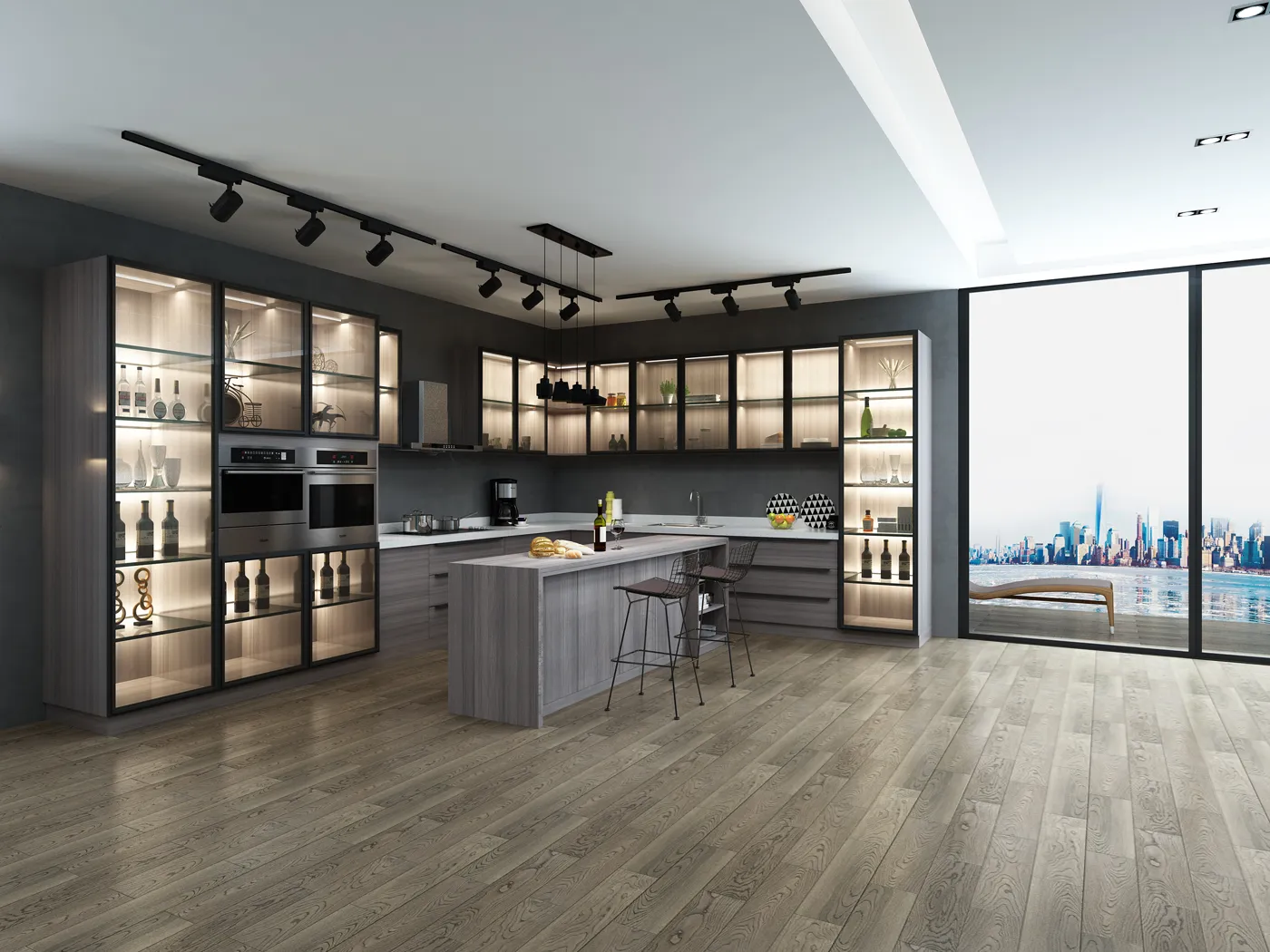
Ever walked into a kitchen and felt like something wasn't quite right? It's often the backsplash - that transitional space between countertops and cabinets that makes or breaks the entire design. When done right, your backsplash creates that magical flow where cabinets and walls don't just meet, but embrace. It's that seamless transition that transforms a functional kitchen into a heart-stopping showpiece.
I've spent years helping homeowners find that perfect integration point. From contemporary lofts to cozy farmhouses, the secret lies not in following trends blindly, but understanding how materials converse with your cabinets and walls. So let's ditch the design rulebook and create spaces that feel authentically you.
Before we dive into trends and materials, let's get real about what makes a backsplash special. It's the unsung hero catching olive oil splatters and tomato sauce stains while quietly elevating your entire kitchen. The magic happens when your backsplash doesn't scream "look at me" but rather harmonizes with your cabinetry and architecture.
The best backsplashes? They feel like they've always belonged - like they grew organically with your kitchen rather than being an afterthought. And here's the beautiful part: achieving this doesn't require professional designer skills. You just need to understand the conversation between surfaces.
This year, earthy tones are stepping into the spotlight - warm terracottas, soft mossy greens, and muted sandstones that create cozy, inviting kitchens. Unlike bolder colors that demand attention, these natural hues act like quiet background music that sets the mood without overwhelming.
I recently worked on a kitchen where we used these shades with white oak cabinetry. The homeowner teared up when she saw how the natural light danced across the textured tiles at golden hour. That's the power of colors that connect to nature.
Cabinet Integration Tip: Pair with wood grain cabinets or warm whites - avoid cold grays that can feel jarring against these earthy tones. Glass tiles in these palettes can create a shimmering effect that bridges the gap between cabinetry and walls.
Subway tiles are getting elongated cousins! We're seeing more 12x24" and even 16x32" porcelain slabs creating clean, uninterrupted visual planes. Unlike busy mosaics that fragment your space, these minimalist giants create incredible continuity.
Here's why designers love them: long vertical installations make ceilings appear taller, while horizontal layouts expand compact kitchens. And because they're porcelain, they offer exceptional durability where quality really matters.
Wall Integration Tip: Use these vertically between upper and lower cabinets to connect the space. Matching the grout color nearly identically to the tile creates a waterfall effect that makes cabinetry feel integrated rather than floating.
2024 is embracing tactile experiences with plaster-look tiles, handmade ceramics with thumbprint ridges, and dimensional surfaces that cast beautiful moving shadows. These add depth without overwhelming patterns.
There's something primal about surfaces that invite touch. Just yesterday, a client shared how guests can't help but run their fingers along her fluted tile backsplash. That sensory connection turns walls from barriers into invitations.
Cabinet Integration Tip: Flatter cabinet fronts pair beautifully with textured backsplashes creating lovely contrast. Just ensure lighting properly illuminates these surfaces - under-cabinet strips work wonders here. With various architectural façade solutions available today, achieving this tactile dimension has never been easier.
The magic happens when different materials start a conversation. Combining materials like slate with metallic inserts or marble with laser-cut metals creates points of intrigue where walls meet cabinetry. It's like jewelry for your kitchen.
I particularly love combining honed stone with metallic details - the soft matte foundation with sparkling accents creates focal points without overwhelming. Metal details integrated throughout the backsplash can then be echoed in cabinet hardware and lighting.
Integration Secret: Choose one dominant material and let accents complement it. If using metallics, pick up the same finish in your cabinet hardware so the eye naturally flows between surfaces.
For the bold at heart, full-height backsplashes that extend to the ceiling make breathtaking statements. Instead of stopping at the upper cabinets, these designs create dramatic backdrops that turn kitchens into gallery spaces.
A client recently used forest green handmade tiles for this effect, turning her entire cooking area into something that felt lifted from a Tuscan villa. The cabinets appeared to emerge from this beautiful landscape rather than being separate elements.
Architectural Integration: Keep surrounding walls in a complementary neutral to highlight your backsplash art piece. Consider painting upper cabinets the same color as walls to create continuity while lowering cabinets anchor the space.
| Material | Best For | Integration Tips | Maintenance |
|---|---|---|---|
| Glass Tile | Reflecting light in dark kitchens; creating shimmering effects | Use similar color tones as cabinets but in lighter/darker variations | Wipe with vinegar solution for shine; resists stains beautifully |
| Marble & Natural Stone | Luxurious statement; natural movement connects spaces | Highlight veins with under-cabinet lighting; match stone countertops | Require sealing; patina develops over time - embrace it! |
| Porcelain Slabs | Seamless, grout-free installations; minimalist spaces | Match veining direction with cabinet lines; keep grout minimal | Easiest to clean; stain-resistant; ideal for busy kitchens |
| Metal Tiles | Industrial or art deco spaces; reflective surfaces | Pair with flat cabinet fronts; match metal to hardware finishes | Wipe with mild soap; avoid abrasive cleaners |
| Handmade Ceramics | Artisanal warmth; unique characters | Beautiful against wood cabinetry; glaze should complement wood tones | Seal to protect; minor imperfections add charm |
Matching backsplash tile size to your kitchen proportions:
Beautiful backsplash integration isn't just about materials—it's how they're installed. These techniques create magical connections:
Choosing grout 1-2 shades darker than your tile creates depth, while matching it closely makes tile patterns recede. For ultimate seamlessness in residential and commercial building materials alike, choose epoxy grout that matches tile color perfectly.
Install backsplashes that sit flush with cabinets rather than protruding. Deep reveals collect grime and create shadows that break visual connections.
Where backsplash meets adjacent walls, continue tile around corners by 2-3 inches. This avoids jarring cut-offs and creates intentional framing. Some interior and exterior decoration materials can be adapted to create these elegant transitions.
Place under-cabinet lights 4-6" from the wall, angled slightly toward backsplash. This creates a stunning glow that highlights texture without glare.
The ultimate integration trick? Letting your backsplash inform other kitchen elements:
Pull out your backsplash's most subtle hue and use it for upper cabinets. For example, if your tiles have faint taupe undertones, paint upper cabinets in that color. The connection feels magical without being obvious.
If using fluted tiles, repeat similar vertical lines in cabinet panels or furniture legs. This rhythm subconsciously ties spaces together.
Use backsplash materials elsewhere - a stone tile sample becomes a cutting board, a ceramic tile becomes a trivet. These little connections weave design narratives throughout your kitchen.
The journey to finding your perfect backsplash integration might feel overwhelming, but I promise - it's incredibly rewarding. When that moment comes where materials meet perfectly, where light catches textures just right, where guests ask "how did you make it look so effortless?" you'll know it was worth every decision.
Final Thought: Your backsplash isn't just protecting walls - it's the canvas where function meets beauty, where cabinets and walls come together in perfect harmony. Trust your instincts, be bold, and create something uniquely you.
Recommend Products












