
How Intelligent Automation is Revolutionizing Food Service Operations Behind the Scenes
Did you know? The latest commercial kitchen robots can reduce food prep errors by 98% compared to human staff while cutting energy consumption by up to 35%. That's not sci-fi—it's happening today in kitchens from Tokyo to Texas.
Remember the last time you had a perfectly cooked meal at your favorite restaurant? The kind where every element is precisely timed, the plating impeccable, the flavors perfectly balanced? Now picture that same consistency during peak dinner rush with 200 covers. That's where robotic kitchen assistants are stepping in—not to replace chefs, but to become their tireless, hyper-precise sous-chefs.
Commercial kitchens face a perfect storm: escalating food safety regulations, razor-thin profit margins, and a worsening labor shortage. When I visited a roboticized pizza kitchen in Chicago last month, the manager shared something striking: "Our robot doesn't call in sick, doesn't need breaks, and portions sauce within 0.5mm accuracy on every single pie."
Picture a robotic arm flipping burgers just inches from human workers. Without robust safety protocols, this could become an industrial horror story. UL Solutions addresses these risks through their comprehensive UL 3320 certification—the kitchen robotics equivalent of seat belts and airbags combined.
"We built UL 3320 specifically for the collision risks in cramped kitchen spaces," explains Dr. Lena Torres, UL's food tech safety lead. "It tests everything from emergency stops to thermal sensors that freeze movement when human proximity exceeds safety buffers."
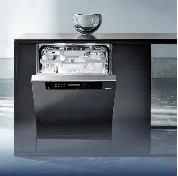
The modern commercial dishwasher has evolved from a clunky water-heating box to an AI-driven sanitation system. New models feature:
At Portland's Juniper Cafe, their smart dishwasher cut water usage by 7,000 gallons monthly while flagging a failing pump a week before it died. "It saved us from a Saturday night disaster," manager Rico Fernandez told me.
Culinary robots aren't replacing chefs but augmenting their capabilities. Consider these real-world applications:
| Restaurant | Robot Function | Impact |
|---|---|---|
| Flippy Burger Bot | Precise frying & flipping | 34% faster throughput |
| Sushi-Maker 9000 | Portioning rice/fish | 99% consistency rating |
| Wok-AI | Stir-fry automation | Energy savings up to $900/month |
These aren't just tools; they're culinary teammates. Chef Elena Martinez at Miami's Vista describes her wok bot as "like having an extra set of hands that never tire during our marathon brunch services."
Future Spotlight: MIT's prototype "FlavorBot" uses spectral analysis to adjust seasoning in real-time—like a sommelier for spices with machine learning precision.
Let's be clear: the goal isn't fully robotic kitchens. It's augmentation. Consider how these setups actually work:
This synergy creates what industry expert Kenji Tanaka calls "precision hospitality"—the marriage of culinary artistry with engineering reliability.
Despite the promise, challenges remain:
Solutions are emerging, like Robot-as-a-Service (RaaS) leasing models and modular units designed for tight spaces. "You can't just drop a bot into any kitchen," warns implementation specialist Derek Cho. "Successful adoption requires rethinking workflow architecture."
The cutting edge? Robots that perceive texture, scent, and visual presentation:
Noma's tech director hints at their experimental "Synaesthesia Grill" project that correlates sizzle acoustics with optimal flipping timing—because even robots can listen for the perfect sear.
As dawn breaks over commercial kitchens worldwide, a quiet revolution simmers. Automated systems aren't replacing the heart of cooking—human creativity and connection. Instead, they're eliminating drudgery, minimizing waste, and maximizing consistency. The future belongs not to fully robotic kitchens, but to harmonious human-technology partnerships where chefs choreograph automated precision while focusing on what truly matters: creating memorable dining moments.
Recommend Products












