


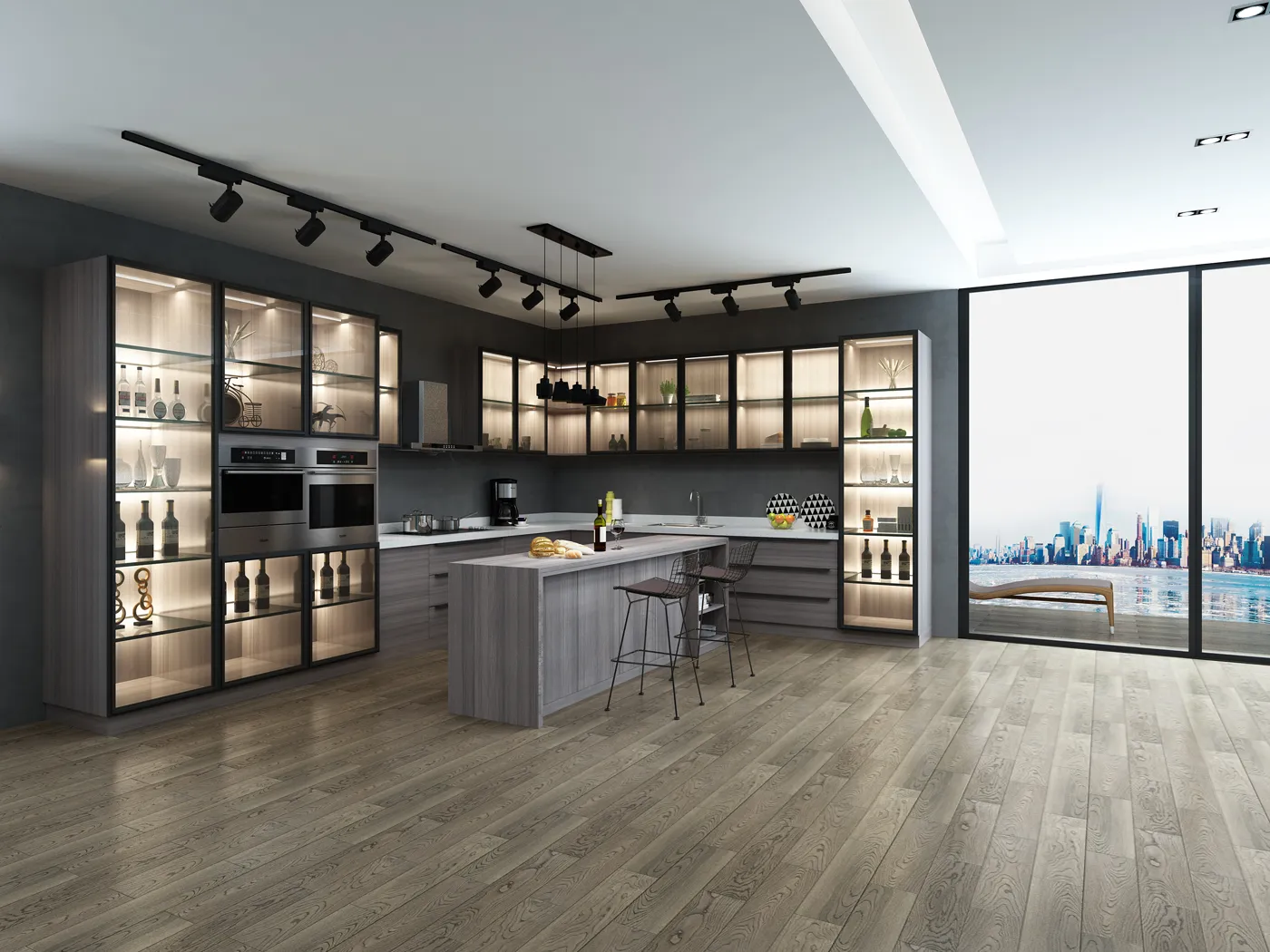
Walk into any high-performing restaurant kitchen, hospital food service area, or campus cafeteria, and you'll notice a unifying element that forms the backbone of these spaces – stainless steel cabinetry. Far from being just a utilitarian choice, this material has revolutionized how professional kitchens operate. Unlike their residential counterparts, commercial kitchens face unique challenges: relentless daily use, intense heat exposure, strict hygiene protocols, and constant moisture. Stainless steel emerges as the undisputed solution, but selecting the right cabinetry involves far more than choosing shiny surfaces. It's about matching material science to operational demands.
"In commercial environments, kitchen equipment isn't installed – it's commissioned. Stainless steel cabinetry is frontline defense against operational breakdowns and health violations."
Why Stainless Steel Wins in Commercial Spaces
At first glance, stainless steel cabinetry seems like a premium choice, but when calculated over a decade of service, it becomes the economical solution. Consider these vital aspects:
Thermal Resistance
Unlike laminates that bubble when hot pans meet surfaces, stainless maintains integrity even when surface temperatures spike beyond 500°F. This matters profoundly in wok stations, near pizza ovens, and at plating areas.
Hygiene Advantage
The non-porous surface prevents bacterial colonization – critical for NSF compliance. During deep cleaning cycles, harsh disinfectants don't degrade surfaces as they might with coated alternatives.
Structural Longevity
A 16-gauge stainless frame withstands years of heavy sheet pan loading without warping or fatigue failures common in lesser materials. Downtime for replacements disappears.
Notice how food processing facilities like salad prep zones prioritize welded seams over mechanical fasteners? That's no accident. Those seamless corners prevent debris traps where pathogens could proliferate. This attention to fabrication detail separates true commercial-grade equipment from stainless-clad residential designs.
Beyond Restaurants: Diverse Commercial Applications
Healthcare Nutrition Centers
Hospitals require cabinetry that handles three shifts of intense use while meeting Joint Commission standards. The smart home appliance solutions integrated into modern healthcare cabinetry – like temperature-controlled medication storage compartments within stainless bases – demonstrate how function evolves. In cancer treatment centers, where patients have heightened vulnerability, the antimicrobial properties of 304-grade stainless become non-negotiable. You'll often see continuous countertop-to-backguard transitions that eliminate crumb-collecting seams.
Educational Facilities
School districts increasingly adopt central production kitchens serving multiple sites. Here, stainless cabinetry scales differently: mobile base cabinets become service modules that dock with blast chillers; vertical storage maximizes cramped footprints; and custom pass-through designs interface with delivery vehicles. One often overlooked factor? Acoustics. Schools specify specialized commercial flooring systems in adjacent areas while installing rubber-isolated drawers that dampen the notorious clatter of busy kitchens during class hours.
Specialized Food Service
Consider cruise ship galleys where cabinetry confronts salt corrosion and constant vibration. Marine-grade 316 stainless with added molybdenum becomes essential here. For commissary kitchens servicing food trucks, space optimization reaches new heights with modular cabinet systems that fit disassembly/reassembly cycles. Airline catering facilities? That's where you'll see stainless cabinets engineered for extreme low-height clearance beneath conveyor systems.
The Specification Blueprint: Technical Considerations
Gauge & Grade
- 18-gauge (1.2mm) for light-duty auxiliary stations
- 16-gauge (1.5mm) for primary work zones
- 14-gauge (1.9mm) for heavy butcher block tops
- 304 grade for standard environments
- 316 grade for high-corrosion areas
Finish Science
- #4 Brushed: Most common hide micro-scratches
- #7 Mirror: High-end venues requiring sparkle
- Bead Blasted: Minimizes fingerprint visibility
- Passivation Treatment: Post-fabrication acid bath for enhanced corrosion resistance
Hardware Anatomy
- Full-extension ball bearing slides
- Self-closing mechanisms
- Continuous hinges vs. European hidden hinges
- Stainless drawer fronts with concealed fasteners
Design Pitfall Warning: Insufficient radius on corners leads to difficult cleaning. The NSF standard requires minimum 1/4" radius for all vertical edges. Countersinks around fasteners become grime traps without sanitary capped screws.
The Procurement Pathway: Avoiding Costly Mistakes
Cross-Functional Evaluation
Assemble stakeholders: chefs care about workflow, maintenance teams prioritize cleanability, safety officers examine compliance, and finance controllers analyze lifecycle costs. This upfront alignment prevents post-installation regrets.
Prototyping Workflows
Insist on 3D walkthroughs simulating service rushes. Does the plated dish station allow simultaneous chef plating and runner pickup? Is the pot wash return path obstructed by cabinet placement? Digital mockups reveal what paper plans miss.
Customization Strategy
Identify what warrants true customization versus using standard modules with intelligent accessories. Roll-out bin systems beneath countertops often justify custom sizing, while most upper cabinets work well as stock sizes with adjustable shelves.
"We learned the hard way that stainless cabinet finishes vary globally. Insist on Miller test reports showing exact alloy percentages – especially for chloride-rich environments near coastlines. Not all '304 stainless' performs equally."
- Facilities Manager, Oceanfront Resort ChainEmerging Trends in Commercial Cabinetry
Embedded Technology
Smart sensor strips integrated into cabinet frames now monitor internal temperature/humidity, triggering alerts if food storage conditions deviate. NFC-enabled units link directly to inventory management systems.
Advanced Coating
Nano-ceramic layers create permanently hydrophobic surfaces. Demonstrated benefits: 60% faster wipe-downs, nearly zero chemical adhesion, and reduced water spotting.
Structural Enhancements
3D-printed stainless components allow unprecedented strength-to-weight ratios. Internal bracing that would be impossible with traditional fabrication methods now enables suspended cabinet configurations.
Forward-thinking kitchens now install what designers call "tactical infrastructure" – essentially modular utility raceways within cabinet bases that house not just plumbing and electrical, but data lines and compressed air systems. This core approach streamlines future equipment reconfigurations during menu or service concept changes.
The Sustainable Imperative
Beyond its functional superiority, stainless steel cabinetry stands apart in lifecycle sustainability. When properly specified from quality-focused building material suppliers , these installations regularly exceed 25-year service periods. At end-of-life, nearly 100% of materials recycle back into production streams. This contrasts sharply with the landfill destiny of phenolic and laminate alternatives. Modern operations track this through Environmental Product Declarations (EPDs) that document recycled content percentages and carbon footprints.
Selecting commercial kitchen cabinetry ultimately means choosing between two paths: an equipment purchase or an infrastructure investment. Stainless steel represents the latter – a decision measured not in upfront price per square foot, but in decades of reliable service, minimized operational disruptions, and uncompromised food safety. That's why this remains the professional's choice where performance truly matters.










