
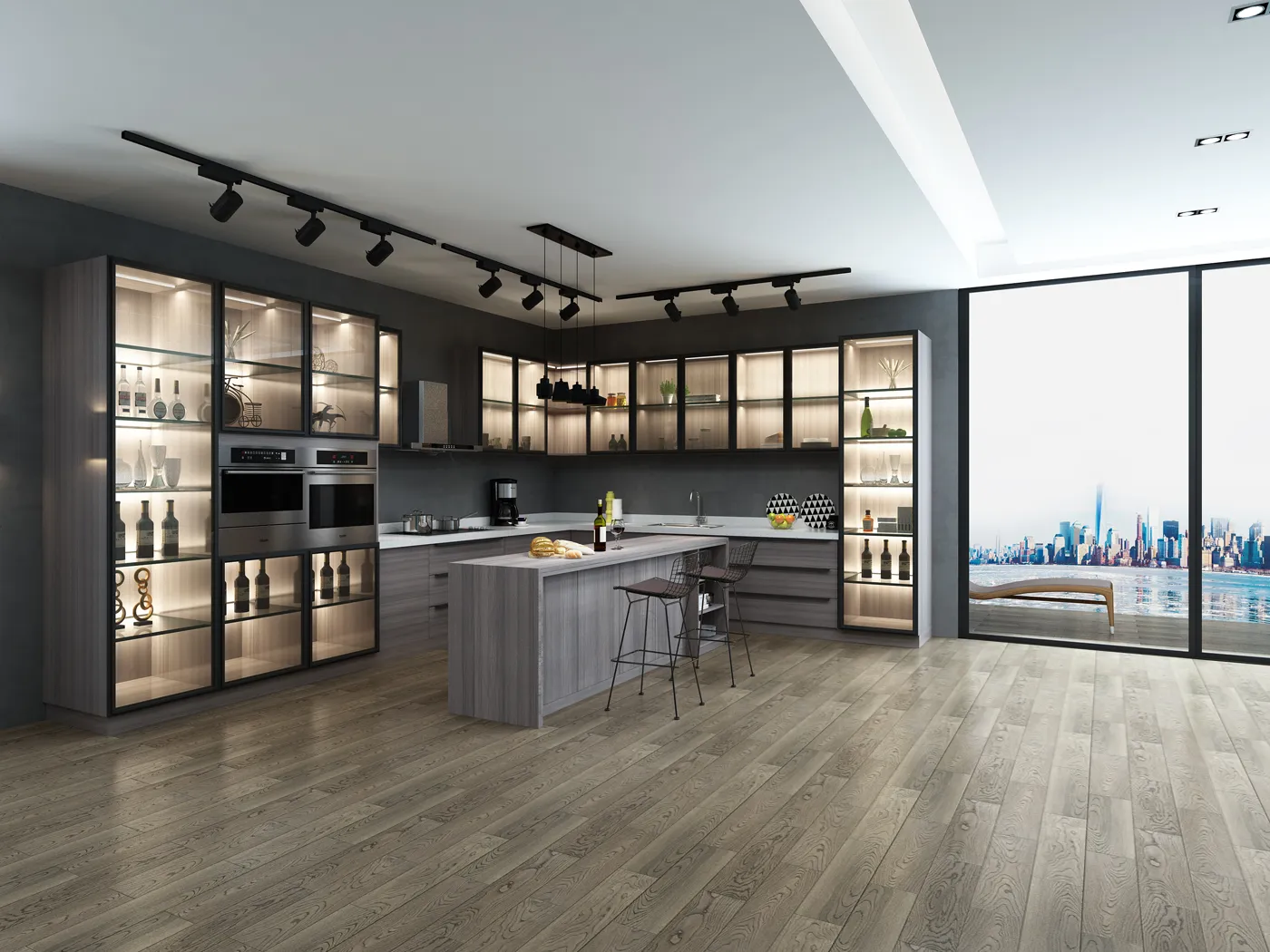
Gone are the days when kitchen handles screamed for attention like metallic jewelry on a minimalist outfit. Today, we're witnessing a quiet revolution—a shift toward concealed handle designs that whisper sophistication rather than shout functionality. These subtle touches don’t just transform cabinets; they redefine how we interact with our kitchens emotionally and physically.
Have you ever walked into a kitchen and felt an instant sense of calm? That’s the magic of concealment. Handles vanish into cabinetry like secrets folded into the pages of a book, creating visual serenity . But it’s more than just aesthetics— custom kitchen cabinets embody this trend by prioritizing flow over fragmentation. When fingers glide along smooth grooves instead of grabbing clunky hardware, we’re not just opening drawers; we’re engaging in a tactile conversation with space.
Think about it: kitchens aren't just workstations. They’re where coffee brews while rain taps the window, where families orbit islands during midnight snacks. Concealed handles? They’re the silent narrators of these moments.
Remember 90s kitchens? Chrome pulls jutting out like uninvited guests? We’ve journeyed far. The metamorphosis began when European designers tossed tradition aside for recessed channels—think "finger pulls" carved into wood like gentle invitations. Now, innovations explode:
Each leap wasn’t just engineering; it was psychology. We crave simplicity because life feels cluttered enough.
The magic lies in what hides the handle. Wood veneers swallow grooves whole. Laminates disguise edges so seamlessly you'd swear cabinets breathe on command. Even metals get coy—brushed finishes deflect light instead of flashing it.
Modern kitchens leverage textures: imagine bamboo charcoal panels ( eco-friendly and air-purifying! ) framing handle-free zones. Or high-pressure laminates that clean with a wipe, resisting crumbs and regrets equally. This isn’t just surface-deep; materials become collaborators in the concealment charade.
Meet Sofia, who redesigned her galley kitchen post-accident: "Protruding handles bruised my hips daily. Now? Smooth lines mean freedom." Or Ben, parent to twin toddlers: "No more impromptu handle-jangling symphonies at 3 AM!"
Their stories aren’t outliers. They spotlight how concealed designs nurture intimacy with space —less friction, more flow. Kitchens should hug us back.
Let’s bust a myth: concealed ≠ fragile. Recessed pulls withstand spills better than ornate hinges trapping grease. Push-latch mechanisms outlive sticky knobs by years. And cleaning? Forget scrubbing crevices—just glide a cloth across uninterrupted planes.
But the brilliance lies in versatility:
Psychology whispers truths: clutter stresses us, while simplicity soothes. Concealed handles act as visual Valium, turning chaos into coherence. When every line serves purpose without pomp, our minds relax. It’s neuroscience meets integrated wall panels .
Brands grasp this too. High-end cabinet lines now market "mindful designs"—not hardware specs. Because what we touch shapes how we feel.
Tomorrow’s kitchens won’t just conceal handles—they’ll erase them. Imagine:
The boundary between human intent and architectural response blurs. Soon, touching a handle might feel quaint—like dialing a rotary phone.
Concealed handles aren't trends; they're translations of deeper needs. They speak of our longing for calm, our rebellion against noise, our hope that daily rituals—coffee brewing, snack grabbing—can feel sacred. In hiding handles, we reveal humanity’s craving for beauty that serves.
So next time your hand finds a groove instead of a knob, pause. Feel the quiet revolution in your fingertips.
Keyword integrated: custom kitchen cabinets
Recommend Products












