
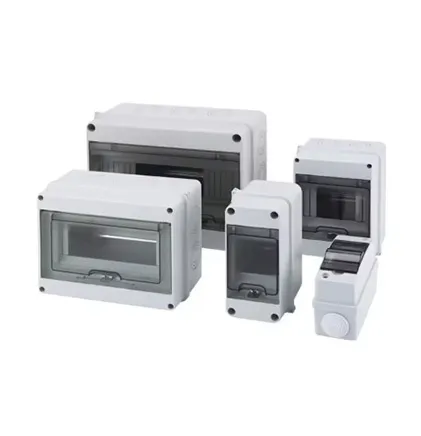
Imagine walking through a modern data center – rows upon rows of servers humming, lights blinking, and cables running like digital arteries. At the heart of this technological marvel lies an unsung hero: the modular distribution box. These compact power hubs have quietly revolutionized how data centers manage electricity, making them more agile than ever before.
Data centers are evolving from rigid power infrastructures to adaptive ecosystems, thanks to modular distribution systems. These boxes act as traffic controllers for electricity, dynamically routing power where it's needed most. It’s like replacing old water pipes with smart valves that adjust flow based on real-time demand – preventing floods and droughts in your digital landscape.
In today’s cloud-powered world, data center power distribution can't be an afterthought
Traditional setups eat valuable floor space. Modular units? They slip into gaps like puzzle pieces. Picture ceiling-mounted trays feeding cabinets vertically – freeing up 40% more room for revenue-generating servers. That space saving translates to extra racks and more processing power.
These systems treat safety like sacred ground. IP42-rated enclosures shield against dust and accidental splashes, while copper connections click into place without dangerous drilling. There’s even thermal monitoring at critical junctions – it’s like having fire alarms built into your wiring.
Remember struggling with server installations? Modular boxes make upgrades feel like snapping LEGO bricks. Tap-off units slide in tool-free, while control panels speak simple Ethernet instead of engineering hieroglyphs. One technician told us: "It used to take half a day to add capacity – now it's coffee break work."
The system’s brain displays real-time voltage/current metrics on its LCD screen – think dashboard for electricity
Modular units with built-in circuit breakers that slide into busways like power cartridges
Synchronize with DCIM platforms, sending alerts when temperatures rise or loads spike
This setup creates organic redundancy too. If one unit falters, power reroutes instantly – imagine your bloodstream redirecting around a blockage. And with integration capability for distributed solar power systems , it allows seamless renewable integration (Note: "distributed solar power systems" sourced from keywords).
Coming innovations will make these boxes even smarter. We’re talking predictive algorithms that sense load shifts before they happen – like weather forecasts for electricity. Some prototypes even harvest kinetic energy from server vibrations.
As demands explode with AI and IoT, these modular units become the Swiss Army knives of power distribution. One CEO put it perfectly: "It’s not just hardware; it’s peace of mind. Knowing our infrastructure can pivot as fast as our business needs."
Modular distribution boxes transform power from rigid constraint to flexible partner. They're the silent enablers of innovation – giving data centers the breathing room to scale, adapt, and push boundaries. In an industry where downtime costs millions per minute, that adaptability isn’t just convenient. It’s existential.
Recommend Products












